

 English
 русский

Disinfection in Water Treatment: Chlorine, UV and Ozone Compared for Plants
In a typical industrial discharge permit, the first number to fail is rarely BOD or suspended solids - it is bacteria. Plants that sit comfortably inside their organic limits for most of the year get caught out in summer, when warmer effluent lets fecal coliform populations rebound and a single result above 1,000 MPN per 100 mL pushes the discharge out of compliance. Disinfection in water treatment is the barrier built to prevent exactly that failure, and it behaves unlike any other unit process on site: it removes nothing you can weigh, and its outcome is decided largely by how clean the water already is when it arrives.
This guide compares the three workhorse methods - chlorination, ultraviolet (UV), and ozone - against the doses each one actually needs, then explains the upstream equipment choices that quietly decide whether the disinfection step passes or fails. If you specify, purchase, or operate wastewater treatment equipment, these are the numbers worth memorizing.
Content
- 1 What Disinfection in Water Treatment Actually Removes
- 2 Chlorine, UV, or Ozone? Compare Dose, Residual, and Byproducts
- 3 Why Solids Removal Decides Disinfection Performance
- 4 How Dose and Contact Time Control Disinfection in Water Treatment
- 5 Disinfection Byproducts: The Trade-Off You Cannot Ignore
- 6 Disinfection in Water Treatment: Four Questions Buyers Ask First
What Disinfection in Water Treatment Actually Removes
Disinfection targets pathogenic microorganisms - bacteria, viruses, and protozoan parasites - and reduces them to a defined, measurable level of protection. Everything else about the topic, from reactor sizing to chemical storage, follows from that single sentence.
Disinfection in water treatment is the selective killing or inactivation of pathogenic microorganisms in water to a target protection level. It differs from sterilization: a disinfected effluent still carries harmless microbes, just not enough of the dangerous ones to pose a risk.
The distinction matters commercially, not just technically. Sterilizing every cubic meter of industrial effluent would be wildly expensive and unnecessary, so permits instead ask for a log reduction - and the log scale is unforgiving:
- 1-log means 90% inactivation - a visible improvement that rarely stands alone.
- 2-log means 99% - the floor for many secondary discharge permits.
- 3-log means 99.9% - the standard benchmark for fecal coliform and E. coli.
- 4-log means 99.99% - where virus and protozoa targets in water reuse schemes usually land.
Regulators phrase limits in logs because percentages hide the scale. Saying 99.9% of organisms were killed sounds complete until you calculate that one in every thousand survives - and in a discharge of several thousand cubic meters per day, that remainder is still an enormous number of cells.
Chlorine, UV, or Ozone? Compare Dose, Residual, and Byproducts
No single disinfectant wins everywhere: chlorine is the cheapest and the only option that leaves a protective residual, UV adds no chemistry and works in seconds, and ozone is the strongest against chlorine-resistant parasites but costs the most to run.
The table below condenses the variables that actually move a procurement decision - dose, contact time, residual behavior, and the byproduct each method creates.
| Method | Typical dose | Contact time | Residual | Main byproduct risk | Best fit |
| Chlorination (NaOCl) | 2-8 mg/L free chlorine | 30-60 min in a contact tank | Yes, 0.2-1.0 mg/L | Trihalomethanes, haloacetic acids | Long outfalls, budget-driven operation |
| UV irradiation | 12-186 mJ/cm2 by target organism | Seconds, no tank | None | None | Reuse schemes, tight byproduct limits |
| Ozonation | 0.5-3 mg/L transferred ozone | 10-15 min | Decays in minutes | Bromate in bromide-rich water | Resistant protozoa, color and odor polishing |
- You need a residual that protects the outfall and downstream pipes
- Cost per cubic meter is the deciding factor
- Influent quality swings are moderate and predictable
- Byproduct limits leave no room for THM formation
- Chemical storage faces safety or permitting constraints
- The effluent is already polished and low in turbidity
UV dose required for 4-log (99.99%) inactivation, by microorganism
Values in mJ/cm2, rounded from US EPA ultraviolet design guidance. Adenovirus, not bacteria, sizes most full-scale UV reactors.
Why Solids Removal Decides Disinfection Performance
Particles are the quiet enemy of every disinfection process: they shadow microorganisms from UV light and consume chlorine before it reaches the organism it is meant to inactivate.
The working thresholds are unforgiving. UV reactors are designed around ultraviolet transmittance (UVT), and most need effluent above roughly 55 to 65% UVT - which in practice means suspended solids well under 20 mg/L and turbidity below 5 NTU. For chlorination, every milligram of organic solids creates a chlorine demand that must be satisfied before any free residual can exist, so dirty water quietly multiplies the chemical bill.
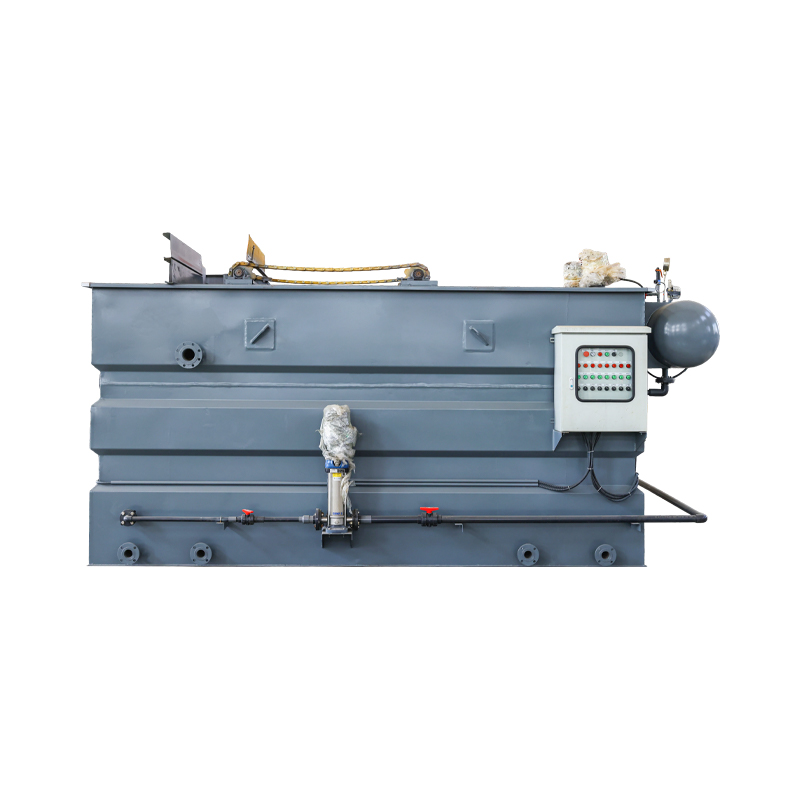
This is why experienced designers treat the solids train as part of the disinfection system rather than a separate stage. Coagulation with dissolved air flotation strips suspended solids and oils before they ever reach the final barrier.
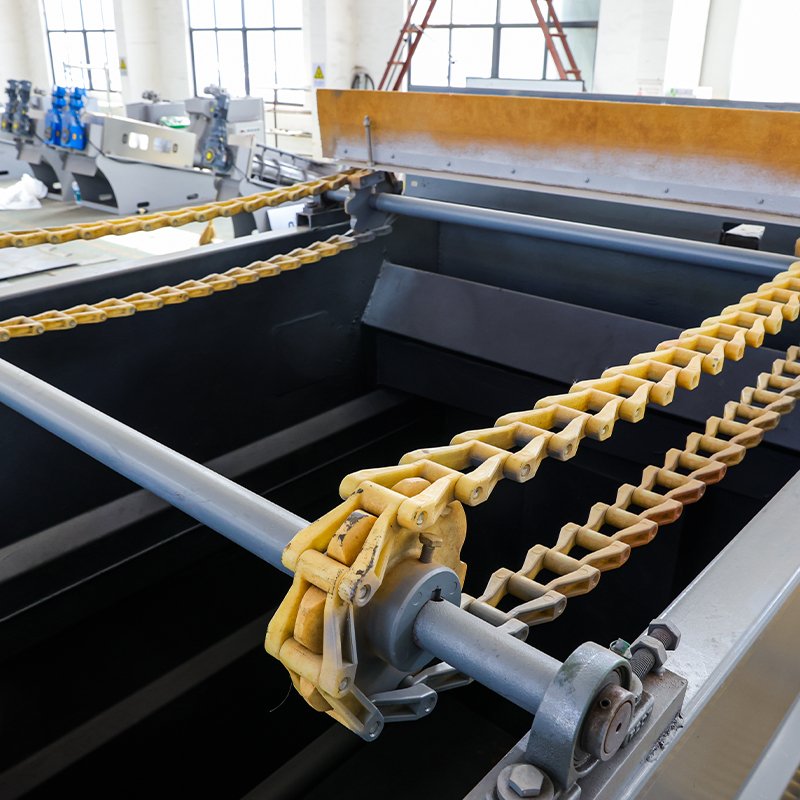 Dissolved Air Flotation Machine for Solids and Oil RemovalThis integrated, automated DAF unit coagulates and floats out suspended solids, oils, and other contaminants ahead of fine screening. Removing that load first helps the downstream disinfection barrier achieve the low turbidity effluent its design assumes.View Product →
Fine screening then polishes secondary effluent down to the low turbidity window a UV design assumes on paper.
 Micro Drum Filter for Fine Effluent PolishingWith a 10-100μm 316L stainless steel mesh and fully automatic continuous backwashing, this drum filter polishes secondary effluent to low suspended solids. It prepares water for the stable turbidity conditions that consistent disinfection performance depends on.View Product →
How Dose and Contact Time Control Disinfection in Water Treatment
Disinfection compliance is a control problem before it is a chemistry problem - the plants that pass consistently are the ones that hold dose and contact time steady while the influent changes around them.
For chemical methods, regulators evaluate the CT value: free disinfectant concentration (C, in mg/L) multiplied by effective contact time (t, in minutes). A plant dosing 3 mg/L into a genuine 30-minute contact tank accumulates a CT of 90, comfortably above what most bacterial targets need in warm water. But lower temperatures, pH drift, and chlorine demand from organic matter all push the required CT upward - often by a factor of two or three between summer and winter.
CT is the arithmetic every permit inspector knows. If the contact tank short-circuits, or the dose is set by hand once per shift, the CT you designed is not the CT you are delivering.
Automation is what closes that gap. A fully automatic dosing device paces chemical injection to flow and trims it against a residual analyzer, holding free chlorine inside a narrow band instead of overshooting between manual corrections. The same logic applies upstream, where coagulant and pH adjustment chemicals face identical swings - which is why automated chemical dosing has become the default across modern effluent plants.
 Fully Automatic Dosing Device for Chemical ControlThis PLC-controlled three-tank system continuously prepares and meters polymer or chemical solutions, holding dosing steady as influent changes. Automated pacing keeps disinfectant and coagulant residuals inside narrow bands, reducing both microbiological and chemical risks.View Product →
Disinfection Byproducts: The Trade-Off You Cannot Ignore
Chemical disinfection trades a microbiological risk for a chemical one, and modern permits increasingly cap both sides of that trade.
When chlorine reacts with organic matter left in poorly polished effluent, it forms trihalomethanes and haloacetic acids. The US EPA caps total trihalomethanes at 0.080 mg/L and the five haloacetic acids at 0.060 mg/L in drinking water, and reuse frameworks keep tightening along similar lines. Ozone has its own version of the problem: in bromide-rich water it can form bromate, which is regulated at the microgram level.
The cheapest byproduct control is not a different chemical - it is cleaner water.
- Strip organic precursors with coagulation, flotation, or sedimentation before chlorine is added
- Shorten contact time wherever the residual is not needed for protection
- Use UV as the primary barrier where byproduct limits leave no margin
In practice, plants that struggle with byproducts are almost never short of disinfectant - they are short of pretreatment.
Disinfection in Water Treatment: Four Questions Buyers Ask First
What is the difference between disinfection and sterilization?
Disinfection reduces pathogenic microorganisms to a target protection level, usually expressed as a 3-log, or 99.9%, reduction. Sterilization destroys all microbial life, which is unnecessary and uneconomical for effluent and drinking water streams.
How much contact time does chlorination actually need?
Conventional practice is 30 to 60 minutes in a baffled contact tank while holding a free chlorine residual of roughly 0.2 to 1.0 mg/L. Chlorine-resistant organisms such as Giardia and Cryptosporidium need CT values hundreds of times higher, which is why many plants pair chlorine with filtration or UV.
Why does UV disinfection fail after heavy rain at industrial plants?
Storm inflow raises turbidity and drops ultraviolet transmittance, so particles shadow organisms from the light. If a UV system fails only in wet weather, the root cause is usually upstream solids loading rather than the reactor - check the flotation and filtration stages first.
Which equipment should be planned around the disinfection step?
Treat the solids train as part of disinfection: dissolved air flotation and inclined tube sedimentation cut the load, micro-drum filtration polishes turbidity, and automatic dosing devices hold chemical disinfectant on target. Manufacturers such as Yixing Hengye Environmental Protection Technology Co., Ltd. that build these units as one integrated line make those interfaces easier to keep consistent.
Let's Cooperate with Yixing Hengye Environmental Protection
Contact Us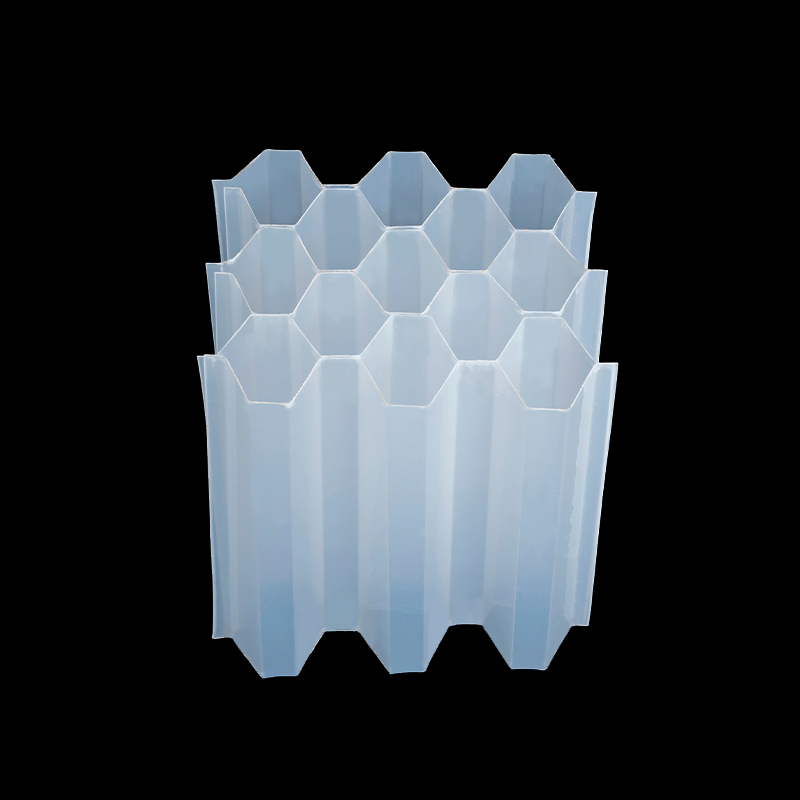
- Product Categories
- Sludge Dewatering Machine
- Roller Filter
- Dissolved Air Flotation Machine(DAF)
- Rotary Mechanical Bar
- Dosing Device
- Aerator
- Biological Packing Material
- Other Wastewater Treatment Equipment
- Contact Us
-
-
[email protected]

[email protected] -
+86-13812201185

-
+86-13812201185

-
No. 20, Saite Road, Gaoyao Village, Gaocheng Town, Yixing City, Wuxi City, Jiangsu Province, China

-



