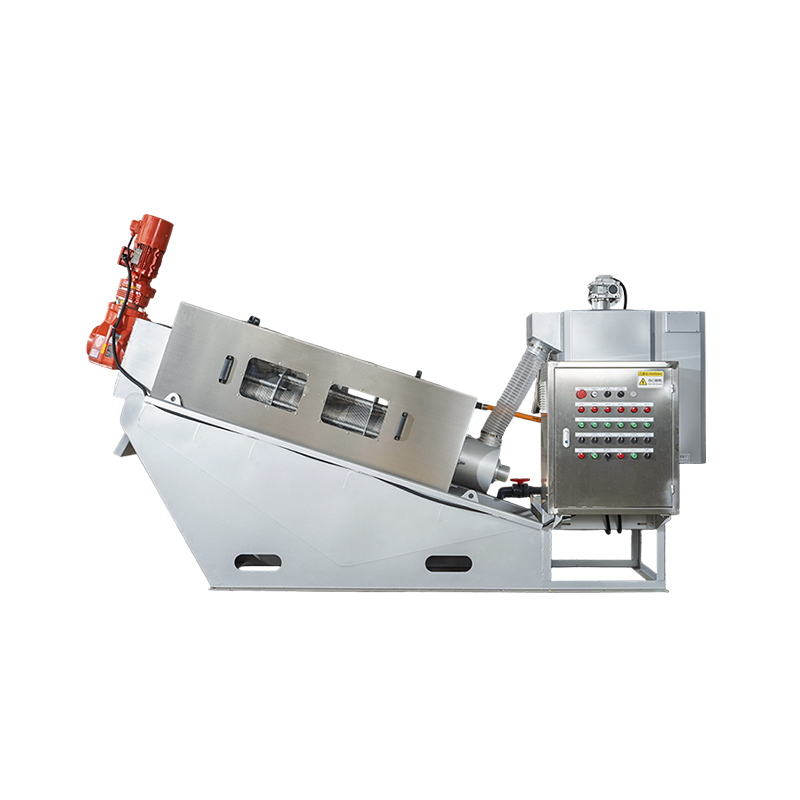
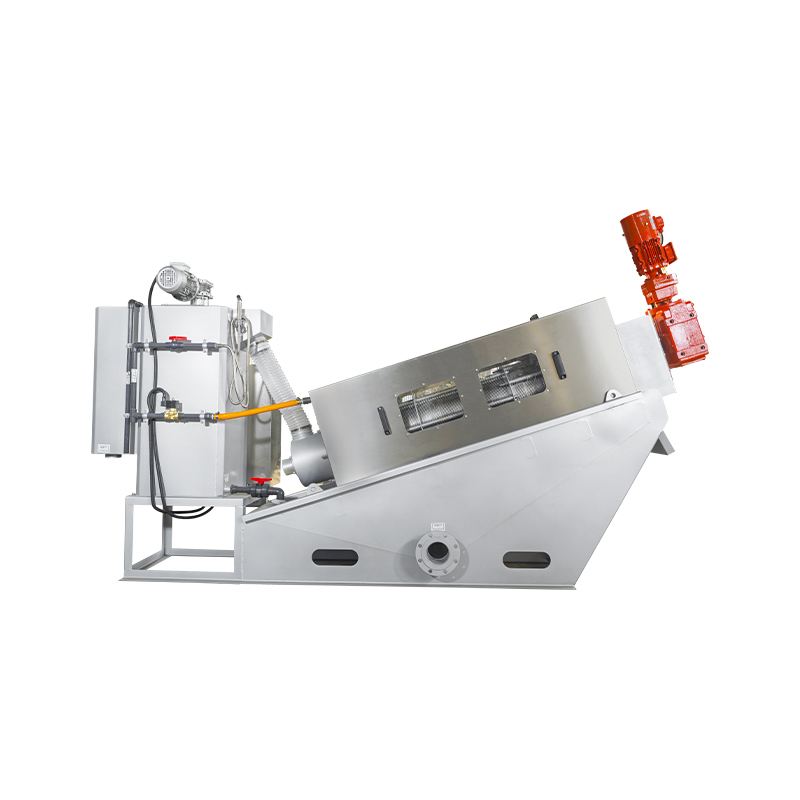
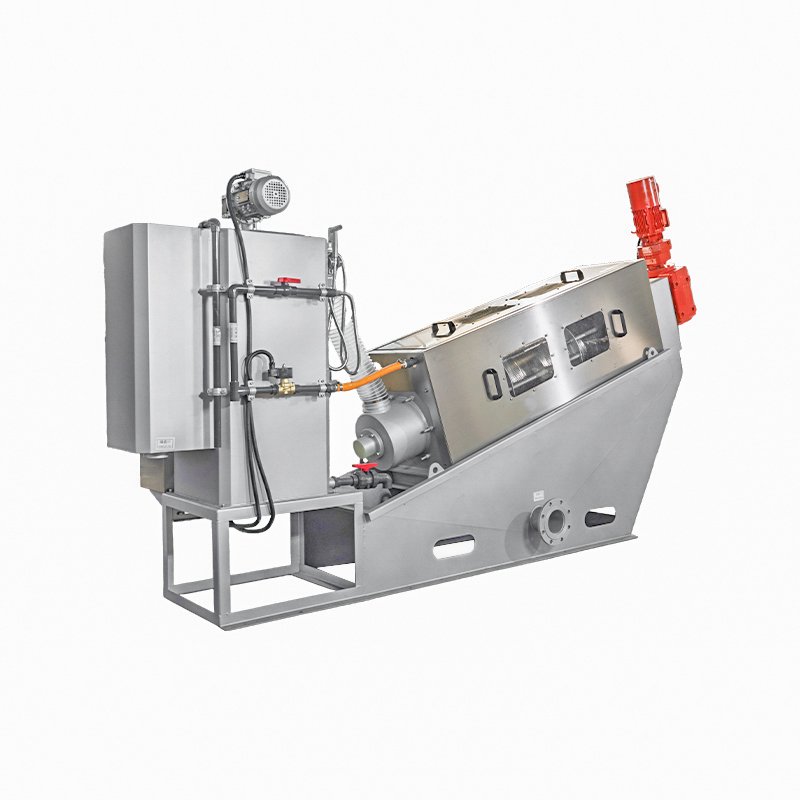
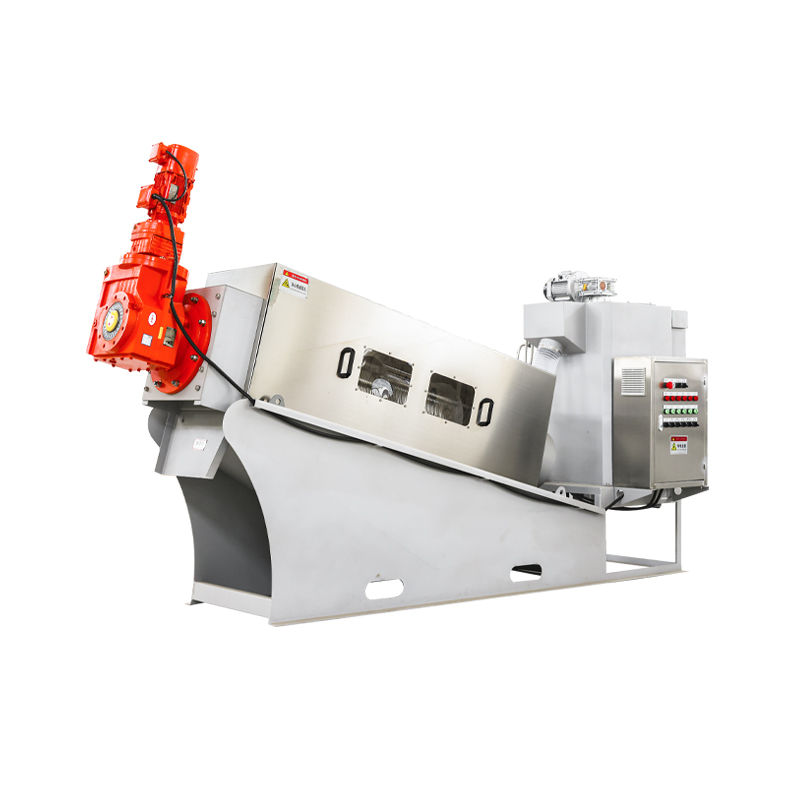
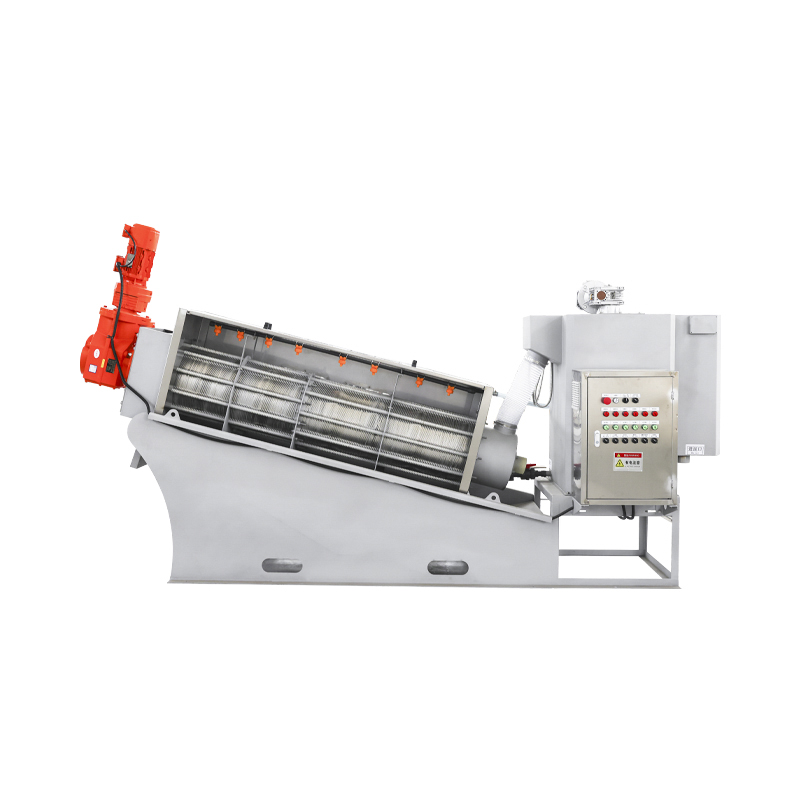
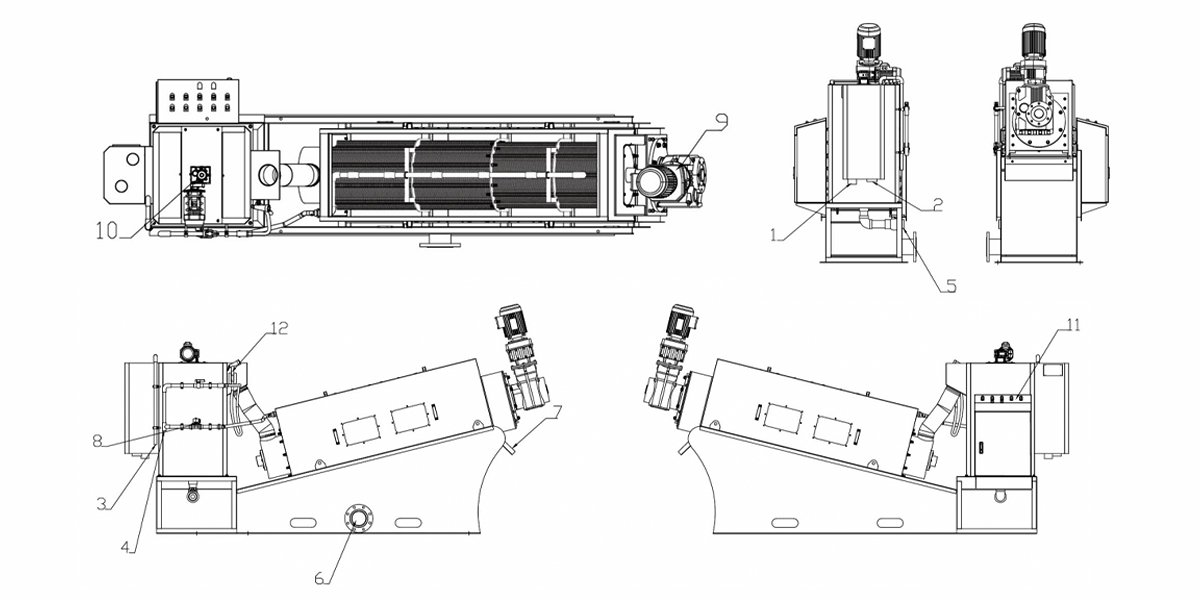
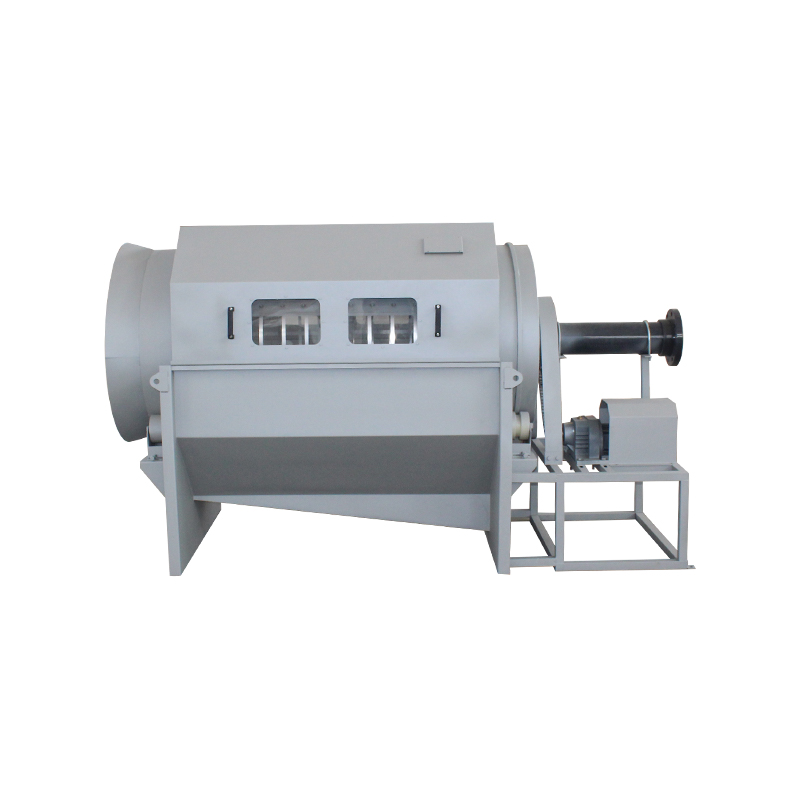
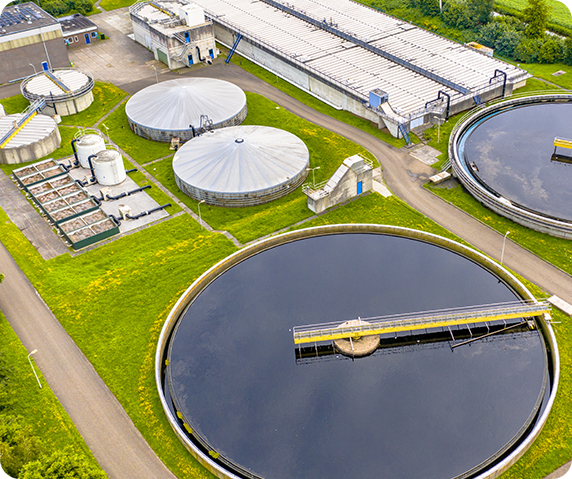
1. Equipped with a proprietary rotary disc pre-concentration device, it excels at treating low-concentration sludge.
This addresses the shortcomings of existing gravity-based concentration methods, achieving efficient concentration of low-concentration sludge. Flocculation and concentration are completed in a single integrated process, reducing pressure on subsequent dewatering stages. Combined with an adjustable expansion valve, the incoming sludge concentration can be optimized for dewatering. Sludge concentration range: 2000 mg/L - 50000 mg/L
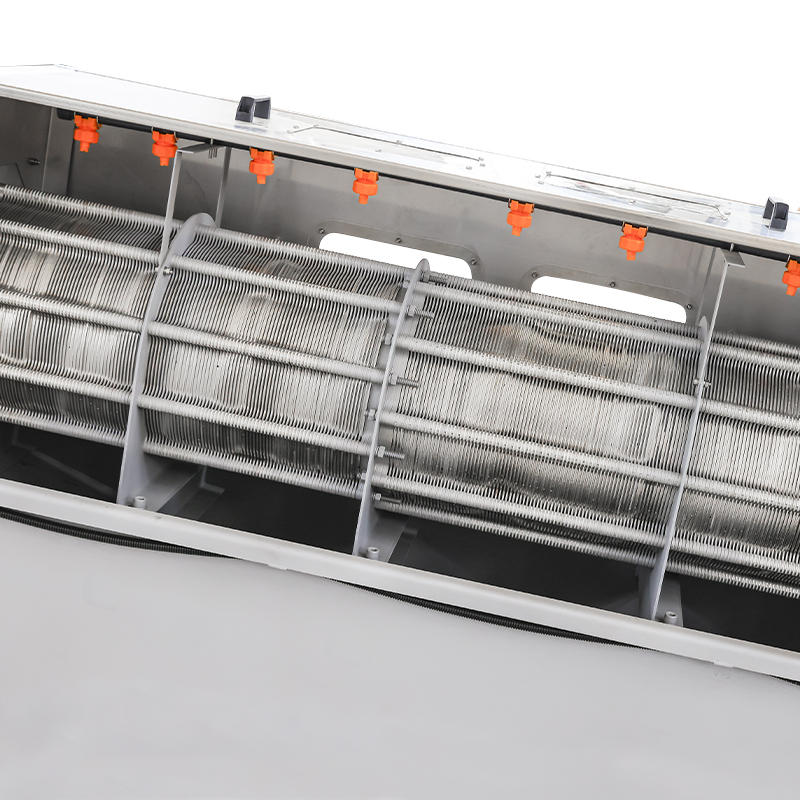
2. Moving and stationary rings replace filter cloths, enabling self-cleaning, clog-free operation, and easy handling of oily sludge.
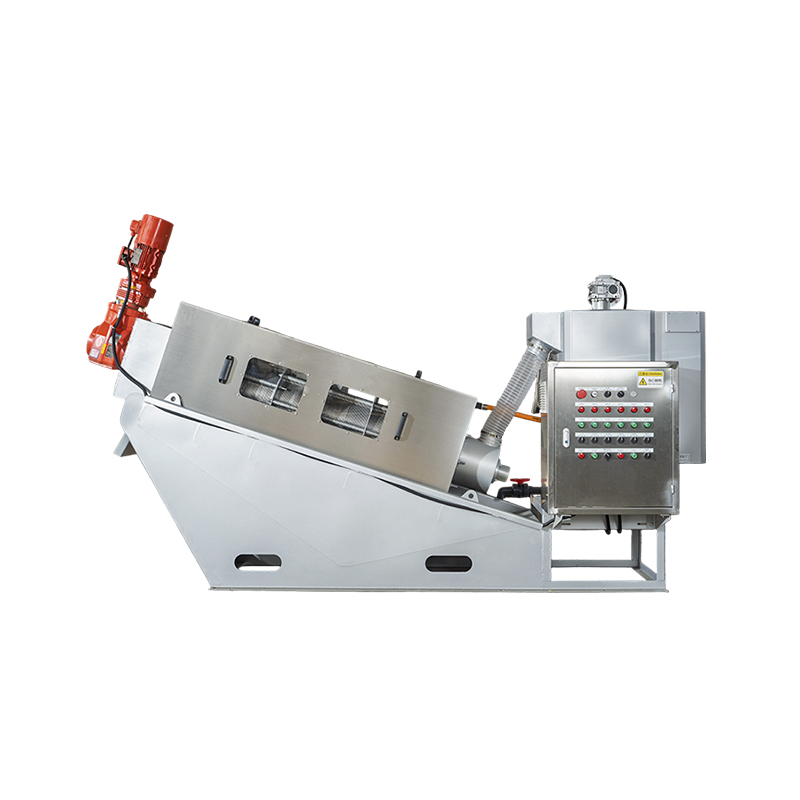
The screw-type sludge dewatering machine employs a continuous self-cleaning process driven by the relative misalignment of moving and fixed plates during screw shaft rotation. This eliminates clogging issues common in traditional dewatering equipment, delivering strong resistance to oil contamination, effortless separation, and zero blockages. Additionally, it requires no external water for high-pressure flushing, ensuring cleanliness, environmental friendliness, odor-free operation, and zero secondary pollution.
3. Low-speed operation, noise-free, low energy consumption—only 1/8th of belt presses and 1/20th of centrifuges
The screw-stack sludge dewatering machine relies on volumetric internal pressure for dewatering, eliminating the need for large components like drums. Operating at a low speed of 2-4 RPM, it conserves water and energy while producing minimal noise. Its average energy consumption is 1/8th that of belt machines and 1/20th that of centrifuges, with a unit power consumption of just 0.01-0.1 kWh/kg-DS, significantly reducing wastewater treatment system operating costs.
4. Reduced Capital Investment and Enhanced Treatment Efficiency
· Directly processes sludge from aeration tanks and secondary sedimentation tanks without requiring sludge thickening or storage tanks, lowering overall capital investment. This also prevents phosphorus release issues common in traditional thickening tanks, improving the wastewater system's phosphorus removal capability.
· Saves construction investment for structures like thickening tanks and equipment investment for mixers, air compressors, and flushing pumps.
· Compact footprint reduces civil engineering investment for the dewatering plant.
5. Fully automated control for simplified operation and management
The screw-type sludge dewatering machine contains no filter cloths, filter holes, or other components prone to clogging, ensuring simple and safe operation. Based on the customer's operational schedule and integrated with the automatic control system, program settings can be configured to achieve fully automated, unattended operation.


 English
  русский