

 English
  русский
-
0+Over 10 Years of Wastewater Treatment Solutions
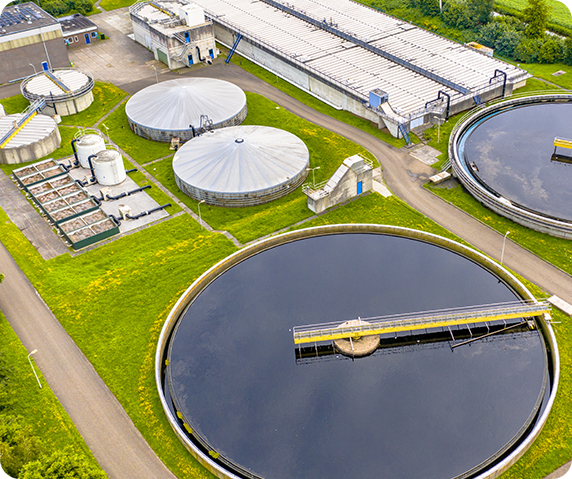


With a strong technical foundation and an ISO-certified quality system, Hengye helps clients across various industries enhance treatment efficiency, reduce operating costs, and meet global environmental standards.
-
Established in 2015

-
Certified Under ISO 9001 Quality Management System
-
Engaged in in-depth Collaborations with Multiple Academic Institutions
-
Professional Environmental Equipment Manufacturing Team
-
 2026-10-21
 -
2026-10-14
-
2026-10-07
-
2026-09-30
-
2026-09-23
Industry Knowledge
Understanding the Full Equipment Chain in Industrial Wastewater Treatment
Effective industrial wastewater treatment is rarely achieved by a single piece of equipment. It requires a sequenced chain of unit processes — each targeting specific pollutant classes — working in coordination to progressively reduce contamination to discharge-compliant levels. The composition of this equipment chain varies significantly between industries, but the underlying logic follows a consistent structure: physical separation precedes chemical treatment, which precedes biological polishing, which precedes final solids management.
For facilities such as chemical plants, leather factories, and paper mills, the treatment train commonly integrates screening and equalization at the inlet, followed by coagulation-flocculation tanks, sedimentation or dissolved air flotation (DAF) units, biological reactors, secondary clarifiers, and sludge dewatering equipment at the tail end. Selecting the right Wastewater Treatment Equipment for each stage — and ensuring compatibility between units in terms of hydraulic capacity, chemical loading, and control integration — is what separates a system that consistently meets discharge standards from one that struggles under real operating conditions. Hengye Technology applies an integrated design philosophy that maps equipment selection to the specific pollutant profile and production schedule of each client facility, rather than defaulting to generic configurations.
Pollutant-Specific Equipment Considerations Across Key Industrial Sectors
Different industrial processes generate wastewater with fundamentally different pollutant fingerprints, and the equipment required to address each profile diverges accordingly. Treating all industrial effluents with a uniform technology approach leads to chronic underperformance and avoidable compliance failures.
- Chemical plant wastewater — typically contains complex organic compounds, heavy metals, and high salinity. Priority equipment includes advanced oxidation systems (Fenton or ozone-based), chelation precipitation units for metal removal, and high-efficiency membrane filtration for desalination where reuse is targeted.
- Leather tannery effluent — characterized by high chromium concentrations, elevated BOD/COD ratios, and strong odor compounds. Chrome recovery and precipitation reactors, anaerobic pre-treatment for high-strength organic loads, and activated carbon polishing are commonly required.
- Printing and packaging wastewater — contains ink pigments, organic solvents, and surfactants that resist conventional biological treatment. Electrocoagulation or enhanced coagulation-flocculation is frequently required upstream of biological units to reduce non-biodegradable COD fractions.
- Plastic processing effluent — dominated by suspended solids, cooling water contaminants, and mold-release agents. Dissolved air flotation combined with biological contact oxidation handles the majority of pollutant load effectively at moderate capital cost.
- Garment and textile wastewater — high color, alkalinity, and surfactant content require coagulation-flocculation optimized for dye removal, often followed by ozonation or UV disinfection to meet color discharge limits.
Matching Industrial Wastewater Treatment Equipment to the specific pollutant matrix of each sector — rather than applying a one-size-fits-all configuration — is the foundational principle behind treatment systems that sustain compliance through production variability and seasonal influent changes.
Hydraulic Loading and Equalization: The Equipment Design Variable Most Often Underestimated
Among the engineering decisions that most directly determine whether a treatment system performs reliably under real operating conditions, equalization basin sizing and hydraulic load management rank among the most consequential — and most frequently underdesigned — elements in industrial treatment facility planning.
Industrial production facilities rarely generate wastewater at a uniform rate. Batch discharge events, shift changeovers, cleaning-in-place (CIP) cycles, and seasonal production peaks create flow and concentration surges that can reach 3–5 times the average daily design load within short timeframes. Downstream treatment equipment — particularly biological reactors and chemical dosing systems — is designed around average conditions and cannot absorb these surges without performance degradation. An adequately sized equalization basin acts as a hydraulic and concentration buffer, attenuating peak loads before they reach sensitive downstream processes.
Design guidelines for industrial equalization generally recommend retention times of 4–12 hours based on average daily flow, with mixing provisions to prevent solids settlement and anaerobic conditions developing in the basin. For high-strength effluents from chemical manufacturing or paper production, longer retention times are often justified by the degree of load variability observed during production audits. Yixing Hengye Environmental Protection Technology incorporates equalization analysis as a standard step in treatment system design, using production schedule data to right-size this critical upstream component rather than applying generic volume rules of thumb.
Sludge Management Equipment: The Back-End Process That Determines Total System Cost
Sludge handling and dewatering equipment is frequently treated as an afterthought in industrial treatment system design, yet it consistently accounts for 30–50% of total lifecycle operating costs and represents the primary compliance risk if underspecified. Every unit process in the treatment train generates sludge — chemical precipitation produces metal hydroxide sludge, biological treatment generates waste activated sludge, and physical separation processes concentrate suspended solids — and the volume, moisture content, and disposal pathway of this material must be engineered as carefully as the liquid treatment stages.
Key sludge management equipment categories relevant to industrial treatment facilities include:
- Gravity thickeners — reduce sludge volume ahead of mechanical dewatering by increasing solids concentration from 0.5–1% to 3–6%, significantly reducing dewatering equipment sizing and polymer consumption.
- Belt filter presses — widely used for biological sludge dewatering in mid-to-large industrial plants; produce cake solids of 18–25% dry solids content at relatively low energy consumption.
- Plate and frame filter presses — preferred for chemical sludges containing heavy metals or where higher cake dryness (up to 35–45% DS) is required to minimize hazardous waste disposal volumes and associated transport costs.
- Centrifuges — offer compact footprint and automated operation suited to space-constrained facilities, with cake dryness typically between belt press and filter press performance levels depending on sludge type.
The choice between these technologies depends on sludge characteristics, available footprint, disposal route economics, and labor availability — all of which vary substantially between the chemical, leather, textile, and paper sectors that form the core of industrial wastewater treatment practice.
- Product Categories
- Sludge Dewatering Machine
- Roller Filter
- Dissolved Air Flotation Machine(DAF)
- Rotary Mechanical Bar
- Dosing Device
- Aerator
- Biological Packing Material
- Other Wastewater Treatment Equipment
- Contact Us
-
-
[email protected]

-
+86-13812201185

-
+86-13812201185

-
No. 20, Saite Road, Gaoyao Village, Gaocheng Town, Yixing City, Wuxi City, Jiangsu Province, China

-



