

 English
  русский
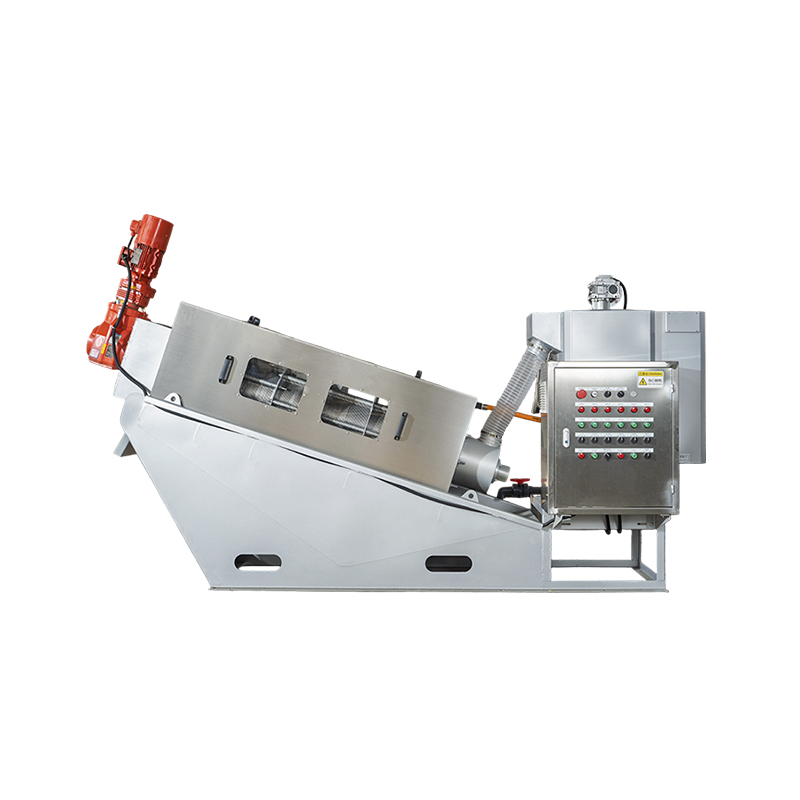
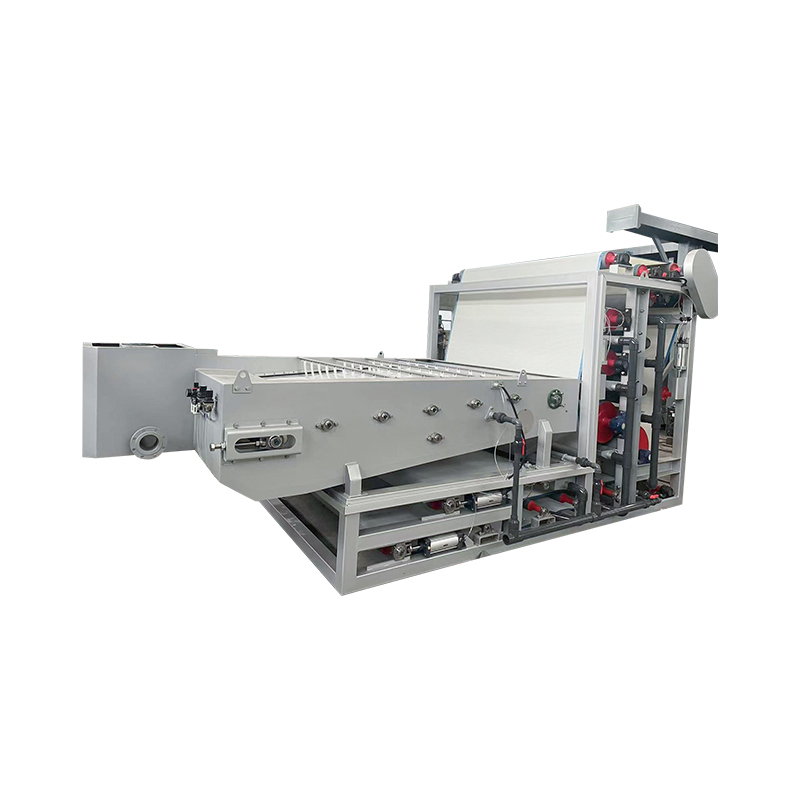
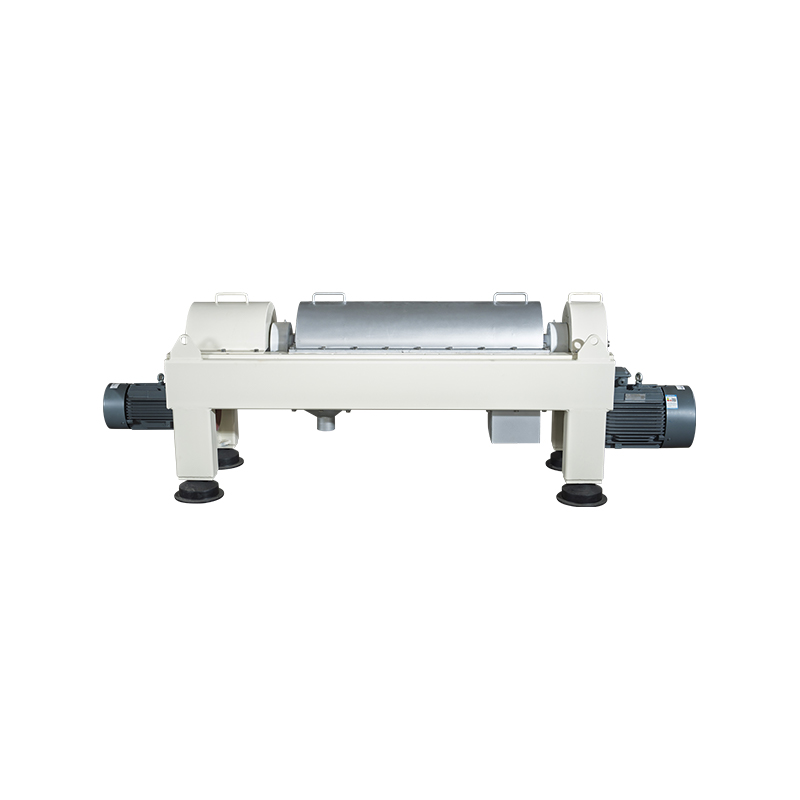
Product Introduction: Sludge dewatering machines are continuously operating sludge treatment equipment. They are popular due to their low sludge moisture content, stable operation, low energy consumption, relatively simple control and management, and convenient maintenance. Because sludge remains in a liquid state and has a large volume after concentration or digestion, it cannot be transported or disposed of. To further reduce the moisture content and make the sludge as low as possible, it is necessary to dewater it to reduce its volume and facilitate transportation.
Working principle
1. Screw press sludge dewatering machine: The filter body is formed by stacked fixed rings and moving rings, with a screw shaft running through them. Through gravity concentration and the internal pressure created by the back pressure plate during the sludge's propulsion, thorough dewatering is achieved. The filtrate is discharged from the filter gaps formed by the fixed and moving rings, and the sludge cake is discharged from the end of the dewatering section.
2. Belt sludge dewatering machine: The sludge layer is sandwiched between two taut filter belts and passes through a series of regularly arranged rollers in an S-shape. The tension of the filter belts themselves creates a squeezing and shearing force on the sludge layer, squeezing out the capillary water in the sludge layer, thereby achieving sludge dewatering.
3. Centrifugal sludge dewatering machine: Composed of a rotating drum and a screw conveyor with a hollow shaft. Sludge is fed into the drum through the hollow shaft, and under the centrifugal force generated by high-speed rotation, the sludge is thrown into the drum cavity. Due to the difference in specific gravity, solid-liquid separation occurs. Driven by the screw conveyor, the sludge is transported to the conical end of the drum and continuously discharged from the outlet; the liquid in the liquid ring layer continuously overflows from the weir and is discharged outside the drum by gravity.
4. Plate and frame sludge dewatering machine: It consists of filter plates and filter frames arranged alternately to form a closed filtration chamber. The sludge is pumped in by a high-pressure pump and squeezed by the filter frames through the hydraulic system of the equipment, so that the water in the sludge is discharged through the filter cloth, thus achieving the purpose of dewatering. The squeezed filter cake can be removed by vibration or knocking.
Main function
1. Reduce moisture: Sludge dewatering machines can effectively remove moisture from sludge, thereby reducing the volume and weight of sludge, making it easier to transport and process.
2. Improved processing efficiency: By reducing the moisture content of sludge, sludge dewatering machines improve the efficiency of sludge treatment and reduce the cost of subsequent treatment.
3. With a wide range of applications, this equipment is widely used in various industries such as sewage treatment plants, paper mills, metallurgical plants, and slaughterhouses.
4. Sludge dewatering machines have advantages such as low energy consumption, relatively simple control and management, and convenient maintenance.
These features make sludge dewatering machines play a vital role in wastewater treatment and industrial production.
-
0+Over 10 Years of Wastewater Treatment Solutions
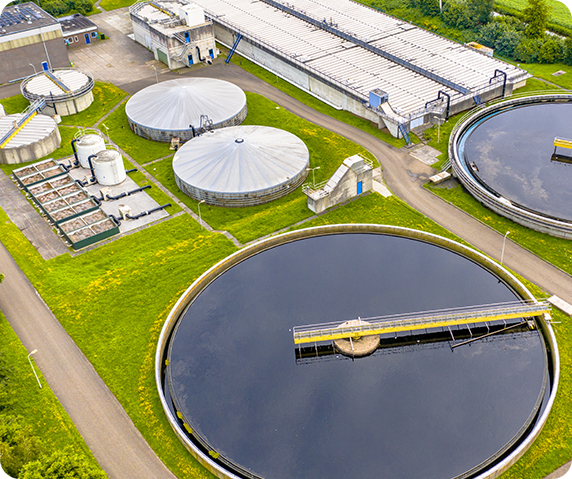


With a strong technical foundation and an ISO-certified quality system, Hengye helps clients across various industries enhance treatment efficiency, reduce operating costs, and meet global environmental standards.
-
Established in 2015

-
Certified Under ISO 9001 Quality Management System
-
Engaged in in-depth Collaborations with Multiple Academic Institutions
-
Professional Environmental Equipment Manufacturing Team
-
 2026-10-21
 -
2026-10-14
-
2026-10-07
-
2026-09-30
-
2026-09-23
Industry Knowledge
Understanding Sludge Composition and Its Impact on Dewatering Performance
Sludge generated from industrial wastewater treatment is not a uniform material. Its dewatering behavior is determined by a combination of physical, chemical, and biological properties — including particle size distribution, extracellular polymeric substance (EPS) content, zeta potential, and specific resistance to filtration (SRF). These parameters vary substantially between industries and even between production batches within the same facility.
High EPS content — common in biological treatment sludge from food processing and pharmaceutical effluent — creates a gel-like matrix that resists mechanical compression. In contrast, inorganic-rich sludge from chemical precipitation processes tends to be more compressible but may contain constituents that accelerate equipment wear. Selecting the appropriate sludge dewatering machine requires prior characterization of these properties rather than relying on generic equipment datasheets.
A practical starting point is the capillary suction time (CST) test, which provides a rapid, low-cost indicator of sludge filterability. CST values below 20 seconds generally indicate good dewaterability, while values above 100 seconds signal the need for conditioning optimization before mechanical dewatering can be effective. These upstream decisions have a direct and measurable impact on final cake dryness and polymer consumption.
Sludge Screw Press vs. Other Mechanical Dewatering Technologies
Facilities evaluating dewatering equipment typically compare screw press, belt filter press, centrifuge, and plate-and-frame filter press technologies. Each has a distinct performance envelope, and the optimal choice depends on sludge type, throughput requirements, available footprint, and operational staffing capacity.
| Technology | Typical Cake Moisture | Energy Consumption | Operator Attention Required |
|---|---|---|---|
| Sludge Screw Press | 75–85% | Very Low | Minimal (fully automatic) |
| Belt Filter Press | 75–85% | Low–Medium | Moderate (belt washing required) |
| Decanter Centrifuge | 70–80% | High | Low–Moderate |
| Plate-and-Frame Filter Press | 55–70% | Medium | High (batch operation) |
The sludge screw press stands out for small-to-medium volume applications where continuous unattended operation is a priority. Its low rotational speed (typically 2–5 RPM) generates minimal noise and vibration, making it well suited for facilities located near residential or commercially sensitive areas. The absence of high-speed rotating components also translates to significantly lower maintenance frequency compared to centrifuge-based alternatives.
At Yixing Hengye Environmental Protection Technology Co., Ltd., technology selection recommendations are based on pilot testing data rather than theoretical comparisons alone — ensuring that equipment sizing decisions are grounded in the actual behavior of the client's sludge under real operating conditions.
Polymer Conditioning: The Variable Most Often Underestimated
Mechanical dewatering equipment can only perform as well as the conditioned sludge fed into it. Polymer conditioning — the addition of flocculants to destabilize sludge particles and form filterable flocs — is frequently the single most influential variable in determining cake dryness and filtrate clarity, yet it is routinely under-optimized in practice.
Critical parameters governing polymer performance include:
- Polymer type and charge density — cationic polymers are most effective for negatively charged biological sludge; anionic types suit certain inorganic sludges
- Dosing rate — over-dosing creates sticky, hard-to-discharge cake; under-dosing leaves solids in the filtrate
- Mixing energy and contact time — insufficient mixing prevents full polymer activation; excessive shear breaks already-formed flocs
- Dilution water quality — high hardness or chlorine content in dilution water can degrade polymer effectiveness before it contacts the sludge
For industrial wastewater treatment applications — particularly in sectors such as printing, leather, and plastics — sludge composition fluctuates with production cycles. A fixed polymer dosing rate calibrated for average conditions will perform poorly during peak load periods. Dynamic dosing systems that adjust polymer addition in response to real-time flow and turbidity measurements represent current best practice for these variable-load environments. Hengye Technology integrates polymer conditioning system design into its overall dewatering solution packages, ensuring that conditioning performance is matched to the mechanical capacity of each sludge press machine.
Sludge Volume Reduction: Quantifying the Economic Case
Effective sludge dewatering delivers directly measurable cost reductions across multiple cost centers. Before dewatering, thickened sludge from biological treatment typically contains 95–98% water by mass. Reducing moisture content from 97% to 80% — a common outcome with screw press dewatering — achieves a volume reduction of approximately 85%, with proportional reductions in transportation, disposal, and landfill fees.
For a facility generating 50 cubic meters of thickened sludge per day, this reduction translates to roughly 42 fewer cubic meters requiring off-site disposal daily — a figure that directly impacts haulage contract costs and tipping fees, both of which continue to rise as landfill capacity in China's industrial zones becomes increasingly constrained.
Beyond disposal savings, drier sludge cake with moisture below 80% opens access to incineration with heat recovery or co-processing in cement kilns — pathways that can convert a disposal liability into a partial cost offset. Facilities planning for long-term sludge management strategy should evaluate dewatering performance targets not only against current disposal costs, but against projected regulatory tightening and gate fee escalation over a 10-year horizon.
- Product Categories
- Sludge Dewatering Machine
- Roller Filter
- Dissolved Air Flotation Machine(DAF)
- Rotary Mechanical Bar
- Dosing Device
- Aerator
- Biological Packing Material
- Other Wastewater Treatment Equipment
- Contact Us
-
-
[email protected]

-
+86-13812201185

-
+86-13812201185

-
No. 20, Saite Road, Gaoyao Village, Gaocheng Town, Yixing City, Wuxi City, Jiangsu Province, China

-



