

 English
  русский
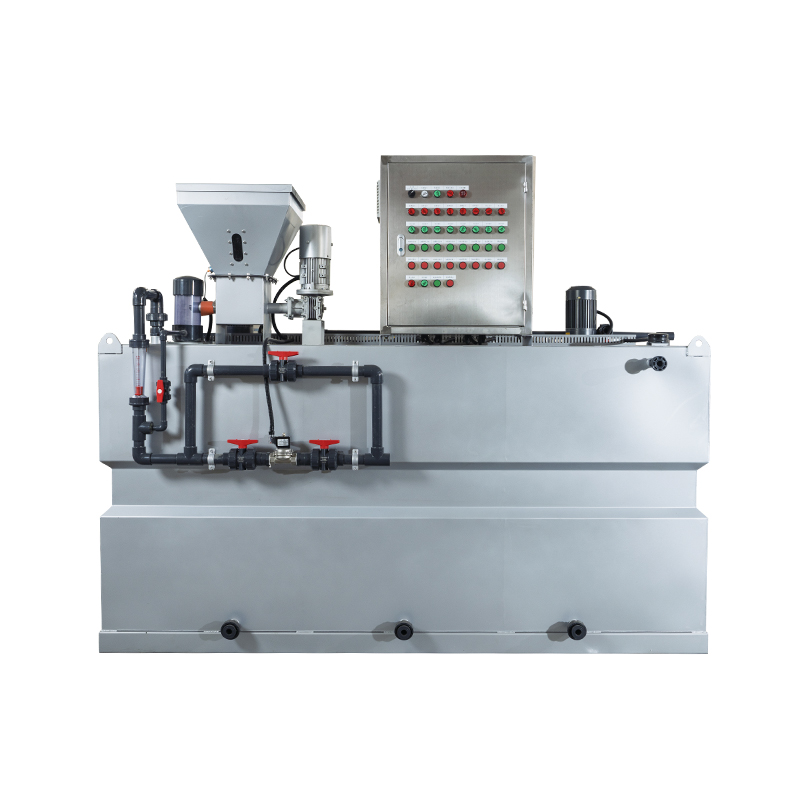
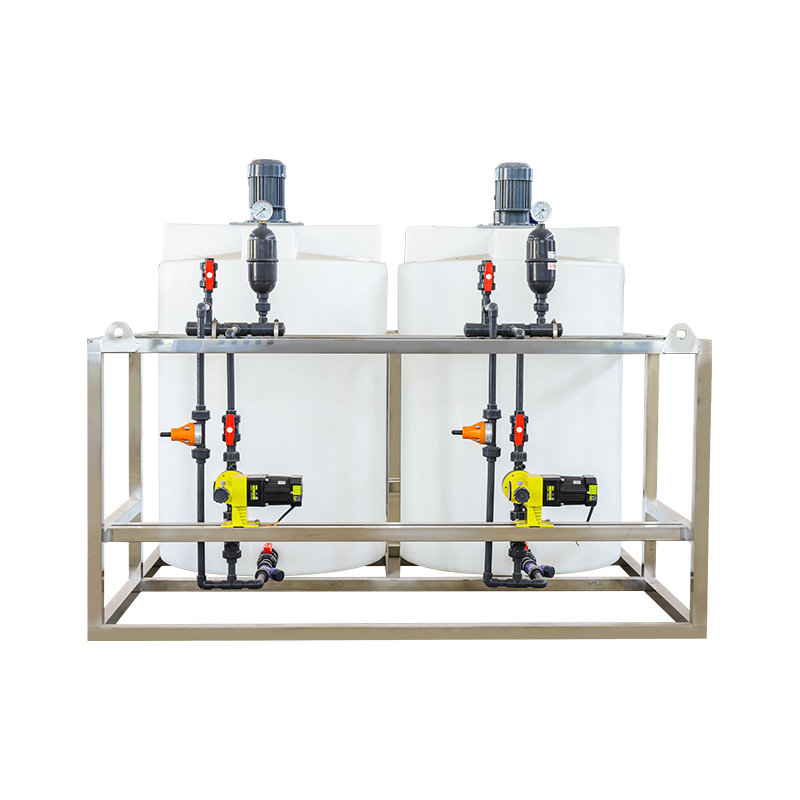
A chemical dosing system is a complete set of equipment integrating chemical dosing, mixing, liquid transportation, and automatic control. It is mainly used in wastewater treatment, waterworks, circulating water systems, swimming pools, and chemical industries to achieve functions such as coagulation, flocculation, pH adjustment, disinfection, scale inhibition, and phosphorus removal. It is also widely used in various industrial fields such as petroleum and healthcare.
Its core components include a solution tank, mixer, metering pump, control system, piping, and various valves and instruments. Based on the form of the chemical, it can be divided into liquid dosing devices, dry powder dosing devices, and solid (lump) chemical dissolution devices. The equipment features a compact structure, convenient operation, and high metering accuracy.
-
0+Over 10 Years of Wastewater Treatment Solutions


With a strong technical foundation and an ISO-certified quality system, Hengye helps clients across various industries enhance treatment efficiency, reduce operating costs, and meet global environmental standards.
-
Established in 2015

-
Certified Under ISO 9001 Quality Management System
-
Engaged in in-depth Collaborations with Multiple Academic Institutions
-
Professional Environmental Equipment Manufacturing Team
-
 2026-09-09
 -
2026-09-03
-
2026-09-03
-
2026-09-02
-
2026-08-26
Industry Knowledge
How Automatic Dosing Devices Improve Chemical Control Accuracy in Industrial Wastewater Treatment
In industrial wastewater treatment, the precision of chemical addition directly determines whether effluent meets discharge standards. Overfeeding coagulants, disinfectants, or pH-adjusting agents not only wastes reagent costs but can introduce secondary contamination — while underfeeding results in treatment failure and regulatory violations. An Automatic Dosing Device eliminates this guesswork by continuously monitoring real-time process parameters such as flow rate, pH, turbidity, or residual chlorine and adjusting chemical feed rates accordingly.
Modern dosing controllers use PID (Proportional-Integral-Derivative) control algorithms to make rapid, precise corrections as influent characteristics fluctuate — a common challenge in chemical plant and leather factory effluents where loading varies significantly between production shifts. Compared to manual dosing, automated systems routinely achieve reagent savings of 15–30% while maintaining tighter control over treated water quality. Hengye Technology integrates these control strategies into complete dosing packages designed for the demanding chemical compositions found across chemical, printing, paper, and plastics sectors.
Key Components That Define a Reliable Automatic Dosing System
An Automatic Dosing System is not a single piece of equipment but an integrated assembly of precision components, each contributing to the system's overall reliability and chemical handling capacity. Understanding what these subsystems do helps facility engineers make better-informed procurement and maintenance decisions.
- Metering pumps — diaphragm or peristaltic designs handle corrosive reagents (acids, alkalis, oxidizers) with leak-free precision, typically rated in the range of 0.1–2,000 L/h depending on system scale.
- Chemical storage and mixing tanks — manufactured from chemical-resistant polyethylene or FRP, sized to match dosing cycles and operator replenishment schedules.
- Inline sensors and analyzers — pH probes, ORP sensors, and flow meters feed live data into the controller for closed-loop adjustment.
- PLC/control cabinet — programs dosing logic, stores historical data, enables remote monitoring via SCADA or HMI interfaces, and triggers alarms for low-level or pump failure conditions.
- Safety features — leakage detection trays, anti-siphon valves, and pressure relief mechanisms to protect operators and infrastructure from chemical exposure.
The interplay between these components determines how well the system adapts to variable loads — a critical capability for garment factories and paper mills where production volumes shift seasonally or batch by batch.
Comparing Dosing System Configurations: Which Setup Fits Your Treatment Process?
Facilities choose between different automatic dosing configurations based on wastewater volume, chemical complexity, and the degree of automation their operations require. The table below outlines the most common setups encountered in industrial treatment applications:
| Configuration | Suitable Scale | Control Mode | Typical Application |
|---|---|---|---|
| Single-chemical skid | Small–medium | Flow-proportional or timer | pH correction, disinfection |
| Multi-chemical integrated system | Medium–large | PLC + closed-loop sensor feedback | Coagulation + neutralization + disinfection |
| Containerized modular unit | Any, plug-and-play | Pre-programmed PLC + HMI | Rapid deployment, temporary or remote sites |
| SCADA-integrated system | Large industrial | Remote monitoring + adaptive control | Chemical plants, paper mills with central control rooms |
For facilities treating complex mixed effluents — such as those from plastic processing or printing operations — multi-chemical integrated systems with sensor-driven closed-loop control generally deliver the most consistent compliance outcomes, particularly where influent composition varies significantly across the production day.
Maintenance Best Practices That Extend Dosing Equipment Service Life
Even the most advanced automatic dosing equipment requires structured maintenance to sustain accuracy and avoid unplanned downtime. Corrosive reagents, scale-forming mineral deposits, and diaphragm wear are the most common causes of performance degradation — all of which are preventable with proactive servicing protocols.
- Weekly sensor calibration — pH and ORP probes drift over time; regular two-point calibration ensures control accuracy remains within ±0.1 pH units.
- Monthly pump diaphragm inspection — check for cracking, swelling, or chemical attack, especially in systems handling strong acids or oxidizing agents.
- Quarterly valve and fitting checks — anti-siphon valves and injection quills are common failure points in high-pressure dosing loops; replacing worn components prevents bypass and overdosing.
- Tank cleaning cycles — polymer preparation tanks in coagulation systems should be flushed and inspected regularly to prevent biofilm accumulation and sediment buildup that alters solution concentration.
- Alarm and interlock testing — verify that low-level alarms, pump failure alerts, and emergency shutoffs activate correctly under simulated fault conditions at least twice yearly.
Yixing Hengye Environmental Protection Technology provides post-installation technical support and on-site service to help clients across chemical, leather, and garment sectors maintain their dosing systems at peak performance — reducing the risk of compliance exceedances and extending equipment operating life well beyond standard design benchmarks.
- Product Categories
- Sludge Dewatering Machine
- Roller Filter
- Dissolved Air Flotation Machine(DAF)
- Rotary Mechanical Bar
- Dosing Device
- Aerator
- Biological Packing Material
- Other Wastewater Treatment Equipment
- Contact Us
-
-
[email protected]

-
+86-13812201185

-
+86-13812201185

-
No. 20, Saite Road, Gaoyao Village, Gaocheng Town, Yixing City, Wuxi City, Jiangsu Province, China

-



