

 English
  русский
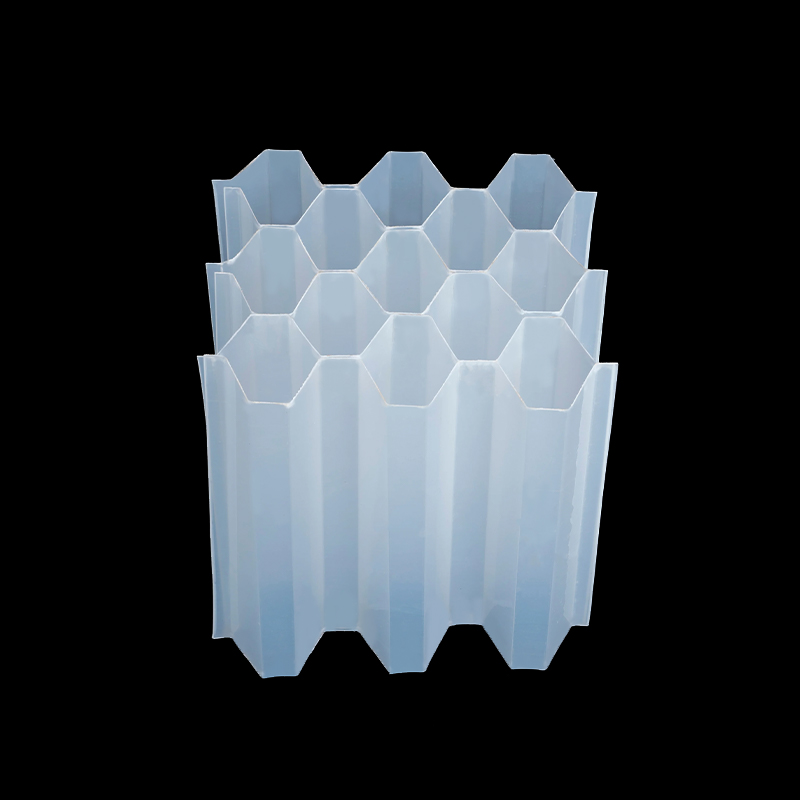
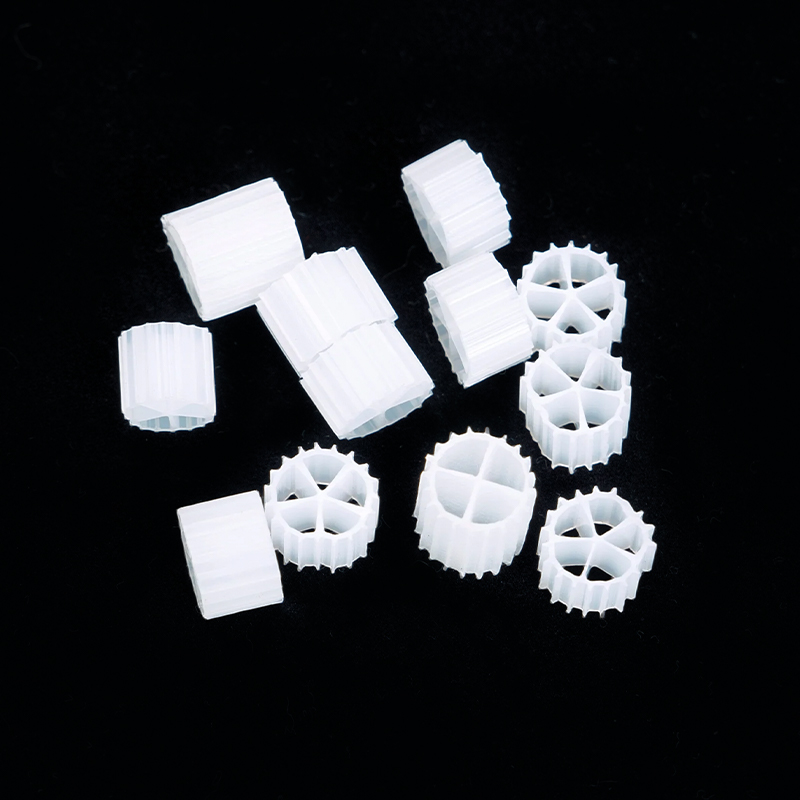
Biological packing materials are widely used biochemical treatment materials in water treatment, primarily serving as carriers for microbial attachment and growth. Their main functions include increasing sludge concentration in biological systems, reducing sludge load, and promoting the effective degradation of organic matter. Biological packing materials also possess excellent physicochemical properties, such as large specific surface area, high porosity, and good hydrophilicity. These characteristics provide a favorable environment for microbial growth, further enhancing their wastewater treatment capabilities.
Types and characteristics of biological packing materials
1. Diverse types: Common biological packing materials include honeycomb inclined tube packing, synthetic fiber balls, fiber bundles, and biological ropes. In addition, there are soft fiber packing, semi-soft packing, combined fiber packing, elastic three-dimensional packing, suspended packing, and fiber ball packing.
2. Structural Design: These packing materials typically have a large specific surface area and high porosity to ensure that microorganisms can attach and grow rapidly. For example, MBBR (Aerobic Biological Fluidized Bed) packing materials use a three-dimensional hollow structure, suspended in water, where anaerobic bacteria can grow inside for denitrification , while aerobic bacteria grow on the outside to remove organic matter.
3. Material characteristics: Biological fillers are mostly made of corrosion-resistant, lightweight, and high-strength materials, such as polyurethane foam and polymer materials . These materials not only have good mechanical properties and chemical stability, but also have enhanced hydrophilicity and biological activity through special process modification.
Functional advantages:
1. Hydrophilicity and lipophilicity: Some biological fillers have good hydrophilicity and lipophilicity, which helps to store oxygen and improve the adhesion of microorganisms.
2. Strong load resistance: For example, MBBR packing exhibits strong load resistance and high processing efficiency during operation.
3. High-efficiency denitrification: Some packing materials can grow anaerobic bacteria inside, producing denitrification, thereby achieving the denitrification effect.
Features
1. Specific surface area and porosity: A larger specific surface area and higher porosity are conducive to the attachment and growth of microorganisms.
2. Material characteristics: Corrosion-resistant, lightweight, and high-strength materials are preferred, while also possessing good hydrophilicity and biological activity.
3. Economic efficiency and environmental friendliness: An ideal biological packing material should have low operating costs and a small footprint, while meeting national environmental protection standards.
Biological packing materials play a vital role in wastewater treatment, and their diverse types and superior performance make them an indispensable part of modern environmental protection technology.
-
0+Over 10 Years of Wastewater Treatment Solutions


With a strong technical foundation and an ISO-certified quality system, Hengye helps clients across various industries enhance treatment efficiency, reduce operating costs, and meet global environmental standards.
-
Established in 2015

-
Certified Under ISO 9001 Quality Management System
-
Engaged in in-depth Collaborations with Multiple Academic Institutions
-
Professional Environmental Equipment Manufacturing Team
-
 2026-09-09
 -
2026-09-03
-
2026-09-03
-
2026-09-02
-
2026-08-26
Industry Knowledge
How Specific Surface Area and Void Ratio Define Biological Packing Material Performance
The two structural parameters that most directly govern how well a Biological Packing Material supports biofilm development are specific surface area and void ratio. Specific surface area — measured in m²/m³ — determines the total colonizable surface available to aerobic and anaerobic microorganisms within a given reactor volume. Void ratio, expressed as a percentage of open space within the packed bed, controls hydraulic resistance, prevents clogging, and ensures adequate oxygen and nutrient distribution throughout the biofilm zone.
High-performance packing materials used in moving bed biofilm reactors (MBBR) and biological contact oxidation systems typically offer specific surface areas ranging from 150 to 1,200 m²/m³, depending on geometry and material structure. Void ratios are generally maintained above 90% in suspended carrier media to allow unrestricted movement through aeration-driven circulation. In fixed packing configurations — such as those used in trickling filters or submerged biofilm reactors — void ratios above 95% are standard to prevent channeling and maintain uniform liquid distribution. These parameters must be evaluated together rather than independently, since maximizing surface area at the expense of void ratio frequently leads to hydraulic short-circuiting and premature clogging in high-suspended-solids industrial effluents.
Material Composition and Its Impact on Biofilm Attachment and Chemical Resistance
The base polymer or material from which biological packing is manufactured has a direct bearing on both biofilm adhesion characteristics and resistance to the chemical environment within the reactor. Most modern packing media are produced from high-density polyethylene (HDPE), polypropylene (PP), or polyvinyl chloride (PVC) — each offering distinct trade-offs in surface wettability, mechanical durability, and chemical compatibility.
- HDPE carriers — widely used in MBBR systems due to their near-neutral buoyancy, impact resistance, and excellent resistance to acids, alkalis, and oxidizing agents common in chemical plant and printing industry effluents.
- Polypropylene packing — preferred for fixed bed and trickling filter applications; offers high temperature tolerance (up to 100°C continuous) and good resistance to organic solvents present in plastic plant wastewater streams.
- PVC-based structured packing — commonly used in crossflow media for biological filters treating municipal and light industrial effluents; lower cost but more brittle at low temperatures and less resistant to concentrated acids.
- Surface-modified carriers — some manufacturers apply hydrophilic coatings or introduce surface roughness during molding to improve initial biofilm attachment speed, reducing the colonization startup period from several weeks to as few as 7–10 days under favorable conditions.
Hengye Technology evaluates material compatibility against client-specific influent chemistry before recommending packing specifications — a step that prevents premature material degradation in aggressive industrial environments such as leather tannery and garment factory wastewater treatment systems.
Comparing Fixed vs. Suspended Packing Configurations in Biofilm Reactor Design
The decision between fixed and suspended biological packing configurations fundamentally shapes reactor hydraulics, biofilm thickness control, and maintenance requirements. Both approaches have well-established applications across industrial wastewater treatment, but their suitability diverges significantly based on influent characteristics and treatment objectives.
| Parameter | Fixed Packing (Submerged / Trickling) | Suspended Carriers (MBBR / IFAS) |
|---|---|---|
| Biofilm control | Passive — backwash or air scour required | Self-regulating via carrier-to-carrier abrasion |
| Clogging risk | Moderate to high in high-SS effluents | Low — open flow path maintained |
| Retrofit suitability | Requires basin modification | High — can be added to existing aeration tanks |
| Biomass concentration | High within bed — risk of anaerobic zones | Moderate — well-distributed, aerobic throughout |
| Ideal application | Relatively stable, lower-SS effluents | Variable-load, high-SS industrial wastewater |
For industrial facilities with fluctuating production schedules — such as paper mills and chemical plants where hydraulic and organic loading varies significantly between shifts — suspended carrier systems generally offer superior operational resilience due to their inherent load-buffering capacity and lower clogging risk.
Startup, Acclimatization, and Long-Term Maintenance of Biofilm Media
Successful biofilm establishment on Biological Packing Material requires careful management during the reactor startup phase — a period that determines how quickly the system reaches stable treatment performance and how resilient the established biofilm community will be to subsequent loading shocks.
Startup typically proceeds through three identifiable stages. During the attachment phase (days 1–7), pioneer microbial species colonize packing surfaces; maintaining low hydraulic loading and avoiding disinfectant carryover from upstream processes is critical during this window. The growth phase (days 7–21) sees rapid biomass accumulation as the biofilm community diversifies; gradual increases in organic loading — targeting no more than a 10–15% daily increase in BOD volumetric load — prevent overgrowth and sloughing events that can carry biomass into downstream clarification. By the maturation phase (day 21 onward), biofilm thickness stabilizes and treatment efficiency reaches design targets.
Long-term maintenance priorities include periodic inspection for media attrition or cracking in fixed packing systems, monitoring fill fraction in MBBR applications to confirm carriers remain within the design operating window (typically 30–67% fill), and preventing toxic shock events from upstream process chemical spills — a particular risk in chemical manufacturing and printing industry treatment systems. Yixing Hengye Environmental Protection Technology supports clients through both the startup commissioning period and long-term operational optimization, ensuring biofilm systems deliver consistent compliance performance across the full range of industrial wastewater applications they serve.
- Product Categories
- Sludge Dewatering Machine
- Roller Filter
- Dissolved Air Flotation Machine(DAF)
- Rotary Mechanical Bar
- Dosing Device
- Aerator
- Biological Packing Material
- Other Wastewater Treatment Equipment
- Contact Us
-
-
[email protected]

-
+86-13812201185

-
+86-13812201185

-
No. 20, Saite Road, Gaoyao Village, Gaocheng Town, Yixing City, Wuxi City, Jiangsu Province, China

-



