

 English
 русский

BOD in Wastewater: Typical Values, Removal Stages and Equipment Choices
The BOD5 bottle goes into the incubator on Monday morning, and the number that decides whether last Wednesday's discharge passed the permit will not exist until Friday. That five-day lag is why BOD in wastewater deserves attention long before results arrive: every blower, tank and press downstream is sized against this one figure. When process engineers talk about BOD, they are talking about how much edible organic matter sits in the water, and that food demand drives oxygen supply, reactor volume and sludge production - the three largest cost lines in any treatment plant.
Misread the number and everything scales wrong: oxygen supply, tankage, excess sludge, even polymer dosing on the dewatering press. The sections below move from reading the figure to removing it, stage by stage, with the equipment decisions attached to each step.
Content
- 1 What Typical BOD Values in Wastewater Reveal Before You Buy Anything
- 2 Particulate BOD First: Separation Equipment That Protects the Biology
- 3 Biological Treatment: The Only Proven Way to Cut Soluble BOD in Wastewater
- 4 The Five-Day Blind Spot: Operating While BOD5 Results Lag
- 5 A Buyer's Checklist for BOD Removal Equipment
- 6 Frequently Asked Questions About BOD in Wastewater
What Typical BOD Values in Wastewater Reveal Before You Buy Anything
Typical BOD5 concentrations vary by roughly a factor of ten across industries, and that spread - not catalogue claims - should drive your equipment shortlist. Domestic sewage sits near the low end; tannery effluent can arrive ten times stronger and needs equalization plus staged treatment before biology can survive it.
| Industry | Typical BOD5 range | What it means for design |
| Domestic sewage (reference) | 150-300 mg/L | Baseline for sizing municipal processes |
| Textile, printing and dyeing | 300-800 mg/L | Dyes and auxiliaries usually call for coagulation ahead of biology |
| Pulp and paper | 300-1,000 mg/L | Fiber load favors screening and flotation before aeration |
| Chemical processing | 200-1,000 mg/L | Check toxicity and the BOD:COD ratio before biological design |
| Tannery and leather | 1,000-2,500 mg/L | Sulfide and chromium constraints demand strong equalization |
Particulate BOD First: Separation Equipment That Protects the Biology
Around a third of the BOD in most industrial effluent is physically removable: it rides on fibers, fats and suspended solids that screening, flotation or settling can capture within minutes, at a fraction of the energy cost of biological treatment.
Particulate BOD
- Bound to TSS, fibers, oils and grease
- Removed by bar screens, DAF and sedimentation
- Captured in minutes with low energy input
- Leaves the water as raw sludge for dewatering
Soluble BOD
- Dissolved organics pass straight through screens
- Only biological oxidation removes it
- Demands hours of contact plus aeration power
- Sets the volume of the biological reactor
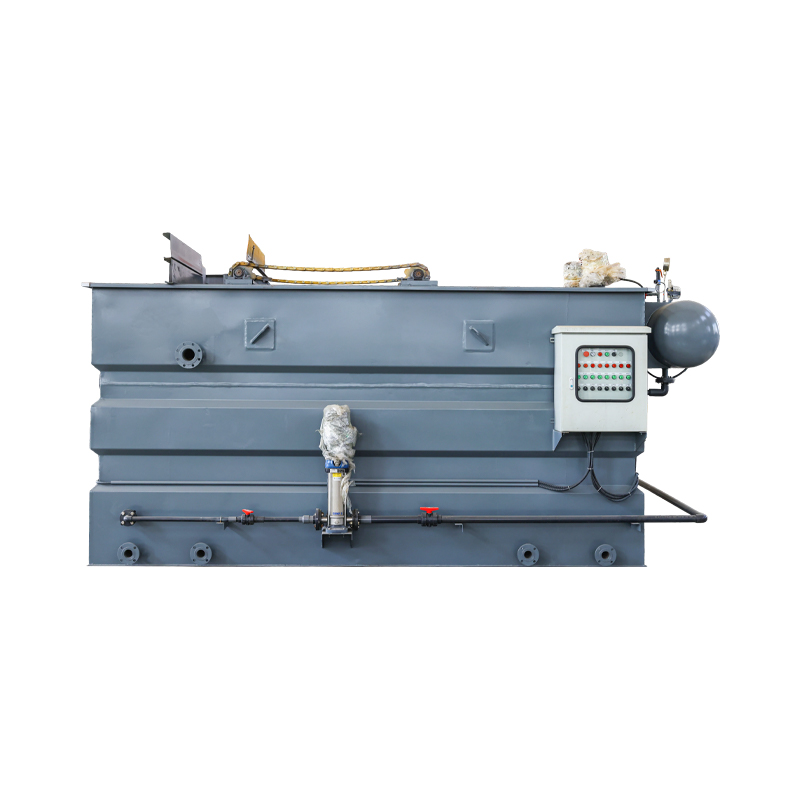
Where the load rides on oils and fine solids - leather, paper, chemical and food effluent - a dissolved air flotation machine is usually the fastest lever: microbubbles attach to flocs and float them out in minutes, commonly cutting incoming BOD by 40 to 60 percent when particulates dominate. The settings that decide whether a DAF unit actually delivers - recirculation ratio, saturation pressure and flocculation time - are broken down in this dissolved air flotation (DAF) system design guide.
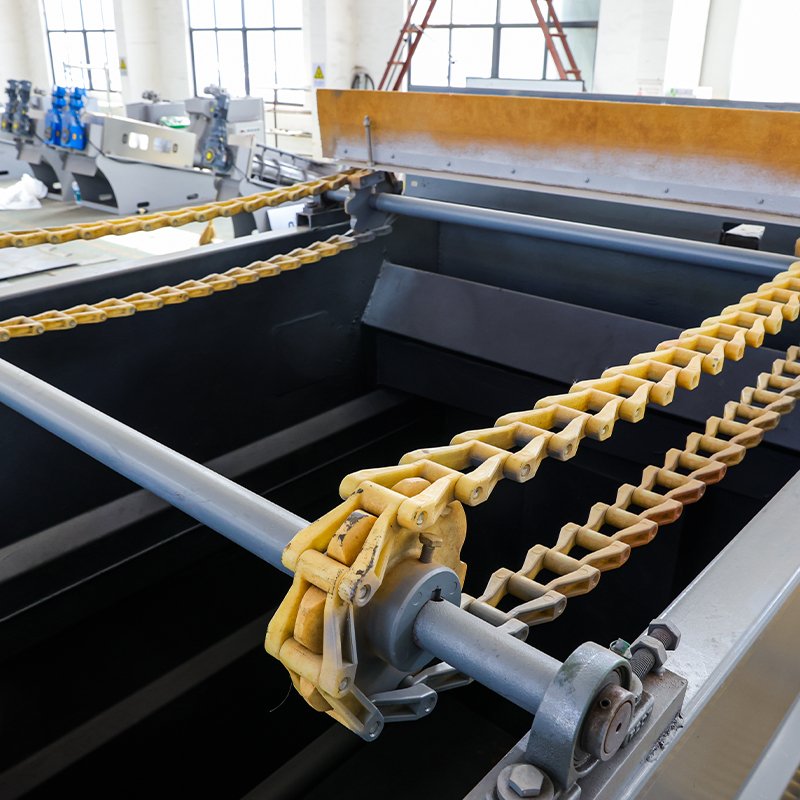 Dissolved Air Flotation Machine for Oily and Solids-Laden EffluentIntegrates flotation tank, dosing, and dissolved air systems into one automated unit. Suited to leather, paper, chemical, and food wastewater where microbubbles float flocs out quickly, cutting particulate BOD before biological treatment.View Product →
Every kilogram settled or floated here is a kilogram the biological stage never has to breathe - and never charges you for on the power bill.
Biological Treatment: The Only Proven Way to Cut Soluble BOD in Wastewater
Soluble BOD leaves water in exactly one way: microorganisms consume it, and you pay for the oxygen they breathe. Everything else in biological design - tank volume, media, return rates - exists to keep that reaction fast and stable.
The arithmetic scales quickly. A stream of 1,000 cubic meters per day at 800 mg/L carries 800 kg of BOD daily, which demands roughly 900 kg of oxygen. Fine-bubble diffusers transfer around 4 to 5 kg of O2 per kWh under standard conditions, so aeration alone draws about 200 kWh per day before mixers, pumps and return flows. That is why oxygen transfer efficiency, not unit price, should rank first when comparing diffuser aerators.
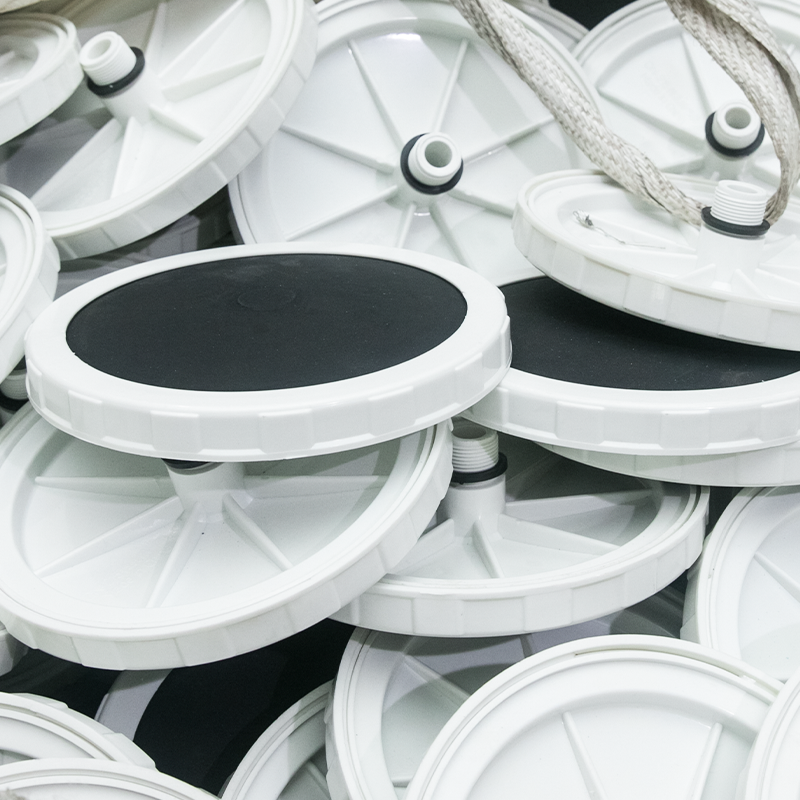 Microporous Disc Aerator for High-Efficiency Aeration TanksDiaphragm-type diffuser producing fine, evenly distributed bubbles with strong oxygen transfer and clog resistance. A practical way to curb the aeration energy that dominates operating costs in biological stages of municipal and industrial plants.View Product →
Attached growth: more active biomass per cubic meter
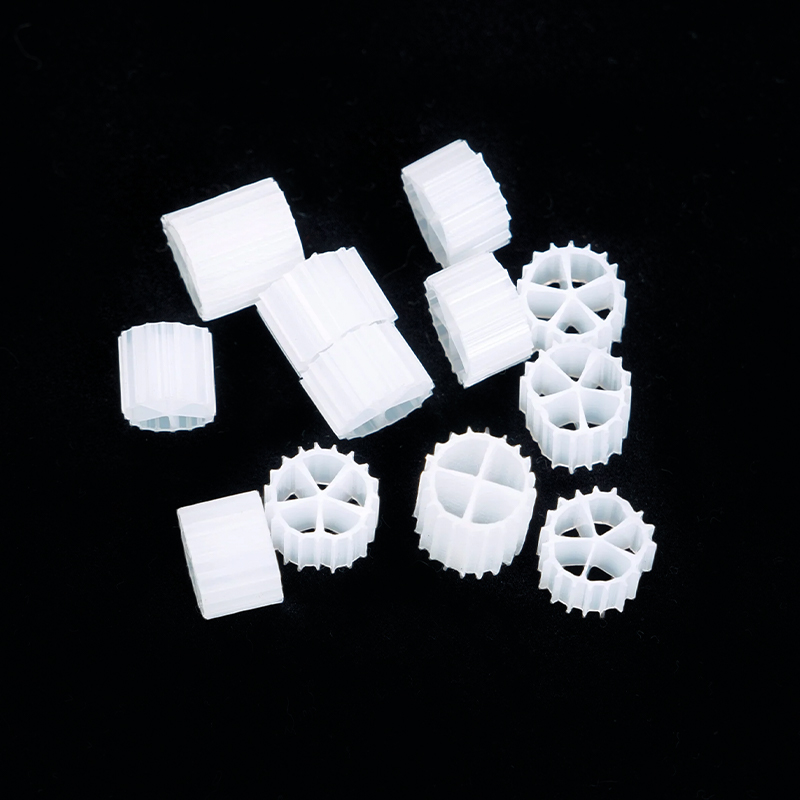
Where loads swing with production shifts, carriers such as MBBR packing give free-swimming biomass a fixed home. Biofilm grows on protected plastic elements, raising active biomass per tank volume and absorbing shock loads that would wash out a conventional activated-sludge system. Retrofits favor it too, because media can often upgrade an existing tank without new construction.
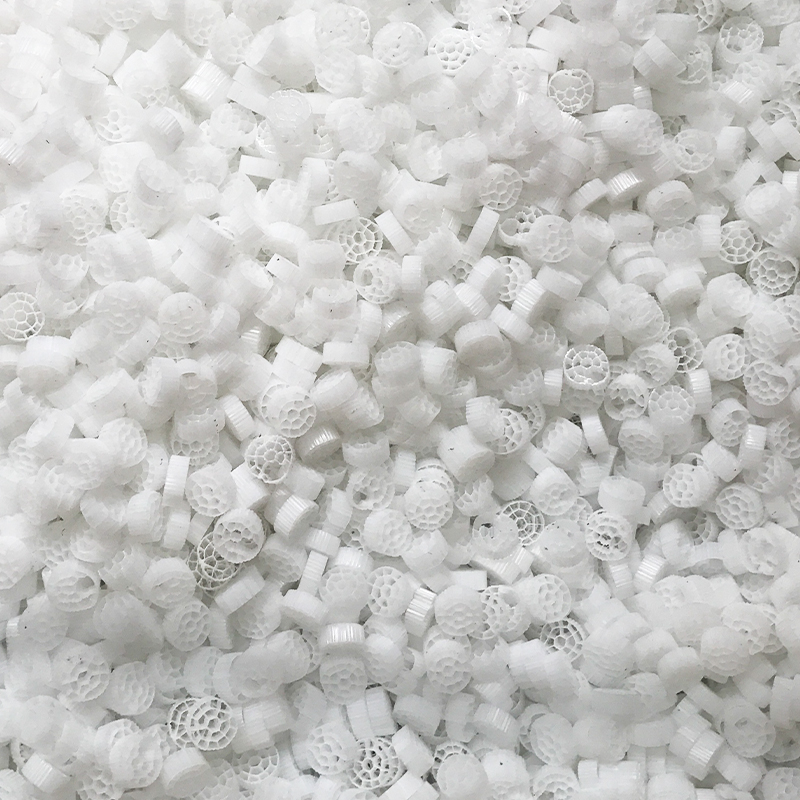 MBBR Biofilm Carrier Media for Shock-Load ResilienceSuspended plastic carriers with large surface area give free-swimming biomass a protected home, raising active biomass per tank volume. Often retrofitted into existing tanks, they help stabilize performance when production shifts swing the load.View Product →
Cumulative BOD5 reduction by treatment stage
Typical midpoints from published municipal and industrial performance data; verify each stage against composite samples from your own plant.
The Five-Day Blind Spot: Operating While BOD5 Results Lag
Because the standard test incubates for five days, BOD5 works as an audit, not a dashboard. Plants that retune aeration on Friday's number are always reacting to last week's wastewater, so the daily control loop needs faster signals.
- Track the BOD:COD ratio monthly. For readily biodegradable industrial effluent it commonly sits between 0.4 and 0.6, and a slide below 0.3 flags inhibition or a refractory spill.
- Log dissolved oxygen and MLSS at the same hours every day; stable readings with a rising load usually mean the influent changed, not the biology.
- Sample during peak production windows rather than Monday mornings, or the composite will understate the load your equipment must actually handle.
A Buyer's Checklist for BOD Removal Equipment
Buy against your peak day, not your annual average, and buy for the fraction of BOD you actually need to remove. Overspecifying is the most expensive habit in this category, and five checks keep the specification honest.
- Composite-sample a full production week. Peak-day BOD, not the monthly mean, is what sizes blowers, tanks and media volume.
- Split the load. Measure BOD alongside COD, TSS and FOG so particulate-heavy streams route to DAF or clarification and soluble-heavy streams to biology.
- Size oxygen for the worst week. If ammonia limits apply, nitrification demand can add half again to the oxygen budget.
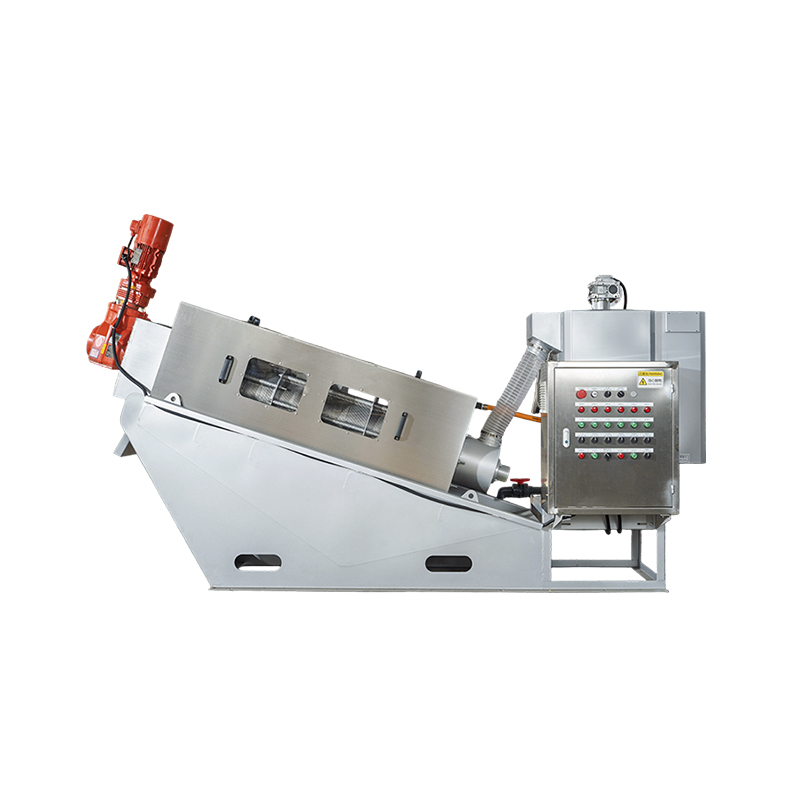
- Close the sludge loop. Every kilogram of removed BOD becomes sludge, and a dewatering press that cannot keep up pushes solids straight back into the train.
- Audit the supplier's delivery chain. Yixing Hengye Environmental Protection Technology Co., Ltd., for example, spans rotary bar screens, DAF units, aeration and MBBR media through screw presses, backed by ISO 9001, environmental and occupational health and safety management certifications - one accountable vendor across the whole train.
For a stage-by-stage view of how these units chain together, this sewage treatment solutions and wastewater treatment equipment guide maps each piece of equipment to its position in the train.
Frequently Asked Questions About BOD in Wastewater
What BOD removal efficiency should a treatment plant target?
A well-run activated-sludge or MBBR train removes 90 to 95 percent of incoming BOD5, bringing typical municipal influent of 200-300 mg/L down to the 10-30 mg/L band that most discharge permits demand.
How is BOD different from COD?
BOD measures the oxygen microorganisms consume over five days and reflects biodegradable matter only; COD uses a chemical oxidant and returns within hours, including refractory organics. In biodegradable industrial wastewater the BOD:COD ratio typically falls between 0.4 and 0.6.
How much oxygen does BOD removal actually require?
Plan on 1.0 to 1.1 kg of oxygen per kilogram of BOD removed, then add nitrification demand if ammonia limits apply; in practice many plants consume 1.2 to 1.5 kg per kilogram once peak days and endogenous respiration are included.
Which equipment reduces BOD fastest?
For particulate BOD, DAF and sedimentation work within minutes; soluble BOD needs hours of biological treatment. The five-day BOD5 test is laboratory latency, not a process step, so never confuse reporting delay with treatment speed.
Let's Cooperate with Yixing Hengye Environmental Protection
Contact Us
- Product Categories
- Sludge Dewatering Machine
- Roller Filter
- Dissolved Air Flotation Machine(DAF)
- Rotary Mechanical Bar
- Dosing Device
- Aerator
- Biological Packing Material
- Other Wastewater Treatment Equipment
- Contact Us
-
-
[email protected]

[email protected] -
+86-13812201185

-
+86-13812201185

-
No. 20, Saite Road, Gaoyao Village, Gaocheng Town, Yixing City, Wuxi City, Jiangsu Province, China

-



