

 English
  русский
Screw Press vs. Belt Filter Press: Sludge Dewatering Equipment Guide
Content
- 1 Screw Press vs. Belt Filter Press
- 2 Screw Press Sludge Dewatering Machine
- 3 Sludge Dewatering Machines for Wastewater and Sewage Treatment
- 4 Industrial Sludge Dewatering Equipment Applications
- 5 How to Select Sludge Dewatering Equipment
- 6 Automatic Sludge Dewatering Systems
- 7 Sludge Dewatering Machine Advantages
Screw Press vs. Belt Filter Press
These are the two most widely deployed dewatering technologies, and the right choice depends heavily on volume, footprint, and how much operator attention a facility can dedicate to the machine.
Screw Press
- Small footprint, enclosed design
- Low energy consumption
- Minimal operator supervision
- Slower, continuous low-speed operation
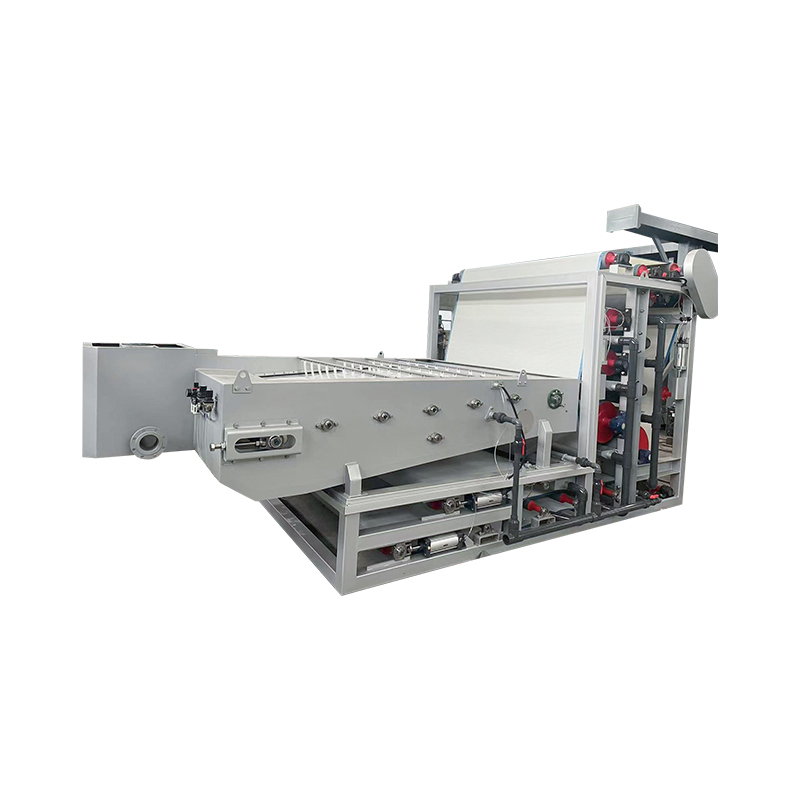
Belt Filter Press
- High throughput capacity
- Well-suited to large municipal plants
- Continuous high-volume operation
- Larger footprint, more moving parts to maintain
Screw Press Sludge Dewatering Machine
A screw press dewaters sludge by rotating a screw shaft inside a gradually narrowing cylindrical screen, compressing the sludge as it advances and squeezing water out through the screen openings. Its design offers several practical advantages that have made it increasingly popular for small-to-mid-size facilities:
Enclosed Operation
Reduces odor release and operator exposure compared to open systems
Low Rotation Speed
Minimal wear on components, longer service intervals
Continuous Feed
Runs unattended for extended periods with automated controls
Modular Sizing
Available in a range of capacities to match smaller treatment flows
Sludge Dewatering Machines for Wastewater and Sewage Treatment
In both municipal wastewater plants and sewage treatment facilities, dewatering equipment sits at the tail end of the treatment process — after biological or chemical treatment has separated solids from the water stream, but before that solid sludge can be economically disposed of or reused. Without dewatering, sludge disposal costs rise sharply, since haulers typically charge by weight or volume, and untreated sludge is mostly water.
This applies equally to municipal sewage plants processing residential wastewater and to industrial facilities treating process water on-site — the equipment principle is the same, though industrial sludge often requires more robust wear-resistant components depending on the chemical composition of the waste stream.
Industrial Sludge Dewatering Equipment Applications
Beyond municipal wastewater treatment, dewatering equipment is used across a wide range of industrial sectors:
Food & Beverage
Processing wastewater, brewery and dairy byproduct sludge
Textile & Dyeing
Dye wastewater sludge, chemical treatment residue
Mining & Metal Processing
Tailings dewatering, metal-bearing process water
Pulp & Paper
Fiber recovery sludge, deinking sludge
How to Select Sludge Dewatering Equipment
Selection is best approached as a sequence of narrowing decisions rather than a single spec comparison:
Measure daily sludge volume and flow variability — this determines whether continuous or batch-style equipment fits better.
Characterize the sludge — organic content, particle size, and abrasiveness all affect which equipment type performs efficiently and how long components last.
Set a target cake dryness based on disposal costs and requirements — higher required dryness generally points toward plate and frame presses or centrifuges.
Assess site constraints — available footprint, staffing levels, and power supply capacity all narrow the realistic equipment shortlist.
Compare total cost of ownership, not just purchase price — factoring in polymer consumption, energy draw, and expected maintenance frequency over the equipment's service life.
Automatic Sludge Dewatering Systems
Automatic dewatering systems integrate the sludge press with automated polymer dosing, feed control, and monitoring instrumentation, allowing the equipment to run with minimal operator intervention. A typical automatic system includes:
- PLC-based control that adjusts feed rate and polymer dosing automatically based on sensor feedback.
- Automatic wash cycles that clean belts, screens, or screw surfaces on a set schedule without manual shutdown.
- Remote monitoring capability, letting operators track performance and receive alerts without being on-site continuously.
These systems are especially valuable for smaller facilities that can't justify a full-time dedicated operator, since automation shifts the labor requirement from continuous monitoring to periodic checks and scheduled maintenance.
Sludge Dewatering Machine Advantages
60–85%
Typical cake dryness achieved
Lower
Disposal and transport costs vs. raw sludge
24/7
Continuous operation capability
Beyond the volume and cost reduction shown above, dewatering equipment also enables more sludge disposal options — dried cake can often be composted, incinerated, or landfilled where wet sludge cannot — and reduces the environmental risk associated with storing large volumes of liquid waste on-site.
Let's Cooperate with Yixing Hengye Environmental Protection
Contact Us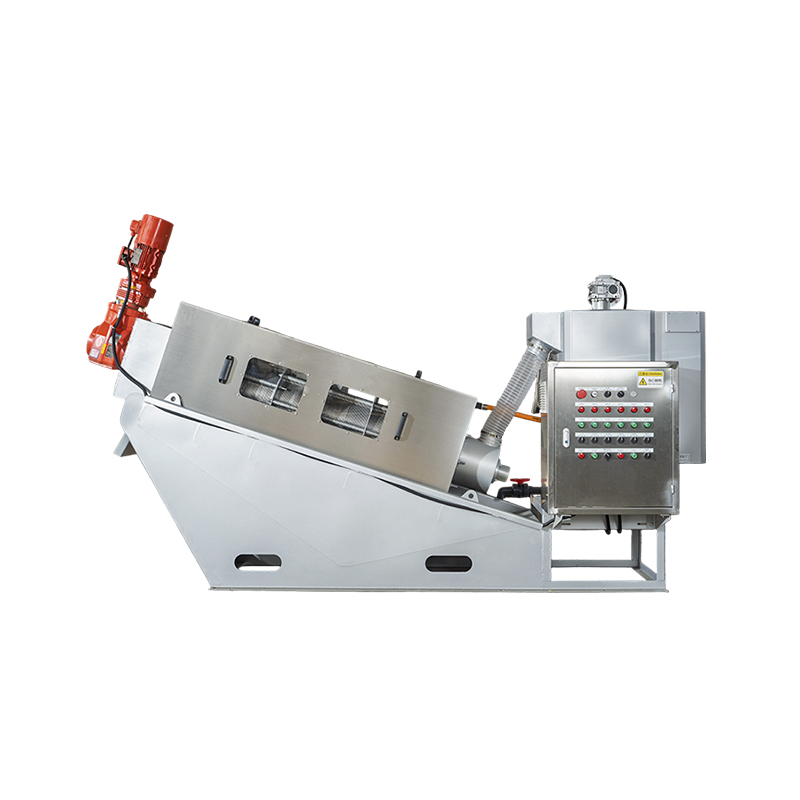
- Product Categories
- Sludge Dewatering Machine
- Roller Filter
- Dissolved Air Flotation Machine(DAF)
- Rotary Mechanical Bar
- Dosing Device
- Aerator
- Biological Packing Material
- Other Wastewater Treatment Equipment
- Contact Us
-
-
[email protected]

[email protected] -
+86-13812201185

-
+86-13812201185

-
No. 20, Saite Road, Gaoyao Village, Gaocheng Town, Yixing City, Wuxi City, Jiangsu Province, China

-



