

 English
  русский
Dewatering Press Machine: How It Works and How to Choose One
Content
- 1 What Is a Dewatering Press Machine?
- 2 Dewatering Press Machine Working Principle
- 3 How Does a Dewatering Press Machine Work? (Step-by-Step Sludge Dewatering Process)
- 4 Types of Sludge Dewatering Equipment
- 5 Factors Affecting Sludge Dewatering Efficiency
- 6 How to Choose a Dewatering Machine
- 7 Sludge Dewatering Equipment Maintenance
What Is a Dewatering Press Machine?
A dewatering press machine — also called a sludge dewatering machine — is industrial equipment that mechanically removes water from wet sludge, reducing its volume and weight before disposal, transport, or further processing. It's used across wastewater treatment plants, food processing facilities, mining operations, and manufacturing sites wherever liquid waste streams generate sludge that's too costly or impractical to handle in its wet state.
Rather than relying on evaporation or gravity settling alone, a dewatering press applies mechanical pressure — through belts, screws, plates, or centrifugal force depending on the equipment type — to physically squeeze water out of the sludge, typically reducing moisture content from around 95–99% down to 60–85%, depending on the sludge type and equipment used.
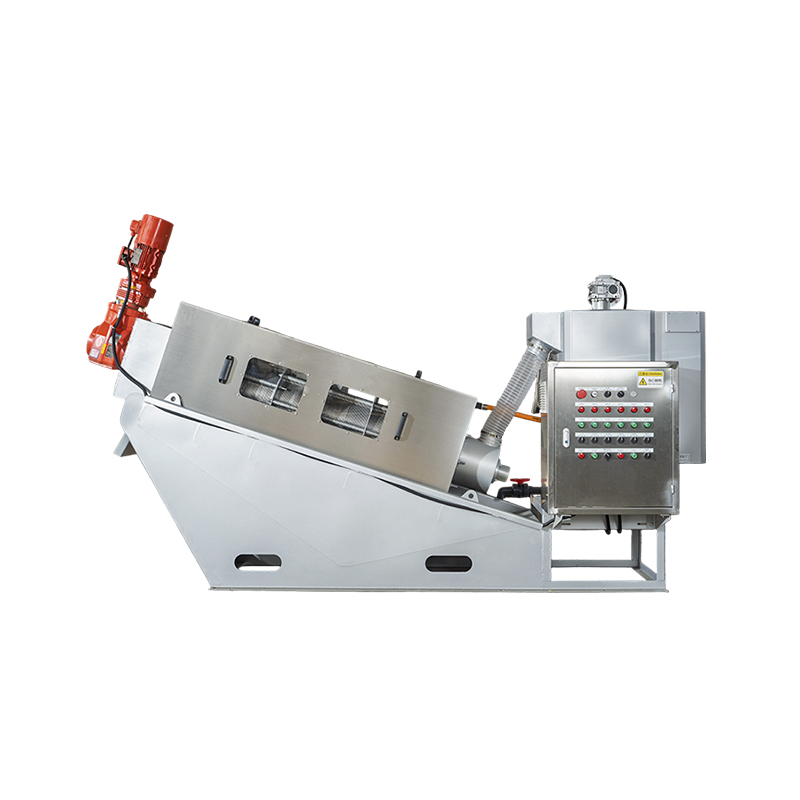
Dewatering Press Machine Working Principle
Despite differences between equipment types, most dewatering presses share a common three-stage working principle:
- Conditioning — sludge is dosed with a flocculant (typically a polymer) that causes fine particles to clump together into larger flocs, making them easier to separate from water.
- Gravity or initial drainage — the conditioned sludge passes through an initial drainage zone (a screen, belt, or drum) where free water drains off under gravity before mechanical pressure is applied.
- Mechanical pressing — the partially drained sludge moves through a pressing zone where increasing pressure — from rollers, screws, plates, or centrifugal force — forces out the remaining bound water, leaving a semi-solid "cake."
The specific mechanism used in the pressing stage is what differentiates the major equipment types, covered below.
How Does a Dewatering Press Machine Work? (Step-by-Step Sludge Dewatering Process)
Walking through a typical belt or screw press cycle from intake to output:
- Sludge intake — raw sludge is pumped from a holding tank into the machine's mixing or conditioning chamber.
- Polymer dosing and flocculation — flocculant is injected and mixed in, causing suspended solids to bind into larger, more easily separated flocs.
- Gravity drainage — the flocculated sludge spreads across a drainage zone, where a large portion of free water separates out immediately under gravity.
- Pressure application — the thickened sludge advances into the pressing section, where increasing mechanical force removes bound water that gravity alone can't extract.
- Cake discharge — the resulting dewatered "cake" (now a stackable, mostly solid material) discharges from the machine for disposal, composting, incineration, or further processing.
- Filtrate return — the separated water (filtrate) is typically routed back into the treatment plant's process water stream.
Types of Sludge Dewatering Equipment
Four equipment types cover the large majority of industrial and municipal dewatering applications:
| Equipment Type | Mechanism | Best Suited For |
|---|---|---|
| Belt filter press | Sludge pressed between two moving belts | Large municipal plants, continuous high-volume operation |
| Screw press | Rotating screw compresses sludge through a narrowing chamber | Compact facilities, low energy use, minimal operator attention |
| Plate and frame filter press | Sludge forced through stacked filter plates under high pressure (batch process) | Highest cake dryness, industrial/chemical sludge |
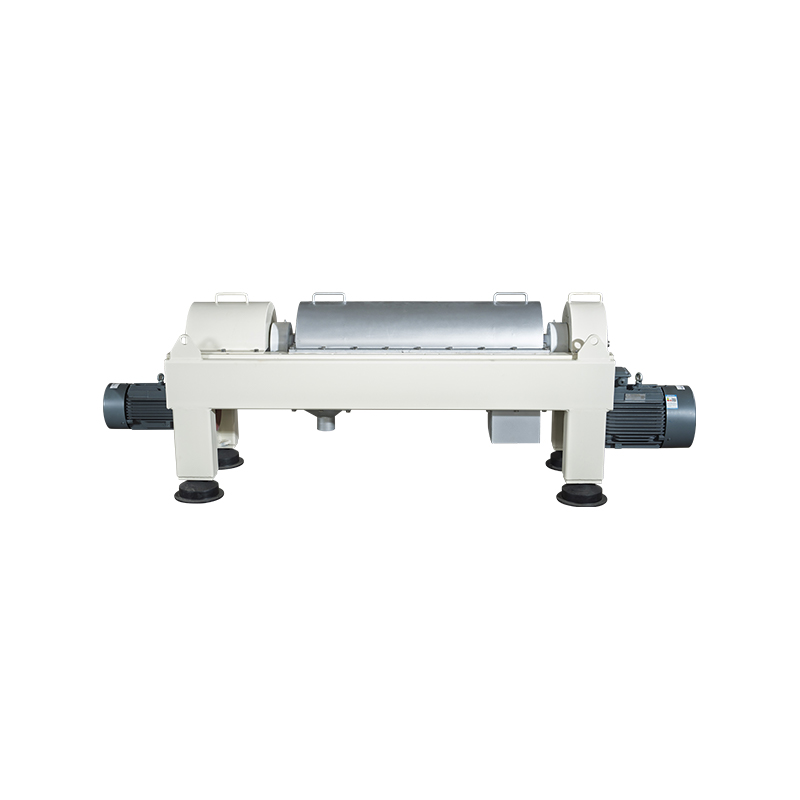
| Centrifuge | High-speed rotation separates solids from liquid by centrifugal force | High-volume continuous operation, compact footprint |
Factors Affecting Sludge Dewatering Efficiency
Cake dryness and throughput can vary significantly between two plants running the same equipment model, largely due to these variables:
- Sludge composition — the ratio of organic to inorganic solids affects how readily particles bind and release water; highly organic sludge (like biological treatment sludge) generally dewaters less easily than inorganic sludge.
- Polymer dosage and type — under-dosing leaves particles too fine to separate efficiently, while over-dosing wastes chemical cost without improving cake dryness further.
- Feed sludge concentration — overly dilute sludge increases processing time and reduces throughput; pre-thickening the sludge before it reaches the press often improves overall efficiency.
- Operating pressure and speed settings — pushing throughput too fast reduces contact time and results in wetter cake, even with correctly dosed polymer.
- Equipment condition — worn belts, screens, or screw components reduce pressing efficiency over time even when process settings remain unchanged.
How to Choose a Dewatering Machine
Selecting the right equipment depends on matching machine type to the site's specific sludge characteristics and operational constraints:
- Sludge volume and flow rate. High-volume continuous flows generally favor belt presses or centrifuges; smaller, intermittent flows suit screw presses well.
- Required cake dryness. If maximum dryness is critical (for disposal cost reduction or landfill requirements), a plate and frame press typically achieves the driest cake, though at higher capital cost and lower throughput.
- Available footprint and operator staffing. Screw presses generally require the smallest footprint and least operator attention; belt presses and centrifuges need more space and closer monitoring.
- Energy and operating cost. Screw presses tend to run at lower power draw than centrifuges, which matters for facilities running continuous 24/7 operation.
- Sludge characteristics. Abrasive or fibrous sludge can accelerate wear on certain equipment types — a supplier familiar with the specific sludge source can usually flag likely wear issues before purchase.
Sludge Dewatering Equipment Maintenance
Routine maintenance has a direct effect on both dewatering efficiency and equipment lifespan. Key maintenance practices include:
- Regular cleaning of belts, screens, or screw surfaces to prevent sludge buildup, which reduces pressing efficiency and can cause uneven wear.
- Inspecting and replacing wear components on schedule — belts, filter cloths, and screw bushings degrade gradually and often show reduced cake dryness before visible damage appears.
- Monitoring bearing and drive lubrication according to the manufacturer's schedule, since dewatering equipment often runs continuously in humid, corrosive environments that accelerate wear.
- Checking polymer dosing pumps and mixing systems periodically, since inconsistent dosing is a common hidden cause of declining performance that's often mistaken for a mechanical fault.
- Tracking cake dryness and throughput over time as an early warning indicator — a gradual decline often signals wear or drift in operating parameters before a breakdown occurs.
Practical tip: Logging daily cake dryness percentages, even informally, makes it much easier to catch gradual equipment wear before it turns into unplanned downtime.
Let's Cooperate with Yixing Hengye Environmental Protection
Contact Us
- Product Categories
- Sludge Dewatering Machine
- Roller Filter
- Dissolved Air Flotation Machine(DAF)
- Rotary Mechanical Bar
- Dosing Device
- Aerator
- Biological Packing Material
- Other Wastewater Treatment Equipment
- Contact Us
-
-
[email protected]

[email protected] -
+86-13812201185

-
+86-13812201185

-
No. 20, Saite Road, Gaoyao Village, Gaocheng Town, Yixing City, Wuxi City, Jiangsu Province, China

-



