

 English
  русский
Poor DAF Performance? Here's What's Really Going Wrong
Content
Why Your DAF System Isn't Performing: The Real Root Causes
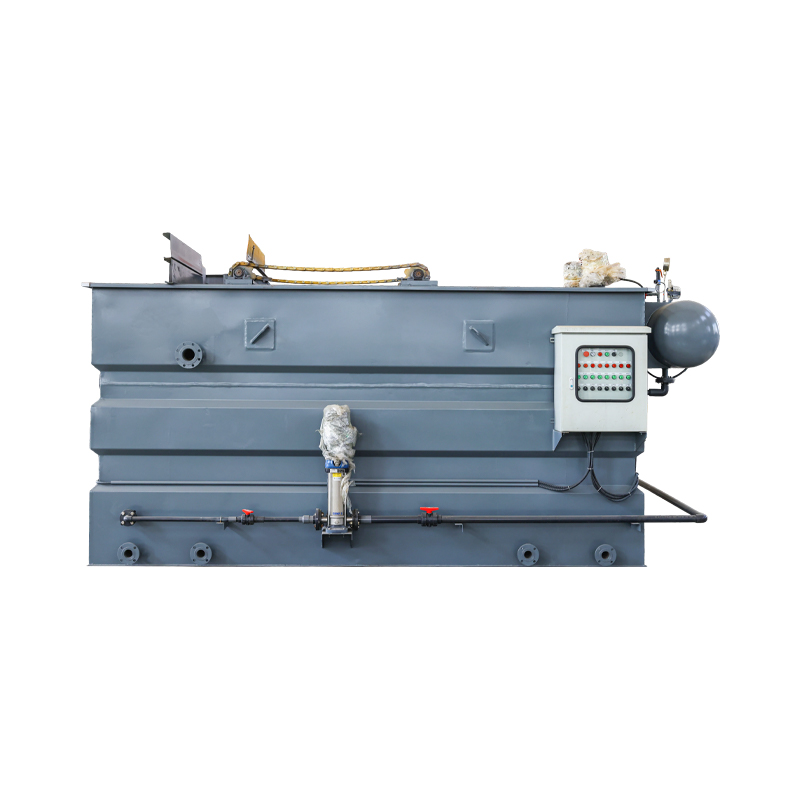
Dissolved air flotation (DAF) is a widely used solid-liquid separation technology that introduces fine microbubbles into wastewater, causing hard-to-settle solids and emulsified oils to attach to the bubble surfaces and rise as a floating scum layer for removal. The process is especially effective for separating fats, oils, fibers, and low-density solids, and is also commonly used to thicken activated sludge and the flocculated sludge produced during chemical coagulation.
When DAF performance underperforms, the root cause almost always traces back to one of three areas: coagulation pretreatment conditions, chemical dosing strategy, or microbubble characteristics. Understanding how each of these factors actually drives separation efficiency is the first step toward diagnosing and correcting poor flotation performance.
How Coagulation Pretreatment Affects DAF Performance
Effective coagulation is the precondition for a well-functioning DAF process. Pretreatment quality can be controlled through three main parameters: floc particle size, mixing intensity, and reaction time.
Floc Particle Size Requirements
DAF and sedimentation processes have similar floc size requirements — both need flocs on the order of hundreds of microns or larger for effective separation. Research shows that adhesion efficiency between microbubbles and floc particles peaks when the two are similarly sized. Since typical DAF microbubble diameters range from 10 to 100 microns, floc particles in the tens-of-microns to roughly 100-micron range are generally sufficient — there's no need to chase oversized flocs.
In fact, oversized flocs work against DAF performance specifically: larger flocs have higher apparent density, which reduces their rise velocity. This makes floc size control arguably more important in DAF than in conventional sedimentation, where larger, denser flocs are typically an advantage rather than a liability.
Mixing Intensity Requirements
Because oversized flocs offer limited value in DAF, mixing intensity (velocity gradient, or G-value) can generally run higher than in sedimentation-focused coagulation — a conclusion supported by multiple studies. Optimal G-value ranges vary by coagulant type: approximately 70 s⁻¹ for ferric chloride, 70–80 s⁻¹ for aluminum salts, and above 30 s⁻¹ for polyaluminum chloride (PAC). Good particle removal is still achievable across a G-value range of 10–50 s⁻¹, and higher energy input effectively reduces the population of fine particles under 50 microns, improving overall flotation performance.
In practice, most facilities split flocculation into two or three stages with progressively decreasing mixing intensity: an initial stage at G = 70–100 s⁻¹ to promote rapid coagulant dispersion and micro-floc formation, followed by later stages reduced to G = 20–50 s⁻¹ to avoid breaking up flocs that have already formed under excessive shear. Operating data from several treatment plants shows that when average flocculation-stage G-values exceed 100 s⁻¹, residual fine particle counts in the effluent rise noticeably and floc breakup increases, reducing scum removal efficiency — while G-values sustained below 20 s⁻¹ slow floc growth and reduce bubble-floc collision frequency, similarly undermining treatment results.
Reaction Time Requirements
Early European water treatment practice used the same flocculation time for both sedimentation and DAF — typically around 45 minutes. More recent research indicates DAF actually requires only 15–20 minutes of flocculation time, and most facilities now use a two-stage flocculation design with total flocculation time around 20 minutes, balancing floc quality against treatment cycle time.
In practice, flocculation time selection also depends heavily on raw water characteristics and treatment volume. Cold, low-turbidity water (below 5°C, turbidity under 10 NTU) forms flocs more slowly, requiring flocculation time extended to 25–30 minutes, or an increased coagulant dose to offset the effects of lower temperature. High-turbidity water (above 100 NTU), by contrast, sees more frequent particle collisions and faster floc growth, allowing flocculation time to shorten to 12–15 minutes. Flocculation time design should account for raw water quality, temperature, and coagulant type together — there's no one-size-fits-all figure. Hydraulic conditions matter just as much: short-circuiting or dead zones within the flocculation basin can leave effective flocculation time well below the nominal retention time, even when basin sizing looks adequate on paper.
Temperature's Impact on Coagulation
Low temperature increases water viscosity, raising resistance to particle movement and reducing collision efficiency, while also slowing coagulant hydrolysis and shifting the form of hydrolysis products — both work against fast floc formation. Water's dynamic viscosity increases roughly 2–3% for every 1°C drop in temperature, directly increasing resistance to both settling and floating. This is why winter DAF operation in colder regions often requires increased coagulant dosing or 20–30% longer flocculation time to offset the effect.
Raw Water Turbidity and Coagulation Strategy
Raw water turbidity level also shapes coagulation control strategy. Low-turbidity water has fewer particles and fewer collision opportunities, typically requiring a coagulant aid or micro-sand-assisted flocculation to strengthen floc formation. High-turbidity water instead requires careful matching of flocculation time and mixing intensity to avoid flocs settling out too quickly. For sources with highly variable turbidity, real-time monitoring paired with automated feedback dosing control has become standard practice in modern DAF systems, helping the process respond to water quality swings without manual intervention.
How Chemical Dosing Affects DAF Performance
Hydrophobic or hydrophilic particles often need chemical treatment to alter their surface properties, strengthening bubble-particle adhesion. Common chemical categories used in DAF include the following.
Coagulants
Coagulants — inorganic and organic polymer types — promote flocculation of fine particles into larger aggregates, increasing rise velocity while also modifying the hydrophilic surface character of suspended particles to favor subsequent flotation. Common inorganic coagulants include aluminum sulfate, polyaluminum chloride, and ferric chloride, which differ in hydrolysis speed, optimal pH range, and floc density.
Ferric chloride performs well across pH 6.0–8.5, making it especially suited to oily wastewater treatment, while aluminum sulfate's optimal range (pH 6.0–7.5) is narrower, with performance dropping off noticeably outside that band. Polyaluminum chloride, an inorganic polymer coagulant, benefits from a higher proportion of pre-polymerized hydrolysis products, maintaining stable performance across a wider pH range (5.5–8.5) with better cold-water adaptability than traditional aluminum salts. Organic polymer coagulants — polyacrylamide series being representative — use long-chain structures to bridge between particles, promoting larger floc formation, though dosage needs tight control since overdosing can trigger a colloidal protection effect that actually worsens flocculation. Combining inorganic coagulants with organic flocculants is common practice, leveraging both charge neutralization and bridging/adsorption mechanisms together.
Flotation Agents
Common flotation agents include petroleum oils, rosin oil, stearates, and surfactants. When a hydrophilic suspended particle adsorbs the polar end of a flotation agent, the non-polar end orients outward into the water, converting the particle surface from hydrophilic to hydrophobic and making it easier to adhere to microbubbles. Flotation agent selectivity varies by contaminant type — diesel or kerosene paired with a frothing agent is common for fine coal slurry in mineral processing wastewater, while rosin oil-based agents are more often used for hydrophobic dye particles in textile printing and dyeing wastewater. Flotation agents are typically dosed at the front or mid-section of the coagulation reaction tank to ensure adequate mixing and adsorption time.
Coagulant Aids
Coagulant aids primarily increase suspended particle surface hydrophobicity, enhancing floatability — polyacrylamide is a typical example. Coagulant aids are usually used alongside a primary coagulant at relatively low dosage (typically 0.1–0.5 mg/L), but their impact on flotation removal efficiency can be significant. Dosing sequence matters considerably: it's generally best to add the coagulant aid only after the primary coagulant has fully dispersed, avoiding direct reaction between the two that would reduce both agents' effectiveness.
Depressants
Depressants selectively suppress the floatability of certain substances without affecting flotation removal of the target contaminant — sodium sulfide and lime are common examples. Depressants see particularly wide use in mineral flotation and multi-metal separation, and in wastewater treatment are often applied to complex systems containing multiple contaminant types. Optimal dosage needs to be determined by testing against the specific raw water composition — underdosing leaves suppression incomplete, while overdosing risks suppressing the target contaminant's own floatability.
pH Adjusters
pH adjusters — various acids and bases — modify bubble dispersion in water and bubble-particle adhesion capability by adjusting wastewater pH. pH affects not only particle surface charge but also coagulant hydrolysis form and bubble surface potential. Different coagulant and contaminant systems have their own optimal pH operating windows — for example, oily wastewater treated with ferric chloride coagulation achieves best oil removal at pH 6.5–7.5. Real-time dosing adjustment in response to raw water pH changes is standard operating practice to maintain the optimal range. Strongly alkaline industrial wastewater is typically adjusted with sulfuric or hydrochloric acid, while acidic wastewater is typically neutralized with lime or sodium hydroxide. pH adjusters should be dosed before the coagulant to ensure the coagulation reaction proceeds under optimal pH conditions.
Dosing Sequence and Compatibility Considerations
The dosing sequence and compatibility between different chemicals significantly affects treatment results in DAF practice. The general sequence is: pH adjuster first, bringing water to the target pH range; then the coagulant, using charge neutralization from hydrolysis products to destabilize colloids; then the coagulant aid, using its bridging action to grow floc size; flotation agents are typically dosed just before the DAF contact zone, ensuring full contact with floc particles before entering the separation stage. Depressants are dosed before or after coagulation depending on the specific target substance being suppressed.
Certain chemical combinations carry real compatibility risks: cationic and anionic polyacrylamide should never be mixed, since doing so produces large, ineffective agglomerates. Flotation agents and coagulants dosed in very close succession can also compete for adsorption sites, reducing the effectiveness of both. Dosing system design should account for these interactions, and beaker (jar) testing is recommended to confirm the optimal chemical combination and sequence for a given water source.
How Microbubble Characteristics Affect DAF Performance
Stable, large-scale microbubble generation is the core of the DAF process, and bubble size and surface characteristics directly determine separation efficiency.
Microbubble Size
Recent research shows that smaller isn't always better when it comes to microbubble size, for several reasons: excessively small bubbles mean floc particles need to attach to more bubbles to rise, which is practically difficult; smaller bubbles require more energy input to generate, raising operating cost; overly small bubbles can carry over into downstream filtration and cause air-binding issues; and surface loading in the separation zone also affects the ideal bubble size — as surface loading increases, bubble-floc aggregates spend less time in the water, requiring higher rise velocity to reach the surface in time. A given number of small bubbles attached to a floc produces higher apparent density and lower rise velocity than the same number of large bubbles, working against higher surface loading capacity.
From a size-distribution standpoint, an ideal DAF process should aim for a narrow, uniform bubble size distribution rather than simply minimizing average size. An overly broad size distribution means large bubbles rise too fast for adequate floc contact time, while overly small bubbles may rise too slowly or even be carried off with the water flow. Bubble size uniformity is often more important to overall DAF efficiency than reducing average bubble size alone.
Microbubble Surface Characteristics
Microbubbles in water typically adsorb certain anions preferentially, acquiring a negative surface charge that can reach fairly high negative values — measured data typically shows microbubble surface potential around -100mV in DAF processes, and floc particle surfaces are also generally negatively charged. When the two approach each other, electrostatic repulsion works against collision and adhesion. Raw water quality and the type and quantity of adsorbed ions both affect microbubble strength, surface hydrophobicity, and charge — adding an appropriate amount of electrolyte can modify these characteristics and adjust flotation performance accordingly.
Regarding surface charge control specifically, metal cations in water (such as Ca²⁺ and Mg²⁺) can reduce bubble surface negative potential through a double-layer compression mechanism, reducing electrostatic repulsion between bubbles and flocs. This is part of why DAF often performs better in hard water than soft water — adjusting water hardness or adding a small amount of electrolyte in practice can improve bubble adhesion performance. Bubble surface hydrophobicity is also a decisive factor in adhesion efficiency: more hydrophobic bubbles adhere more firmly to hydrophobic particles, and the type and quantity of surfactants adsorbed during bubble formation directly determines the degree of surface hydrophobicity.
Microbubble Density and Dispersion Uniformity
Beyond bubble size and surface characteristics, the number density of microbubbles per unit volume of water is also a key parameter affecting DAF efficiency. Under the same saturation pressure and release conditions, higher bubble density means greater total bubble surface area and a correspondingly higher probability of collision with floc particles. But excessively high bubble density can create a noticeable wake effect from rising bubble clusters, increasing local water turbulence and disrupting the stable rise of bubble-floc aggregates. There's an optimal bubble density range, which needs to be determined by testing based on floc concentration and size distribution.
Uniform microbubble dispersion within the contact zone is equally important — uneven bubble distribution, with excess bubbles in some areas and insufficient bubbles in others, inevitably reduces overall flotation efficiency. Engineering practice typically addresses this through optimized placement and quantity of release nozzles, combined with flow-directing structures in the contact zone to promote uniform cross-sectional bubble distribution.
Saturation Pressure and Release Conditions
Saturation (dissolved air) pressure is the core operating parameter determining microbubble size and quantity. Higher saturation pressure increases dissolved air content, producing more microbubbles upon pressure release, though average bubble size may also increase along with energy consumption. Current DAF processes typically operate in the 0.3–0.6 MPa saturation pressure range, which generally achieves favorable microbubble characteristics — the optimal balance between bubble quantity and energy consumption should be determined for the specific water quality and treatment goals involved.
The design of the pressure-release device has a decisive effect on the initial bubble size distribution. Common release device types include needle valve, perforated plate, and dedicated release nozzle designs, which can produce significantly different bubble size distributions at the same saturation pressure. Recent development of higher-efficiency release nozzles has brought average microbubble diameter down from a traditional 50–80 micron range to 20–40 microns, significantly improving bubble-floc adhesion efficiency. Release nozzle clogging remains a major obstacle to long-term stable DAF system operation, and is typically managed through regular flushing or pre-filtration.
How Saturation Method Affects DAF System Operation
The saturation (dissolved air) method used determines microbubble generation quality and overall system energy consumption. Current mainstream DAF saturation methods fall into three basic categories: full-flow pressurized saturation, partial-flow pressurized saturation, and recycle-flow pressurized saturation.
| Comparing the three main dissolved air saturation methods used in DAF systems. | |
| Saturation Method | Characteristics |
| Full-flow pressurized saturation | All influent is pressurized and saturated; thorough air-water mixing, but larger pump/saturation tank sizing and higher energy use; prone to packing clogging with high suspended solids |
| Partial-flow pressurized saturation | Only part of the influent is pressurized; reduces saturation system size, but requires precise flow-split control, or release pressure fluctuates and bubble size stability suffers |
| Recycle-flow pressurized saturation | Most widely used method; recycles 20–40% of DAF effluent for pressurized saturation, then blends with influent; lower suspended solids in the recycle stream means less clogging and better stability |
Recycle-flow pressurized saturation is currently the most widely applied method, since suspended solids content in the recycled stream is low, making the saturation tank and release nozzles less prone to clogging, with good operational stability and strong adaptability to raw water quality fluctuations. Recycle ratio selection should account for raw water suspended solids concentration, floc rise velocity, and treatment volume together — generally, higher suspended solids concentration calls for a higher recycle ratio.
Each saturation method affects bubble size distribution, energy consumption, and system operating stability differently, so selection should weigh treatment scale, water quality characteristics, and overall economics together.
Let's Cooperate with Yixing Hengye Environmental Protection
Contact Us
- Product Categories
- Sludge Dewatering Machine
- Roller Filter
- Dissolved Air Flotation Machine(DAF)
- Rotary Mechanical Bar
- Dosing Device
- Aerator
- Biological Packing Material
- Other Wastewater Treatment Equipment
- Contact Us
-
-
[email protected]

[email protected] -
+86-13812201185

-
+86-13812201185

-
No. 20, Saite Road, Gaoyao Village, Gaocheng Town, Yixing City, Wuxi City, Jiangsu Province, China

-



