

 English
 русский

Sewerage System Equipment: Bar Screens, Grit Removal and Sludge Dewatering
A municipal sewerage system carries more than domestic wastewater. By the time the flow reaches the treatment headworks, it contains wet wipes, rags, grit, plastic debris, and industrial solids that were never meant to enter the sewer. They block pumping stations, wear out impellers, and reduce downstream efficiency. The equipment that intercepts them at the point of entry keeps the whole network reliable. This article covers the three machine types that do that work: bar screens, grit separators, and sludge dewatering units.
Content
- 1 The Sewerage System Headworks Needs a Bar Screen That Matches Its Flow
- 2 Grit Removal: Why a Sand Separator Belongs After Screening
- 3 Sludge Dewatering Closes the Sewerage System Treatment Loop
- 4 Sewerage System Equipment Selection: Flow Peaks, Solids Loading, and Operating Hours
- 5 Frequently Asked Questions About Headworks Equipment
The Sewerage System Headworks Needs a Bar Screen That Matches Its Flow
The bar screen is the first mechanical barrier in a sewerage system; its opening size, cleaning mechanism, and flow capacity decide how much solid reaches the pumps, biological tanks, and final clarifiers.
Gravity sewers discharge into a screening channel or pump station wet well. The flow carries wet wipes and sanitary items that tangle into ropes, packaging film, fibrous material, and hard objects. Without a screen ahead of the pumps, rags wrap around impellers, build up in pipe bends, and blind fine screens downstream within hours.
Three bar screen configurations dominate headworks installations:
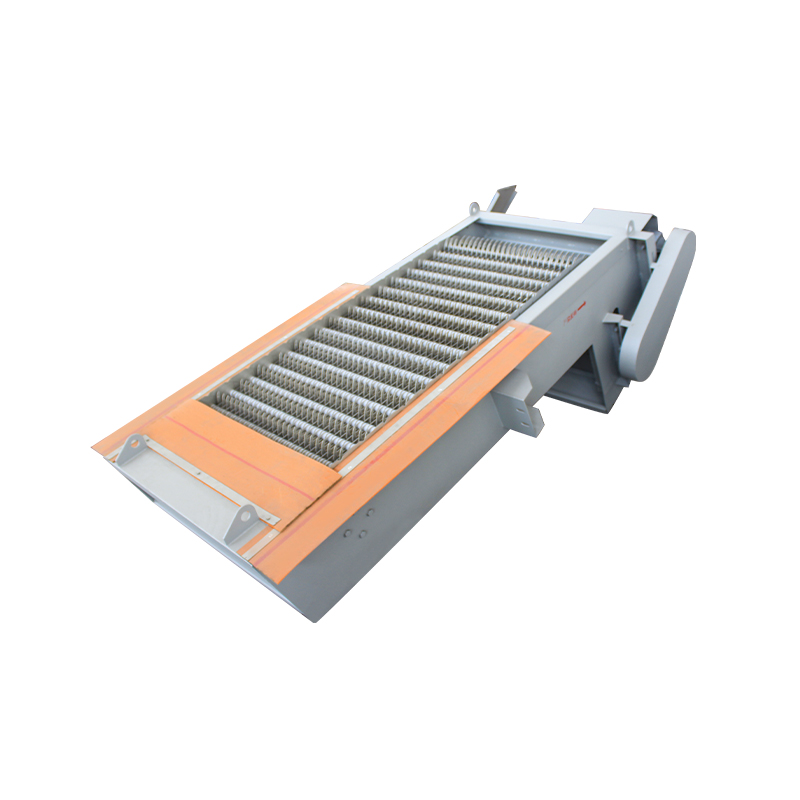
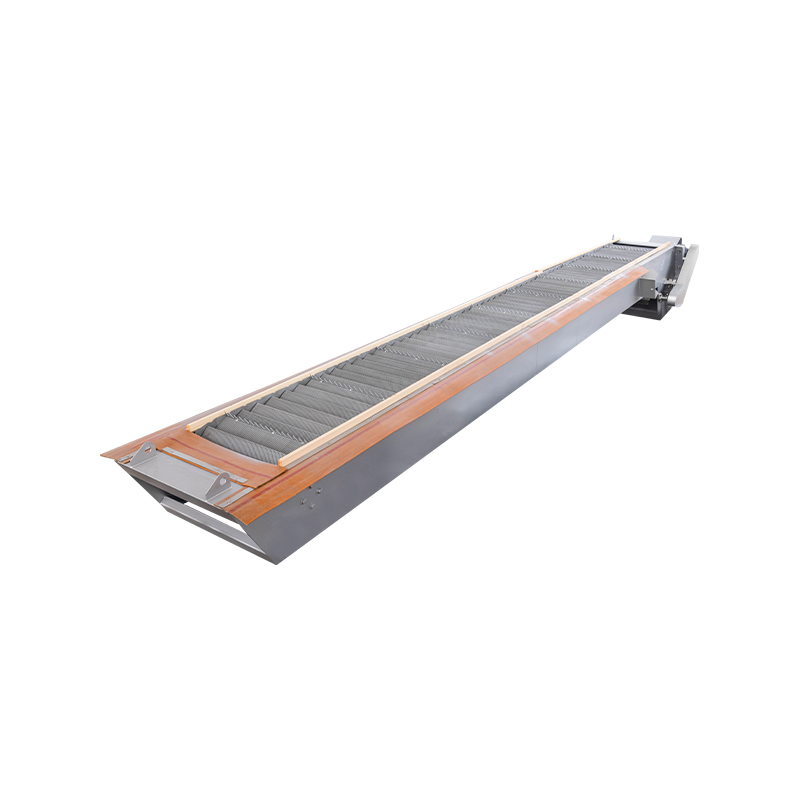
- Raketooth bar screens use spaced bars with a chain-driven rake that lifts coarse solids out of the flow.
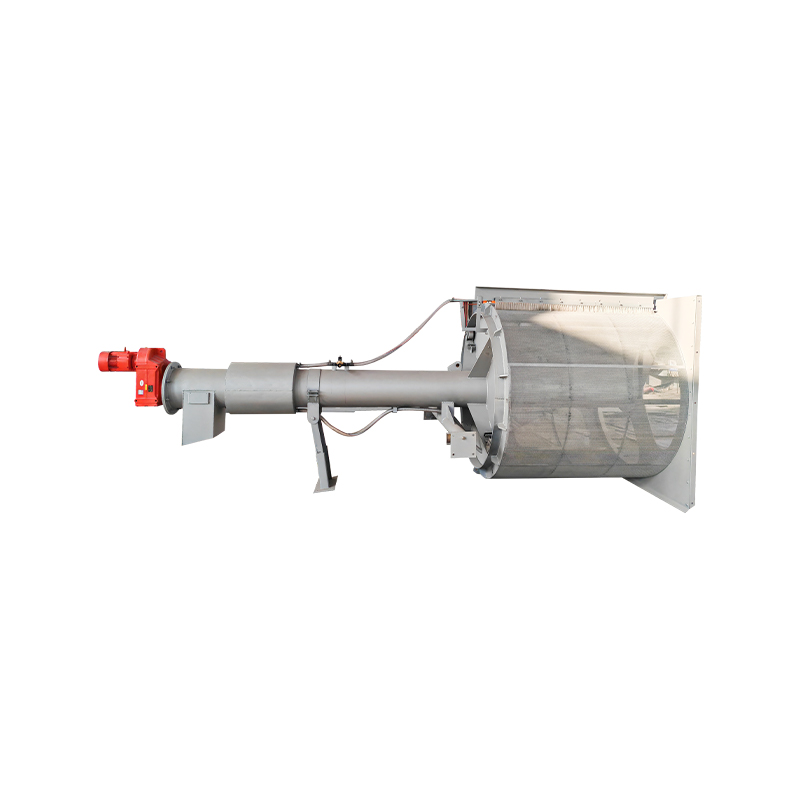
- Drum bar screens capture finer solids on a rotating perforated drum and self-clean as the drum turns.
- Mesh bar screens use the finest openings and suit flows where fibrous material blinds downstream units.
 Rotary Drum Bar Screen for Wastewater Treatment and Fine ScreeningThis drum screen is suited for headworks requiring fine screening and shallow channels. It intercepts solids, then squeezes and dewaters them, offering self-cleaning and compact integration.View Product →
Screening is a physical separation stage: it removes solids larger than its opening size and nothing else. The opening size is therefore the first and most consequential selection decision at the headworks.
The comparison below gives a buyer's view of the differences.
| Screen type | Typical opening | Target material | Typical position |
| Raketooth bar screen | 15-30 mm | Wipes, rags, coarse debris | Inlet channel or pump station |
| Drum bar screen | 1-6 mm | Fine solids, fibrous material | Headworks or pre-treatment line |
| Mesh bar screen | 0.5-3 mm | Suspended solids and short fibre | Fine screen stage before biological tanks |
Verify these points before purchasing a headworks screen:
- Peak flow capacity at the actual channel depth, not the daily average.
- Screen opening related to what the downstream pumps can tolerate.
- Rake speed and cleaning interval matched to the solids load.
- Corrosion protection for wet-well installation.
Grit Removal: Why a Sand Separator Belongs After Screening
Grit settles in sewers and channels whenever flow velocity drops, and the sand separator removes these dense mineral particles before they reach pumps, heat exchangers, and biological tanks.
Bar screens hold large and fibrous solids, but not dense mineral particles such as sand, gravel, eggshells, and glass fragments. These particles travel along the channel bottom and settle as soon as velocity falls. Accumulated grit blocks channels, abrades impellers, and deposits in digesters. The sand separator classifies particles by settling velocity: the heavier fraction sinks to the bottom, and a conveying screw lifts it out of the flow.
 Shaftless Screw Sand-Water Separator with High Recovery RateThis separator classifies and dewaters grit from sand-water mixtures, recovering over 96% of particles above 0.2 mm. Its enclosed screw design protects downstream equipment from abrasive wear.View Product →
Without grit removal
Sand accumulates in aeration tanks, settles in digesters, mixes into the sludge stream, and accelerates pump wear.
With a sand separator
Mineral particles are removed continuously, sludge lines stay clean, rotating equipment lasts longer, and digester maintenance drops.
A practical rule of sewerage system design: screening protects pumps and channels from ragging, while grit separation protects rotating equipment and sludge processes from abrasion. The two stages work together; neither replaces the other.
Sludge Dewatering Closes the Sewerage System Treatment Loop
Sludge dewatering is a fixed duty of any sewerage system that includes sedimentation or biological treatment: the sludge leaving those tanks contains 96 to 99 percent water, and the dewatering machine removes most of it.
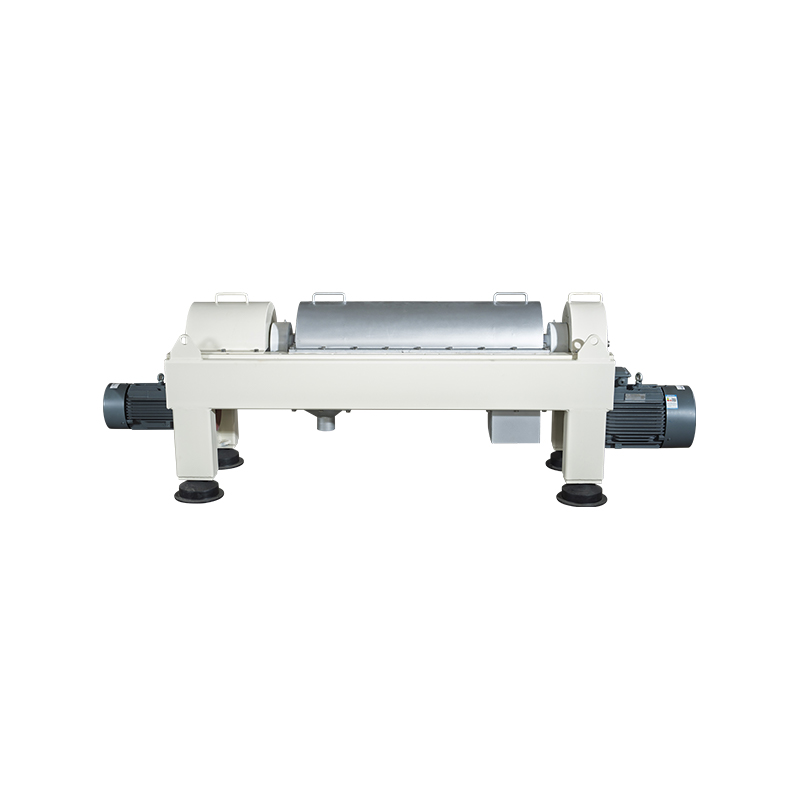
Primary and secondary sludge are produced continuously, and without volume reduction, hauling and disposal costs climb quickly. Mechanical dewatering, most often with a screw press, belt filter press, or centrifuge, raises sludge dryness so the material can be transported, composted, incinerated, or landfilled as a solid. The screw press suits small and medium plants because it runs slowly, uses little energy, and handles greasy feed more gently than a high-speed centrifuge. Polymer conditioning is normally required to form a stable cake.
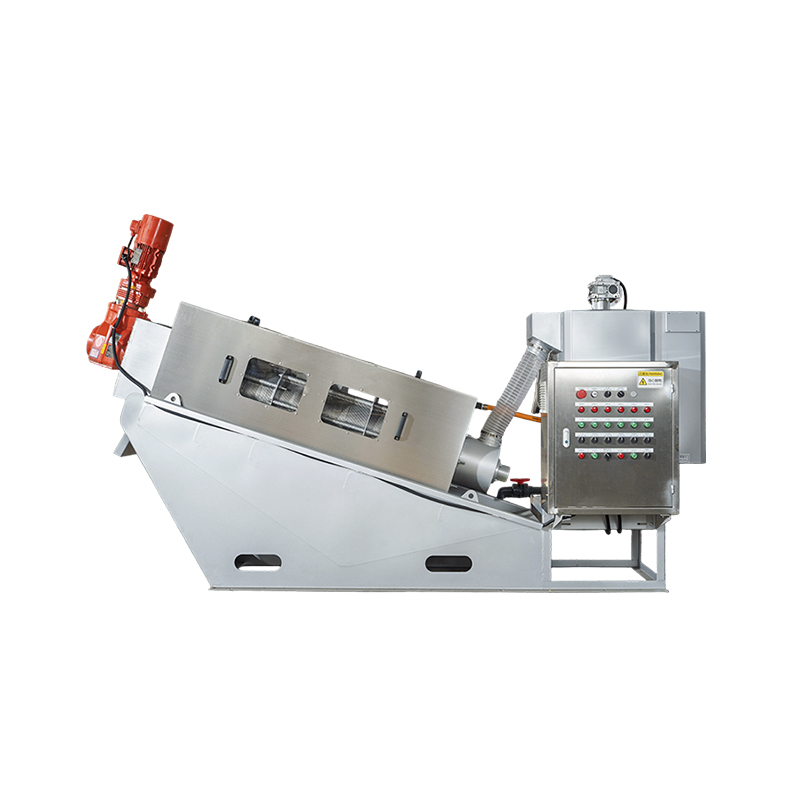
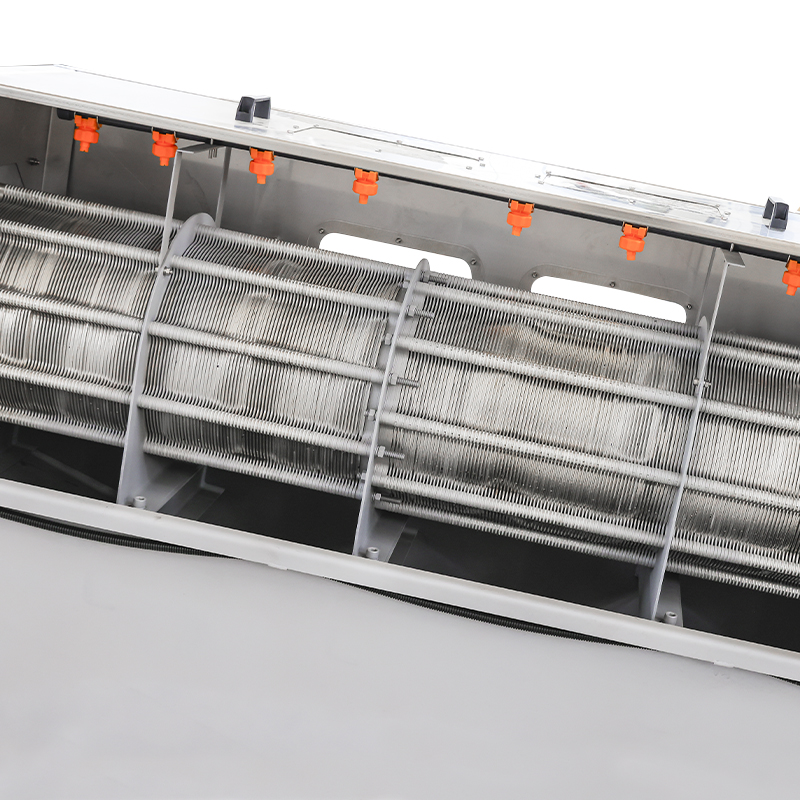 Screw Press Sludge Dewatering Machine for Small and Medium PlantsDesigned for low-concentration and oily sludge, this screw press uses dynamic and static rings for self-cleaning dewatering. It suits plants needing gentle, energy-efficient volume reduction.View Product →
The dewatering machine is selected on the basis of feed solids, polymer conditioning, and required cake dryness, not on the size of the treatment plant alone.
When replacing an existing unit, discharge pipe position, building headroom, and wash water supply matter as much as nominal capacity; measure them before specifying the machine.
Sewerage System Equipment Selection: Flow Peaks, Solids Loading, and Operating Hours
Equipment selection in a sewerage system is governed by the flow profile at the headworks, and that profile is never flat.
Dry-weather flow follows the daily rhythm of the community, with a morning and an evening peak. Wet weather adds stormwater inflow, which can raise flow to 1.5 to 3 times the dry-weather average in combined sewers. Screen capacity, grit separator throughput, and polymer dosing pumps must be sized for these peaks, not for average loads.
Figure 1. Typical dry-weather flow profile delivered to a sewerage system headworks; the morning and evening peaks drive screen capacity and grit separator sizing.
A screen selected on average flow bypasses solids during the morning peak, pushing rags into the biological stage. A screen selected on peak flow alone runs oversized, with slow rake intervals and wasted energy the rest of the day.
A practical selection sequence follows four steps:
- Establish the peak, minimum, and average flow at the headworks.
- Estimate the solids and grit load from the served catchment and sewer condition.
- Define the protection target for downstream pumps, membranes, and biological tanks.
- Match screen opening, grit removal capacity, and dewatering throughput to those targets.
Buyers who specify equipment from measured influent data avoid the two classic failures: undersized screens that bypass at peak flow, and oversized units that waste energy at low flow.
These units do not have to come from the same supplier. Yixing Hengye Environmental Protection Technology Co., Ltd. (HENYEPCC) sells bar screens, sand separators, and sludge dewatering machines as individual products, so a plant can replace one stage without redesigning the line. The manufacturer's support documentation helps operators set maintenance intervals and spare-part stock.
Frequently Asked Questions About Headworks Equipment
What is the difference between a sewerage system and a sewage treatment plant?
A sewerage system is the network of pipes, pumping stations, and channels that collects and conveys sewage, while the treatment plant is the facility where the wastewater is treated. The equipment in this article sits at the interface: bar screens and sand separators at the headworks, dewatering machines at the solids handling stage.
Which equipment in a sewerage system fails most often?
Bar screens and grit removal systems cause the most downtime because they process the most abrasive and stringy material in the network. Rags wrap around moving parts, and grit accelerates wear. Regular inspection of rakes, chains, and conveying screws is the effective countermeasure.
How does a bar screen protect the rest of the sewerage system?
It removes solids larger than its opening before they reach pumps and biological tanks, preventing ragging of impellers, blocking of pipework, and blinding of downstream fine screens — the three most common headworks failures.
Is polymer dosing always required for sludge dewatering?
Polymer conditioning is normally needed in mechanical dewatering to coagulate fine sludge particles and release bound water. Without it, most machines produce wetter cake, lower throughput, and higher solids losses in the filtrate. Dosing devices keep the polymer feed consistent.
Specify equipment for the measured flow and solids profile of the actual sewer, not for a generic treatment plant design. That single habit prevents most headworks failures.
Let's Cooperate with Yixing Hengye Environmental Protection
Contact Us
- Product Categories
- Sludge Dewatering Machine
- Roller Filter
- Dissolved Air Flotation Machine(DAF)
- Rotary Mechanical Bar
- Dosing Device
- Aerator
- Biological Packing Material
- Other Wastewater Treatment Equipment
- Contact Us
-
-
[email protected]

[email protected] -
+86-13812201185

-
+86-13812201185

-
No. 20, Saite Road, Gaoyao Village, Gaocheng Town, Yixing City, Wuxi City, Jiangsu Province, China

-



