

 English
  русский
Sludge Dewatering Methods, Equipment and Process
Content
What Is Sludge Dewatering
Sludge dewatering is the mechanical process of removing water from wastewater sludge to reduce its volume and weight before disposal, transport, or further processing. Raw sludge coming out of a treatment plant typically contains 95-99% water; dewatering equipment can reduce that to 70-85% water content, cutting sludge volume by a factor of five to ten and dramatically lowering the cost of hauling, landfilling, incinerating, or composting the material.
Dewatering sits at a specific point in the broader sludge treatment process: after thickening concentrates the sludge and typically after digestion stabilizes it biologically, but before final disposal or beneficial reuse. Getting this stage right has a direct impact on downstream costs, since every percentage point reduction in water content meaningfully reduces the tonnage that has to be transported and disposed of.
Sludge Thickening vs Dewatering
Thickening and dewatering are often confused because both remove water, but they operate at different concentration ranges and use different mechanisms.
| Factor | Thickening | Dewatering |
|---|---|---|
| Starting solids content | 0.5-2% | 2-6% |
| Resulting solids content | 3-8% | 15-30%+ |
| Typical method | Gravity settling, flotation, gravity belt thickeners | Mechanical pressure or centrifugal force |
| Resulting sludge state | Still pumpable liquid | Semi-solid "cake" |
Thickening and dewatering compared by solids content and process characteristics.
In short, thickening reduces sludge from a very dilute liquid to a still-pumpable concentrated liquid, while dewatering takes that concentrated sludge the rest of the way to a solid or semi-solid cake that can be handled, stacked, and transported without a tanker truck.
Sludge Dewatering Methods and Equipment
Several mechanical dewatering technologies are used across municipal and industrial plants, each suited to different sludge characteristics and throughput needs:
- Belt filter press — sludge is sandwiched between two moving porous belts that apply increasing pressure as they pass through a series of rollers, squeezing out water.
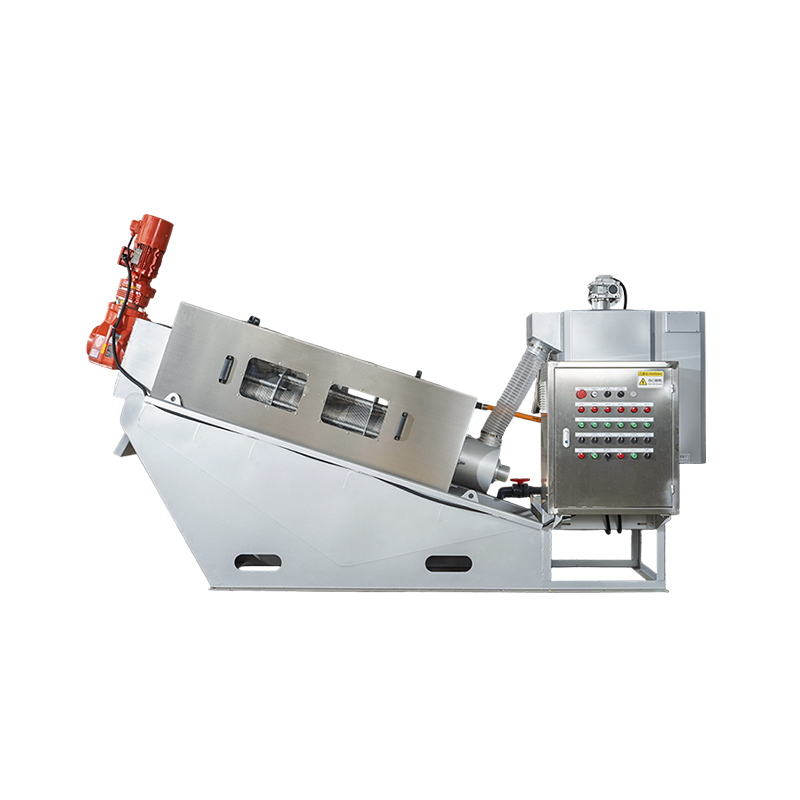
- Screw press — a rotating screw conveys sludge through a gradually narrowing, perforated cylindrical screen, compressing it continuously as it advances.
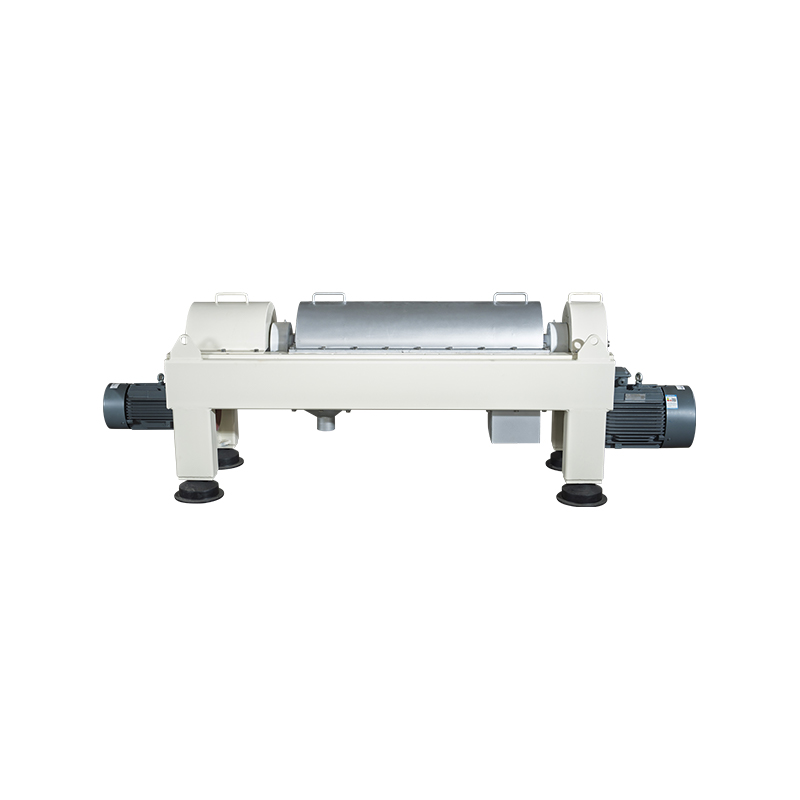
- Centrifuge — sludge spins at high speed inside a rotating bowl, using centrifugal force to separate denser solids from water, which is then decanted off.
- Plate and frame filter press — sludge is pumped into chambers between filter plates under high pressure, producing a very dry cake but operating as a batch process rather than continuously.
- Rotary drum vacuum filter — an older technology where a rotating drum covered in filter media draws sludge onto its surface under vacuum, pulling water through while solids build up on the outside.
Belt Filter Press vs Screw Press
Belt filter presses and screw presses are two of the most widely used continuous dewatering technologies, and the choice between them typically comes down to sludge volume, operating cost tolerance, and maintenance capacity.
| Factor | Belt Filter Press | Screw Press |
|---|---|---|
| Throughput | Higher, suited to large municipal volumes | Lower to moderate, suited to smaller/industrial plants |
| Energy use | Moderate | Lower, runs at slower rotational speed |
| Maintenance | Belt wear and tracking require regular attention | Fewer moving parts, generally lower maintenance |
| Noise and odor control | More open process, can be noisier | Enclosed design, generally quieter with less odor release |
Belt filter press and screw press compared for typical dewatering applications.
Belt filter presses remain a common choice at large municipal plants where high throughput justifies the additional maintenance of belt tracking and washing systems. Screw presses have gained ground in small-to-mid-sized municipal and industrial plants because their enclosed design reduces odor and aerosol release, and their lower rotational speed and fewer moving parts translate to lower energy consumption and simpler upkeep.
How Does a Sludge Dewatering Machine Work
Regardless of the specific technology, most sludge dewatering machines follow a similar underlying sequence:
- Sludge is conditioned with a polymer flocculant, which causes fine solid particles to clump together into larger flocs that release water more readily.
- The conditioned sludge is fed into the dewatering machine, whether that's between belts, into a screw chamber, or into a rotating centrifuge bowl.
- Mechanical force — pressure, screw compression, or centrifugal spin — physically separates free water from the solid flocs.
- Separated water (called filtrate or centrate) drains or is spun off and typically returns to the front of the treatment plant for further processing.
- The remaining solid material, now a semi-solid cake, discharges from the machine for storage, transport, or further treatment such as drying or incineration.
Industrial Sludge Dewatering Considerations
Industrial wastewater sludge — from food processing, chemical manufacturing, textile dyeing, or metal finishing operations — often behaves differently from municipal sludge and requires equipment matched to its specific characteristics:
- Variable solids content — industrial sludge composition can shift significantly with production changes, so equipment and dosing systems often need more flexibility than a municipal plant with relatively stable influent.
- Oil and grease content — sludge with higher oil or grease content, common in food processing, can affect polymer dosing and may require pre-treatment to avoid clogging dewatering equipment.
- Corrosive or abrasive solids — industries like metal finishing may produce sludge with abrasive particulates that accelerate wear on screens, screws, or belts, influencing material selection for equipment components.
- Disposal pathway — the intended end use of the dewatered cake (landfill, incineration, land application, or reuse) affects the target dryness and may drive equipment selection toward higher-performance options like plate and frame presses.
Let's Cooperate with Yixing Hengye Environmental Protection
Contact Us
- Product Categories
- Sludge Dewatering Machine
- Roller Filter
- Dissolved Air Flotation Machine(DAF)
- Rotary Mechanical Bar
- Dosing Device
- Aerator
- Biological Packing Material
- Other Wastewater Treatment Equipment
- Contact Us
-
-
[email protected]

[email protected] -
+86-13812201185

-
+86-13812201185

-
No. 20, Saite Road, Gaoyao Village, Gaocheng Town, Yixing City, Wuxi City, Jiangsu Province, China

-



