

 English
  русский
Dissolved Air Flotation System: DAF Water Treatment Explained
Content
- 1 What Is a Dissolved Air Flotation System?
- 2 How DAF Wastewater Treatment Works: Process Stages
- 3 Key Applications of DAF Water Treatment Across Industries
- 4 DAF vs. Conventional Sedimentation: Performance Comparison
- 5 Design Considerations for a Dissolved Air Flotation System
- 6 Operational Optimization and Common Challenges
- 7 Emerging Developments in DAF Technology
What Is a Dissolved Air Flotation System?
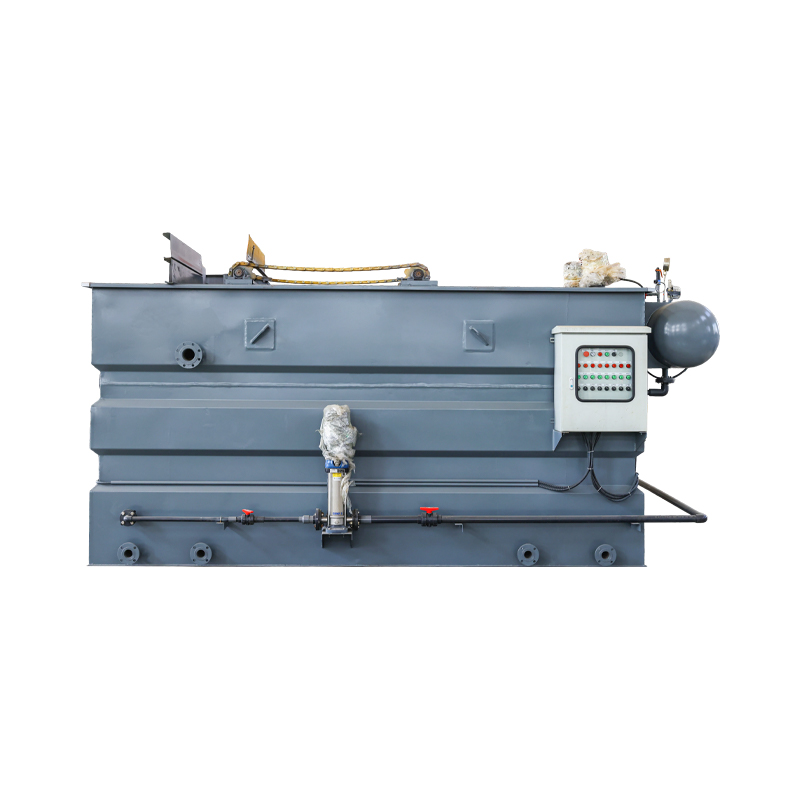
A dissolved air flotation system is a water clarification technology that removes suspended solids, fats, oils, greases, and fine particulates from water by attaching them to microscopic air bubbles. As these bubbles rise to the surface, they carry contaminants with them, forming a float layer that is mechanically skimmed off — leaving clarified effluent below.
The core mechanism involves pressurizing water saturated with dissolved air, then releasing it into an open flotation tank at atmospheric pressure. The sudden pressure drop causes the dissolved air to come out of solution as millions of microbubbles, typically 10–100 microns in diameter. These bubbles adhere to suspended particles and cause them to float rather than sink — a critical advantage over conventional gravity sedimentation in applications where settleable solids are minimal or where rapid throughput is required.
DAF systems are widely deployed across municipal water treatment, industrial process water, and wastewater reclamation. Their compact footprint and high hydraulic loading rates make them particularly suited to facilities with space constraints or high-volume processing demands.
How DAF Wastewater Treatment Works: Process Stages
Understanding the operational sequence of DAF wastewater treatment helps clarify why the technology outperforms alternatives in specific contaminant profiles. A properly designed DAF unit processes influent through four main stages:
1. Chemical Coagulation and Flocculation
Influent wastewater is first dosed with coagulants — commonly aluminum sulfate, ferric chloride, or polymer blends — to destabilize colloidal particles. This is followed by flocculation, where gentle mixing encourages small particles to agglomerate into larger, bubble-receptive flocs. Proper chemical dosing at this stage directly determines downstream removal efficiency; under-dosing leaves fine solids in suspension while over-dosing increases sludge volume and chemical costs.
2. Pressurized Recycle Saturation
A portion of the treated effluent — typically 10–50% of the inlet flow — is recycled and pressurized to 40–80 psi in a saturator vessel where it is thoroughly mixed with compressed air. At this elevated pressure, the water becomes supersaturated with dissolved air far beyond what is possible at atmospheric conditions.
3. Flotation and Separation
The pressurized recycle stream is injected into the flotation tank through a nozzle or diffuser and mixed with the chemically conditioned influent. As pressure drops to atmospheric, dissolved air nucleates as fine bubbles that collide with and attach to flocculated particles. The loaded bubbles rise at rates of 5–10 meters per hour, accumulating as a float blanket on the tank surface. A rotating skimmer or beach-and-scraper mechanism continuously removes this float layer into a sludge hopper.
4. Clarified Effluent Discharge
Clarified water exits through a submerged outlet at the base of the flotation tank. Depending on downstream requirements, this effluent proceeds to biological treatment, filtration, or direct discharge. In well-operated DAF systems, suspended solids removal efficiencies of 90–99% are achievable, with total suspended solids (TSS) in the effluent commonly below 10 mg/L.
Key Applications of DAF Water Treatment Across Industries
DAF water treatment addresses a diverse range of industrial and municipal effluent challenges. Its effectiveness with light, non-settleable contaminants positions it as the preferred primary clarification method across the following sectors:
| Industry | Primary Contaminants Removed | Typical TSS Reduction |
|---|---|---|
| Food & Beverage Processing | Fats, oils, greases, organic solids | 90–98% |
| Paper & Pulp Mills | Fiber fines, fillers, ink particles | 85–97% |
| Municipal Wastewater | Algae, phosphorus, biological floc | 88–99% |
| Textile & Dyeing | Dye particles, surfactants, suspended fiber | 80–95% |
| Oil & Gas / Petrochemical | Emulsified oil, hydrocarbons | 90–99% |
| Drinking Water Production | Algae, NOM, turbidity | 92–99% |
In food processing applications, DAF is especially critical for dairy, slaughterhouse, and vegetable washing effluents where fat and protein loads would quickly overwhelm biological treatment units without primary clarification. In municipal settings, DAF has gained traction as a compact alternative to sedimentation basins for direct filtration plants and reservoir water with high algae concentrations.
DAF vs. Conventional Sedimentation: Performance Comparison
The decision to implement a dissolved air flotation system versus traditional gravity clarification depends on the physical characteristics of the target contaminants and the hydraulic constraints of the installation. The following comparison highlights where each technology holds a decisive advantage:
Hydraulic Loading Rate
DAF tanks operate at surface loading rates of 4–20 m³/m²/h, compared to 0.5–2.5 m³/m²/h for conventional sedimentation. This translates directly into a smaller tank footprint for the same volumetric throughput — often one-quarter to one-tenth the surface area of an equivalent settling basin. For urban or retrofit installations where land is constrained, this advantage is often decisive.
Low-Density Particle Removal
Gravity sedimentation depends on particles having a density greater than water. Algae cells, emulsified oils, and fine fiber fines have densities close to or below 1.0 g/cm³ and settle extremely slowly or not at all. DAF reverses this limitation — the lighter the particle, the more readily it floats once a microbubble has attached. This makes DAF the only practical clarification method for many algae-rich or high-FOG (fat, oil, grease) influents.
Startup and Response Time
DAF units reach steady-state operation in 15–30 minutes after startup, making them well-suited to batch operations or plants with variable flow patterns. Sedimentation basins require several hours to stabilize and are poorly suited to intermittent or shock loading.
Sludge Characteristics
DAF float sludge is significantly thicker than sedimentation sludge, with typical solids concentrations of 3–8% dry weight versus 0.5–2% for settled sludge. This reduces downstream dewatering costs but may require more robust thickening and disposal infrastructure for high-volume installations.
Design Considerations for a Dissolved Air Flotation System
Selecting and sizing a dissolved air flotation system requires careful evaluation of influent characteristics, process objectives, and site conditions. The following factors most significantly influence system design and long-term performance:
- Air-to-Solids (A/S) Ratio: The ratio of dissolved air released to the mass of solids to be floated, typically targeted between 0.005 and 0.06 mL air per mg solids. Insufficient A/S results in incomplete flotation; excess increases energy consumption without proportional benefit.
- Recycle Ratio: Higher recycle ratios (up to 50%) provide more microbubbles for challenging influents but increase pump energy demand. Most systems are optimized at 15–25% for a balance of performance and efficiency.
- Saturator Pressure: Operating pressures of 400–600 kPa (58–87 psi) are standard. Higher pressures increase dissolved air content but also increase equipment and energy costs. Saturator efficiency should be verified during commissioning, as poor air dissolution is a common cause of underperformance.
- Tank Geometry: Rectangular DAF tanks are preferred for larger installations due to uniform flow distribution, while circular designs are common in smaller package units. Tank depth typically ranges from 1.5 to 3.0 m, with shallow tanks offering faster float accumulation and skimming.
- Chemical Dosing System: An integrated coagulation–flocculation stage with programmable dosing pumps and automated pH control is essential for consistent performance across variable influent loads.
- Sludge Handling: Float removal frequency, sludge hopper sizing, and downstream thickening or dewatering capacity must be matched to the solids loading. Continuous skimming is preferable for high-load applications; intermittent skimming suits lower-concentration influents.
For industrial users treating highly variable wastewater — such as seasonal food processors or batch chemical plants — pilot testing is strongly recommended before finalizing DAF system specifications. Jar testing and bench-scale flotation trials can characterize chemical demand, achievable effluent quality, and float volume generation under representative conditions.
Operational Optimization and Common Challenges
Even well-designed DAF wastewater treatment systems can underperform if not operated with attention to process variables. The most frequent operational issues and their corrective approaches include:
Float Breakup and Carryover
If the float blanket becomes too deep or is disturbed by turbulent influent injection, portions can break apart and re-enter the effluent stream. Solutions include reducing hydraulic loading, adjusting influent distribution baffles, and increasing skimming frequency. Float solids should be removed before they accumulate beyond 150–200 mm depth.
Inadequate Microbubble Formation
Poor bubble formation — visible as large, irregular bubbles rather than a fine white cloud — typically indicates saturator fouling, nozzle wear, or insufficient recycle pressure. Regular inspection of nozzles and pressure gauges, combined with monthly saturator flushing, prevents most cases.
Chemical Dosing Drift
Influent composition changes seasonally and with production schedules. DAF performance is highly sensitive to coagulant dose; a 20% change in influent TSS or organic load may require a corresponding adjustment in polymer or coagulant dosing. Online turbidity monitoring in the effluent, combined with regular jar testing, is the most reliable approach for maintaining optimal chemical dose.
Temperature Effects
Cold water holds more dissolved air but increases water viscosity, slowing bubble rise rates. In climates with significant seasonal temperature variation, DAF performance may degrade in winter without recalibration of recycle ratio and chemical dosing. Heated influent or insulated tanks may be warranted for installations in cold regions.
Emerging Developments in DAF Technology
Continued research and industrial adoption have driven several advances in dissolved air flotation design that are now entering mainstream application:
- Nano-bubble DAF: Generating bubbles in the 0.1–1 micron range via hydrodynamic cavitation or electrochemical means allows attachment to much finer particles and colloidal matter that conventional DAF cannot effectively capture. Pilot installations in drinking water treatment have achieved cryptosporidium removal rates exceeding 3-log under optimized conditions.
- High-Rate DAF: Advances in inlet nozzle design and baffle geometry have pushed surface loading rates above 30 m³/m²/h in some commercial units, further reducing tank footprint without sacrificing effluent quality.
- Integrated DAF-MBR Systems: Combining DAF as a pre-treatment stage with membrane bioreactors reduces membrane fouling, extends membrane life, and improves overall system capacity for demanding effluent quality targets.
- Automated Process Control: Machine-learning-assisted dosing control systems can dynamically adjust coagulant, flocculant, and recycle ratio in real time based on influent turbidity, flow, and effluent quality sensors — reducing chemical consumption by 10–25% compared to fixed-dose operation in variable-load facilities.
As regulatory limits on suspended solids, phosphorus, and microplastics tighten globally, dissolved air flotation is well positioned to become an even more central technology in both new and upgraded water treatment facilities across municipal and industrial sectors.
Let's Cooperate with Yixing Hengye Environmental Protection
Contact Us
- Product Categories
- Sludge Dewatering Machine
- Roller Filter
- Dissolved Air Flotation Machine(DAF)
- Rotary Mechanical Bar
- Dosing Device
- Aerator
- Biological Packing Material
- Other Wastewater Treatment Equipment
- Contact Us
-
-
[email protected]

[email protected] -
+86-13812201185

-
+86-13812201185

-
No. 20, Saite Road, Gaoyao Village, Gaocheng Town, Yixing City, Wuxi City, Jiangsu Province, China

-



