

 English
  русский
Sludge Dewatering: Methods, Technologies & Systems for Wastewater Treatment
Content
- 1 What Is Dewatering — and Why It Matters for Sludge Management
- 2 Sludge Thickening vs. Dewatering: Understanding the Difference
- 3 Sludge Dewatering Technologies: A Comparative Overview
- 4 DAF Sludge Dewatering: Handling Flotation Unit Byproducts
- 5 Slurry Dewatering Systems in Industrial Applications
- 6 Polymer Conditioning: The Variable That Controls Dewatering Performance
What Is Dewatering — and Why It Matters for Sludge Management
Dewatering is the mechanical or physical removal of water from a solid-liquid mixture to reduce its volume and increase its solids content. In the context of wastewater treatment, dewatering refers specifically to the process of separating water from sludge — the semi-solid byproduct generated during primary, secondary, and tertiary treatment stages — to produce a handleable, transportable cake suitable for disposal, land application, or further processing.
The economic and operational case for dewatering is straightforward. Raw wastewater sludge typically contains 95–99% water by weight. Reducing moisture content from 97% to 75% through mechanical dewatering shrinks the sludge volume by roughly 88%, dramatically cutting hauling costs, landfill tipping fees, and energy consumption in downstream thermal treatment. For a mid-sized municipal wastewater treatment plant processing 50,000 m³/day, this volume reduction can translate to savings of several hundred thousand dollars annually in sludge disposal costs alone.
Beyond volume reduction, dewatering also stabilizes sludge for handling — a well-dewatered cake at 20–25% total solids (TS) can be conveyed by belt or screw without pumping, stacked for temporary storage, and loaded into trucks without specialized equipment.
Sludge Thickening vs. Dewatering: Understanding the Difference
Sludge thickening and dewatering are sequential but distinct operations in a complete sludge management train. Confusing the two leads to equipment mis-selection and process inefficiencies.
Thickening is a gravity or low-shear mechanical process that concentrates dilute sludge from 0.5–2% TS to approximately 3–8% TS. It is not a final dewatering step — the thickened sludge remains pumpable and flowable. The primary purpose is to reduce the volume fed to downstream digesters or dewatering equipment, lowering their sizing and operating costs. Common thickening technologies include gravity thickeners, dissolved air flotation (DAF) thickeners, rotary drum thickeners, and gravity belt thickeners.
Dewatering follows thickening and uses mechanical pressure, vacuum, or centrifugal force to push sludge solids content from the 3–8% TS range up to 15–35% TS — producing a semi-solid cake. At this solids content, the material transitions from a fluid that must be pumped to a solid that can be conveyed, stacked, and transported by conventional means.
The combined sludge thickening and dewatering sequence is the backbone of modern biosolids management. Skipping thickening and feeding dilute sludge directly to dewatering equipment results in oversized, overloaded machines with poor cake dryness and high polymer consumption.
Sludge Dewatering Technologies: A Comparative Overview
Multiple sludge dewatering technologies are in commercial use. Each operates on different physical principles and delivers different cake dryness, polymer demand, footprint, and energy consumption. Selection depends on sludge type, plant size, final disposal route, and capital vs. operating cost priorities.
Belt Filter Press
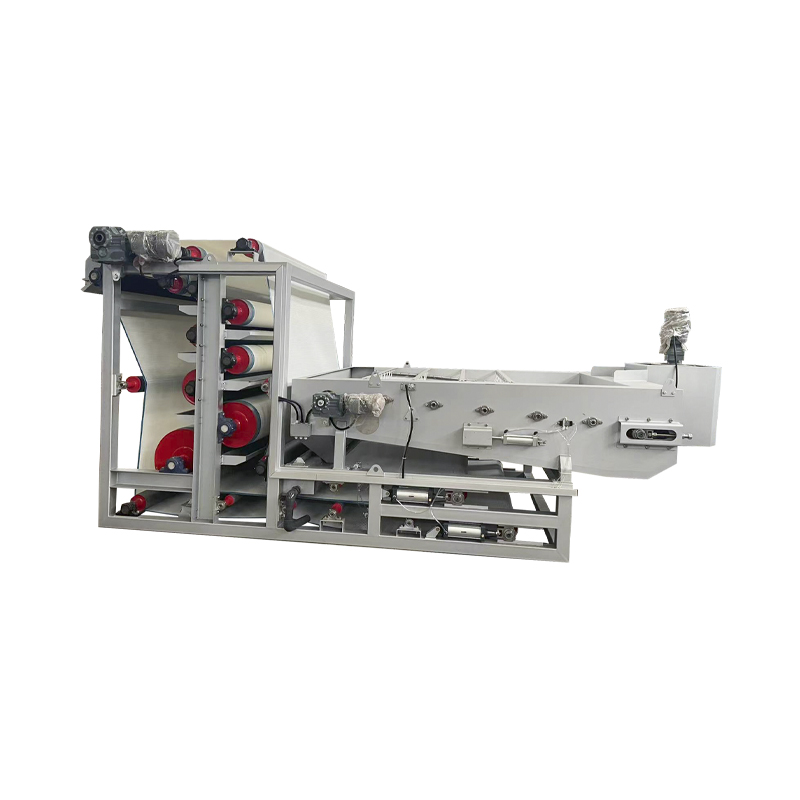
The belt filter press (BFP) is one of the most widely installed dewatering technologies globally, particularly in municipal wastewater applications. Conditioned sludge is fed between two continuously moving porous belts that first drain by gravity, then compress the sludge through a series of rollers with progressively increasing pressure. Cake solids content typically ranges from 18–25% TS for mixed municipal sludge. BFPs have low energy consumption (1–2 kWh/tonne dry solids) but require significant wash water (3–10 m³/hour per meter of belt width) and are sensitive to feed sludge variability.
Centrifuge Decanter
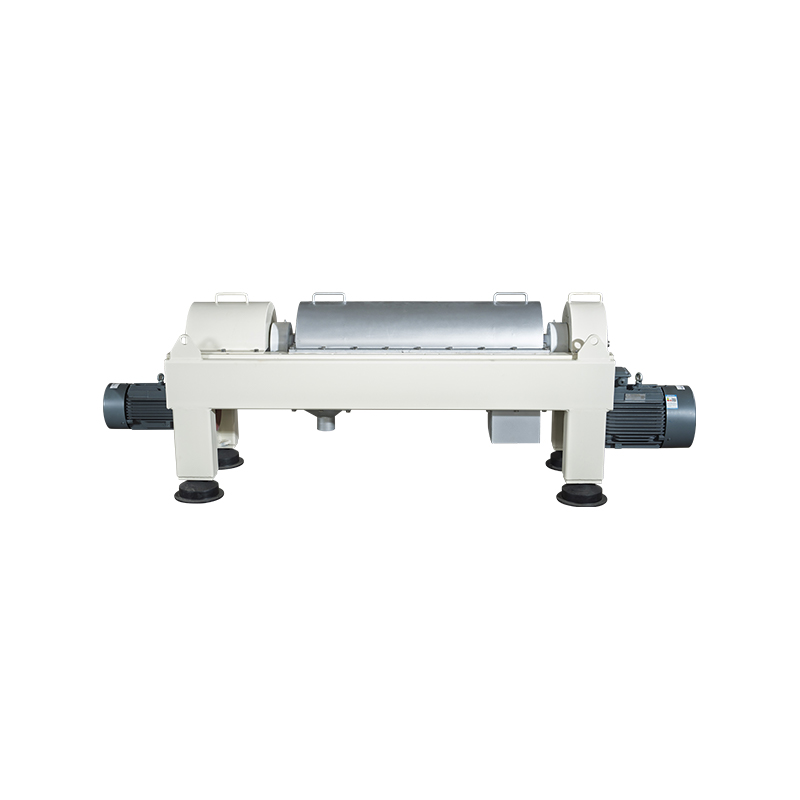
Decanter centrifuges use centrifugal force (typically 1,500–4,000 × g) to separate sludge solids from the liquid phase at high speed. They deliver 20–30% TS cake dryness for digested municipal sludge and are well suited to high-volume, continuous operation. Centrifuges are compact, fully enclosed (important for odor control), and largely automated — but their energy consumption is significantly higher than BFPs, typically 15–30 kWh/tonne dry solids, and their maintenance cost is elevated due to wear from abrasive sludges.
Screw Press
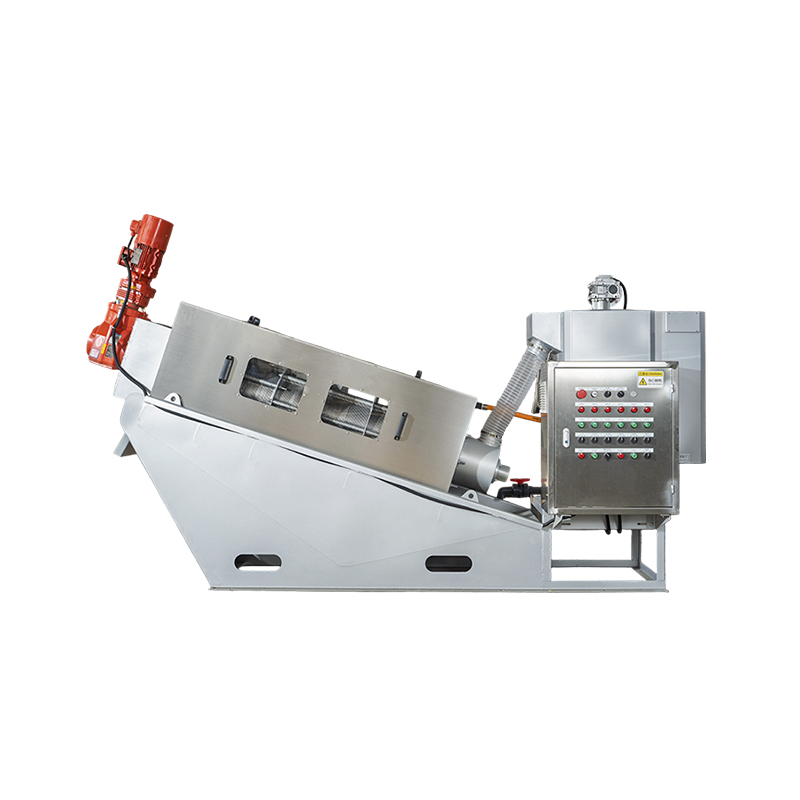
The screw press feeds sludge into a cylindrical screen and advances it with a rotating screw of progressively decreasing pitch, squeezing free water through the screen while the cake is discharged at the outlet. Modern multi-disc screw presses have gained market share rapidly due to their very low energy consumption (2–5 kWh/tonne DS), minimal operator attention, low wash water requirements, and suitability for small-to-medium plants. Cake dryness is typically 15–22% TS — lower than centrifuges — but for applications where disposal cost savings justify the slightly wetter cake, the operating cost advantage is compelling.
Filter Press (Plate and Frame)
High-pressure plate-and-frame filter presses deliver the driest cake of any mechanical dewatering technology — typically 35–45% TS — making them the preferred choice where sludge is destined for incineration, co-firing, or where landfill costs are extremely high. The batch operation, large footprint, and high capital cost limit their use to industrial sludges, lime-conditioned municipal sludge, and applications where very high dryness is a hard requirement. Membrane filter presses that inflate flexible diaphragms after filling can push cake dryness above 50% TS in some industrial sludge applications.
Rotary Vacuum Filter
Once the dominant technology for sewage sludge dewatering, rotary vacuum filters have been largely displaced by belt presses and centrifuges in new installations due to their relatively poor dryness (12–18% TS), high energy and maintenance requirements, and open design. They remain in service at older municipal plants and in some industrial applications where their gentle, continuous operation suits fragile or fibrous sludge types.
| Technology | Cake Dryness (% TS) | Energy Use (kWh/t DS) | Best Fit |
|---|---|---|---|
| Belt Filter Press | 18–25% | 1–2 | Municipal, large volume |
| Decanter Centrifuge | 20–30% | 15–30 | Municipal, industrial, odor-sensitive |
| Screw Press | 15–22% | 2–5 | Small/medium plants, low O&M priority |
| Plate & Frame Filter Press | 35–45% | 20–40 | Industrial, incineration feed |
| Rotary Vacuum Filter | 12–18% | 20–35 | Legacy installations, fibrous sludge |
DAF Sludge Dewatering: Handling Flotation Unit Byproducts
Dissolved air flotation (DAF) units are widely used in both industrial and municipal wastewater treatment to remove suspended solids, fats, oils, and greases by attaching microscopic air bubbles to particles and floating them to the surface as a skimmed float. The resulting DAF sludge presents unique dewatering challenges that differ significantly from settled primary or secondary biological sludge.
DAF float typically arrives at the dewatering stage at 1–5% TS — comparable to thickened biological sludge — but its physical character is fundamentally different. DAF sludge from food processing, rendering, or paper mills is often highly compressible, gelatinous, and rich in fats and proteins that resist drainage. Standard polymer conditioning that works well for activated sludge may perform poorly on DAF float; dual-polymer programs combining cationic and anionic polymers, or the addition of coagulants such as ferric chloride or aluminum sulfate prior to polymer conditioning, are often required.
For DAF sludge dewatering, decanter centrifuges and belt filter presses are the most commonly applied technologies. Centrifuges handle the high fat content more reliably — fat accumulation on belt press fabrics is a chronic operational problem in food-industry DAF applications. Screw presses have also shown good results on DAF float from municipal plants where lipid content is lower. Cake dryness of 12–20% TS is typical for food-industry DAF sludge, substantially lower than biological sludge, due to the compressible and hydrophilic nature of the solids.
In industrial settings where DAF is used for paint wastewater treatment, the resulting paint sludge presents additional complications. Paint solids — particularly from waterborne basecoats containing resins and pigments — form a sticky, adhesive cake that can blind filter media and foul centrifuge bowls rapidly. Dedicated dewatering paint sludge systems often use filter presses with synthetic filter cloths rated for solvent cleaning cycles, or purpose-designed sludge dryers that combine mechanical dewatering with thermal drying in a single unit to reach 80–90% TS for classification as a non-hazardous solid waste.
Slurry Dewatering Systems in Industrial Applications
Beyond municipal sewage treatment, slurry dewatering systems are central to a wide range of industrial process operations. The term "slurry" typically describes a mixture with a higher and more uniform solids concentration than wastewater sludge — often 10–40% solids by weight — and may involve inorganic particles (minerals, ceramics, metals) rather than biological material.
Key industrial slurry dewatering applications include:
- Mining and mineral processing — tailings dewatering using thickeners, filter presses, or vacuum belt filters; recovering process water for recycling in water-scarce regions is a primary driver
- Construction and tunneling — bentonite slurry and drilling mud from tunneling operations require rapid dewatering at the job site using mobile filter press or centrifuge systems before the recovered water can be discharged or reused
- Ceramic and glass manufacturing — fine particle slurries from wet grinding and polishing operations are dewatered by vacuum disc filters or pressure filters to recover valuable material and reduce wastewater discharge volumes
- Power generation — fly ash and bottom ash slurries from coal combustion are dewatered using vacuum belt filters or filter presses as part of dry or semi-dry ash handling systems required by environmental regulations
- Food and beverage processing — fruit pomace, grain stillage, and starch slurries are dewatered prior to drying or animal feed processing, with screw presses and decanter centrifuges being the dominant equipment choices
Industrial slurry dewatering system design must account for abrasivity (which dictates wear-resistant materials in centrifuges and pumps), particle size distribution (fine particles below 5 µm resist drainage and may require filtration aids), and chemical compatibility between the slurry and the dewatering equipment's wetted surfaces.
Polymer Conditioning: The Variable That Controls Dewatering Performance
Across virtually all sludge dewatering methods, polymer conditioning is the upstream step that determines whether mechanical dewatering equipment operates within its design range or struggles to produce acceptable cake dryness. Getting conditioning right is often more impactful than equipment selection.
Polyelectrolytes — most commonly cationic polyacrylamides — work by neutralizing the negative surface charge of sludge particles and bridging particles together into larger, water-releasing flocs. The key parameters to optimize in any sludge dewatering system are:
- Polymer dose — typically 3–10 kg active polymer per tonne of dry solids for municipal secondary sludge; over-dosing wastes chemical cost and can reverse charge, reducing performance
- Dilution and make-down — emulsion polymers must be diluted to 0.1–0.5% solution prior to injection; inadequate dilution results in unactivated polymer that passes through the dewatering stage without conditioning the sludge
- Mixing energy and contact time — sufficient shear is needed to disperse polymer throughout the sludge, but excessive shear after floc formation breaks the flocs and cannot be reversed; inline static mixers or low-shear dynamic mixers are preferred over high-speed impellers
- Sludge variability — changes in feed sludge composition (e.g., after a storm event that dilutes primary sludge, or after changes in biological treatment) alter optimal polymer type and dose; automated polymer dosing systems with turbidity or capillary suction time (CST) feedback control significantly improve consistency
For sewage sludge dewatering at municipal plants, polymer costs typically represent 30–50% of total dewatering operating cost. A 10% reduction in specific polymer consumption through better conditioning optimization is frequently achievable and delivers meaningful budget savings without capital investment.
Let's Cooperate with Yixing Hengye Environmental Protection
Contact Us
- Product Categories
- Sludge Dewatering Machine
- Roller Filter
- Dissolved Air Flotation Machine(DAF)
- Rotary Mechanical Bar
- Dosing Device
- Aerator
- Biological Packing Material
- Other Wastewater Treatment Equipment
- Contact Us
-
-
[email protected]

[email protected] -
+86-13812201185

-
+86-13812201185

-
No. 20, Saite Road, Gaoyao Village, Gaocheng Town, Yixing City, Wuxi City, Jiangsu Province, China

-



