

 English
  русский
Screw Press Dewatering Machine & Screw Press Filter: Complete Guide
Content
- 1 What Is a Screw Press Dewatering Machine?
- 2 Screw Press Filter: Core Components and How They Interact
- 3 Types of Screw Press Dewatering Machines: A Comparative Overview
- 4 Key Performance Parameters and How to Evaluate Them
- 5 Screw Press vs. Other Dewatering Technologies: Where It Wins and Where It Doesn't
- 6 Installation, Operation, and Maintenance Considerations
What Is a Screw Press Dewatering Machine?
A screw press dewatering machine is a mechanical sludge treatment device that removes water from sludge by advancing it through a progressively narrowing channel using a slowly rotating screw shaft. As the sludge moves from the feed inlet toward the discharge end, the decreasing pitch between screw flights generates increasing internal pressure, forcing free and interstitial water outward through a surrounding filtration screen while the dewatered cake exits continuously against a back-pressure plate.
Unlike centrifuges or belt presses, screw press dewatering machines operate at very low rotational speeds — typically 2–5 RPM — which gives them several practical advantages: minimal noise, low vibration, low energy consumption, and the ability to handle difficult-to-dewater sludges including fibrous, oily, and biologically active materials. These characteristics have made screw press technology increasingly prevalent across municipal and industrial wastewater treatment facilities where operational simplicity and reduced maintenance burden are priorities.
The typical output cake solids content achievable by a screw press ranges from 15% to 30% dry solids (DS) depending on sludge type, polymer conditioning, and machine configuration — broadly comparable to belt filter press performance, and below what plate-and-frame filter presses can achieve for chemical sludges, but delivered with significantly less operator attention and a fully enclosed, odor-contained design.
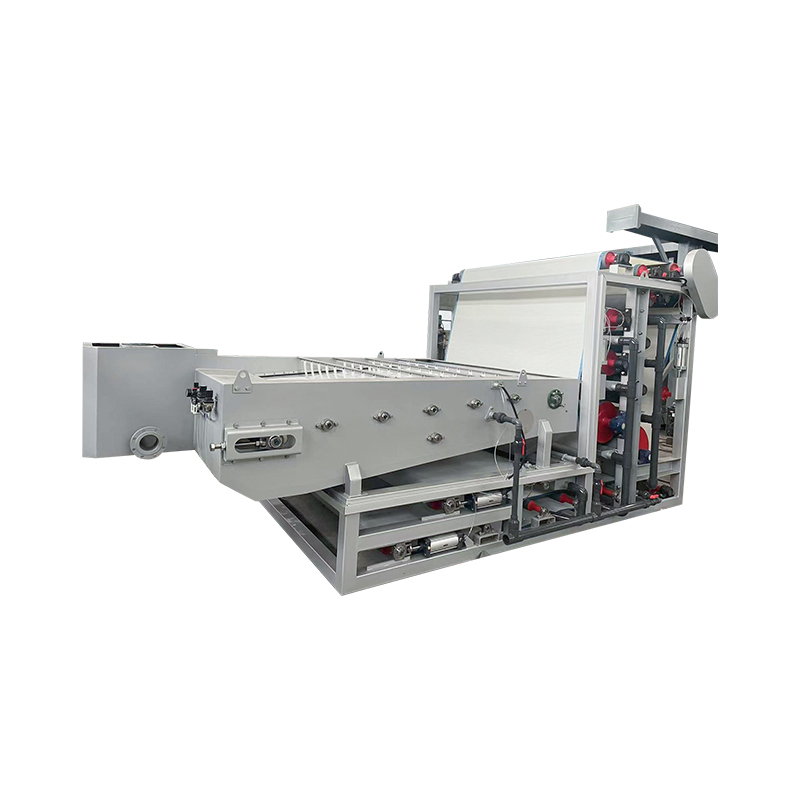
Screw Press Filter: Core Components and How They Interact
The term screw press filter refers specifically to the filtration assembly at the heart of the dewatering unit — the combination of the rotating screw shaft and the surrounding static or dynamic filter screen through which separated water drains. Understanding the function of each component clarifies why performance varies between machine designs and why certain configurations suit specific sludge types better than others.
- Screw shaft and flights — the central helical screw conveys sludge from the feed zone to the discharge end. In many designs, the shaft diameter increases toward the outlet (a "tapered screw") to progressively reduce channel volume and build compression pressure without relying solely on back-pressure resistance.
- Filter screen or drum — surrounds the screw and provides the drainage surface through which filtrate exits. Materials include stainless steel wedge wire, perforated plate, and woven mesh, with aperture sizes typically ranging from 0.2 to 1.0 mm selected based on sludge particle size distribution.
- Moving ring / fixed ring stack (lamella type) — an advanced screw press filter design uses alternating fixed and floating rings rather than a continuous screen, creating self-cleaning gaps that prevent blinding; this configuration is particularly effective for fine-particle biological sludges.
- Back-pressure discharge plate — an adjustable resistance element at the cake outlet that controls the compression zone length and final cake dryness; increasing back pressure raises DS content but also increases energy demand and potential screen blinding risk.
- Polymer conditioning unit — most screw press systems integrate a flocculation/conditioning stage upstream where polymer is dosed and mixed with incoming sludge to aggregate fine particles, significantly improving both drainage rate and final cake dryness.
Types of Screw Press Dewatering Machines: A Comparative Overview
Several distinct screw press configurations have emerged to address the full range of sludge characteristics encountered in municipal and industrial treatment. Selecting the correct type requires matching machine design to sludge dewatering behavior — a step that significantly affects both capital cost and long-term operating performance.
| Type | Screen Design | Best Sludge Type | Typical Cake DS (%) |
|---|---|---|---|
| Lamella (moving ring) screw press | Alternating fixed/floating rings | Biological, municipal WAS | 15–22% |
| Wedge wire drum screw press | Continuous stainless steel screen | Fibrous, food processing sludge | 20–28% |
| High-pressure screw press | Perforated drum with reinforced back pressure | Chemical, mineral-rich sludge | 25–35% |
| Multi-shaft screw press | Twin or triple screw configuration | High-volume, mixed industrial sludge | 18–28% |
The lamella design dominates municipal and light industrial biological sludge applications due to its self-cleaning screen mechanism, which eliminates the frequent manual cleaning cycles required by conventional drum screens when handling sticky, fine-particle activated sludge. For heavier industrial sludges — particularly those from chemical precipitation or mineral processing — high-pressure configurations with robust screen materials deliver superior cake dryness and lower disposal volumes.
Key Performance Parameters and How to Evaluate Them
Specifying a screw press dewatering machine requires evaluating several interdependent performance parameters simultaneously. Optimizing for one in isolation — for example, maximizing cake dryness — frequently degrades performance on others such as throughput capacity or filtrate quality.
- Solids capture rate — the percentage of total incoming solids retained in the cake rather than passing through the screen into the filtrate. Well-conditioned sludge through an appropriately sized screw press should achieve 95–99% solids capture; values below 90% indicate poor polymer conditioning, incorrect screen aperture, or excessive feed rate.
- Throughput capacity — rated in kg dry solids per hour (kg DS/h), this determines how many units are required for a given sludge production rate. Oversizing throughput capacity increases capital cost; undersizing creates a treatment bottleneck during peak sludge generation periods.
- Specific energy consumption — screw press dewatering machines are among the most energy-efficient dewatering technologies, typically consuming 0.01–0.05 kWh per kg DS — significantly lower than centrifuges (0.05–0.15 kWh/kg DS) and comparable in energy terms to belt presses while offering enclosed operation.
- Polymer consumption — cationic polyacrylamide (PAM) dosing rates for biological sludge typically range from 3–8 kg polymer per tonne DS; optimization through jar testing before commissioning significantly reduces ongoing polymer costs and improves cake quality consistency.
- Filtrate suspended solids — return filtrate with high TSS loads the headworks and increases treatment plant hydraulic burden; target filtrate TSS below 500 mg/L for well-conditioned biological sludge dewatering operations.
Screw Press vs. Other Dewatering Technologies: Where It Wins and Where It Doesn't
Screw press dewatering machines occupy a specific performance niche within the broader dewatering technology landscape. Understanding where this technology outperforms alternatives — and where other technologies are more appropriate — is essential for making cost-effective equipment decisions at the facility design stage.
Versus belt filter presses: Screw presses eliminate the open belt exposure that creates odor and aerosol issues in enclosed buildings, require no wash water (saving 1–3 m³ per hour of process water per unit), and need significantly less operator attendance. Belt presses maintain a throughput advantage for very high-volume applications and can handle some sludge types that compress poorly in screw configurations.
Versus centrifuges: Screw presses consume substantially less energy, generate far less noise and vibration, have lower capital costs for small-to-medium capacity ranges, and require less precision balancing maintenance. Centrifuges outperform screw presses in applications requiring very high cake dryness from oily or difficult-to-filter sludges, and in configurations where compact footprint justifies higher energy and capital expenditure.
Versus plate-and-frame filter presses: Screw presses operate continuously rather than in batches, eliminating the labor-intensive cake discharge cycle and reducing polymer demand variability. Plate-and-frame presses achieve significantly higher cake dryness — up to 45% DS — for chemical and mineral sludges where minimizing disposal volume is the overriding priority and batch operation is acceptable.
For biological sludge treatment in industrial facilities handling wastewater from chemical plants, printing operations, garment factories, and paper mills — where sludge volumes are moderate, enclosed operation is preferred, and operator labor is limited — screw press dewatering machines represent a well-balanced solution across capital cost, operating cost, and performance dimensions.
Installation, Operation, and Maintenance Considerations
Screw press dewatering machines are among the more straightforward sludge treatment devices to install and operate, but several practical considerations during commissioning and ongoing maintenance determine whether long-term performance meets design expectations.
- Polymer system commissioning — jar testing with actual plant sludge before startup is essential. Polymer type (charge density, molecular weight), dosing rate, and dilution water ratio all significantly affect conditioning quality and must be optimized for the specific sludge before throughput targets are attempted.
- Feed sludge consistency — screw presses perform best with relatively consistent feed solids concentration, typically 0.5–4% total solids for biological sludge. Highly variable feed concentration causes erratic cake dryness and complicates back-pressure adjustment.
- Screen inspection frequency — even self-cleaning lamella designs benefit from weekly visual inspection of the ring stack for wear or deformation; continuous drum screens require periodic manual cleaning with a pressure washer and acid wash cycle every 1–3 months depending on sludge scaling tendency.
- Screw flight wear monitoring — flight wear at the discharge end accelerates in abrasive sludges; measuring clearance between flights and screen surface every 6–12 months identifies wear before it affects cake dryness or causes screen damage.
- Drive unit lubrication — gearbox oil changes at manufacturer-specified intervals (typically every 2,000–4,000 operating hours) are the primary scheduled maintenance requirement for the drive system; neglecting this step is the most common cause of premature gearbox failure in continuously operated units.
When correctly commissioned and maintained, screw press dewatering machines routinely achieve service lives exceeding 10–15 years with minimal unplanned downtime — making them a reliable long-term investment in facilities where sludge dewatering is a continuous operational requirement.
Let's Cooperate with Yixing Hengye Environmental Protection
Contact Us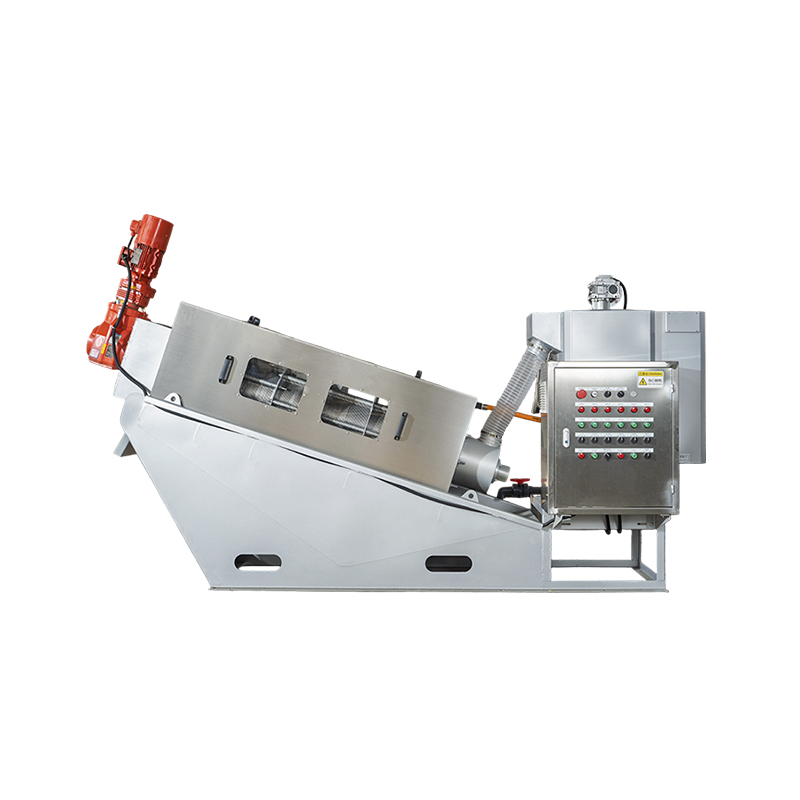

- Product Categories
- Sludge Dewatering Machine
- Roller Filter
- Dissolved Air Flotation Machine(DAF)
- Rotary Mechanical Bar
- Dosing Device
- Aerator
- Biological Packing Material
- Other Wastewater Treatment Equipment
- Contact Us
-
-
[email protected]

[email protected] -
+86-13812201185

-
+86-13812201185

-
No. 20, Saite Road, Gaoyao Village, Gaocheng Town, Yixing City, Wuxi City, Jiangsu Province, China

-



