

 English
  русский
Activated Sludge Process: Key Operating Parameters, Failure Modes and Equipment
Pull a glass jar of mixed liquor from a healthy aeration basin and the answer is visible in minutes: brown, fluffy flocs that settle into a clear layer within half an hour. That living floc is activated sludge, the biological workhorse behind most industrial and municipal wastewater plants, and it routinely removes more than 90 percent of the incoming BOD when it is managed well.
When it drifts, the warning signs arrive within days: cloudy effluent, a sludge blanket creeping toward the weirs, and a blower schedule that stops making sense. This guide walks through how the activated sludge process works, the four operating numbers that decide its performance, the failure modes that appear most often in industrial service, and the equipment choices that keep the biology stable.
Content
- 1 What Is Activated Sludge and Why Does the Floc Matter?
- 2 How the Activated Sludge Process Works, Stage by Stage
- 3 The Four Operating Numbers That Decide Activated Sludge Performance
- 4 When Activated Sludge Goes Wrong: Bulking, Foaming and Rising Sludge
- 5 Handling Waste Activated Sludge Before It Takes Over the Budget
- 6 Frequently Asked Questions About Activated Sludge
What Is Activated Sludge and Why Does the Floc Matter?
Activated sludge is a flocculent culture of bacteria, protozoa and other microorganisms that is grown under controlled aeration and used to consume the organic pollutants in sewage and industrial wastewater.
The name dates to 1914, when Edward Ardern and William Lockett showed in Manchester that aerated sewage could be reused to seed the next batch, and that recycling this biomass cut treatment time from days to hours. A century later, the same principle still runs the majority of biological treatment plants in the world.
The floc is a working ecosystem rather than a chemical. Heterotrophic bacteria strip the carbonaceous load measured as BOD, nitrifying bacteria convert ammonia to nitrate, and protozoa graze free-swimming cells, which is what polishes the effluent. Floc-formers secrete the sticky extracellular polymers that let particles aggregate, settle and compact, so every decision an operator makes is really a decision about that ecosystem.
How the Activated Sludge Process Works, Stage by Stage
The process works as a continuous loop: pretreat the flow, aerate it, settle it, then return most of the biomass and waste the surplus.
- Pretreatment and equalization. Screens and grit removal protect pumps and diffusers, and an equalization tank smooths batch discharges from factory shifts. Oily or fatty industrial streams usually pass through a dissolved air flotation unit first, because oil coatings stop flocs from settling.
- Biological aeration. Fine bubbles or surface aerators feed oxygen to the basin while turbulence keeps the floc suspended. Dissolved oxygen needs to stay above roughly 1.5 mg/L for carbon removal, and closer to 2 mg/L where nitrification is required.
- Secondary clarification. Mixed liquor flows into a quiet clarifier where flocs sink and clear water spills over the weirs. Surface loading is typically held below about 1.2 metres per hour to prevent solids from carrying over.
- Return and waste. A return activated sludge (RAS) pump lifts settled biomass back to the basin inlet, usually at 30 to 80 percent of the incoming flow, while a controlled waste activated sludge (WAS) stream sets the sludge age, commonly 5 to 15 days in conventional plants.
Where the clarifier is the bottleneck, inclined tube modules add effective settling area inside the existing tank footprint, which makes them one of the least disruptive upgrades available to a running plant.
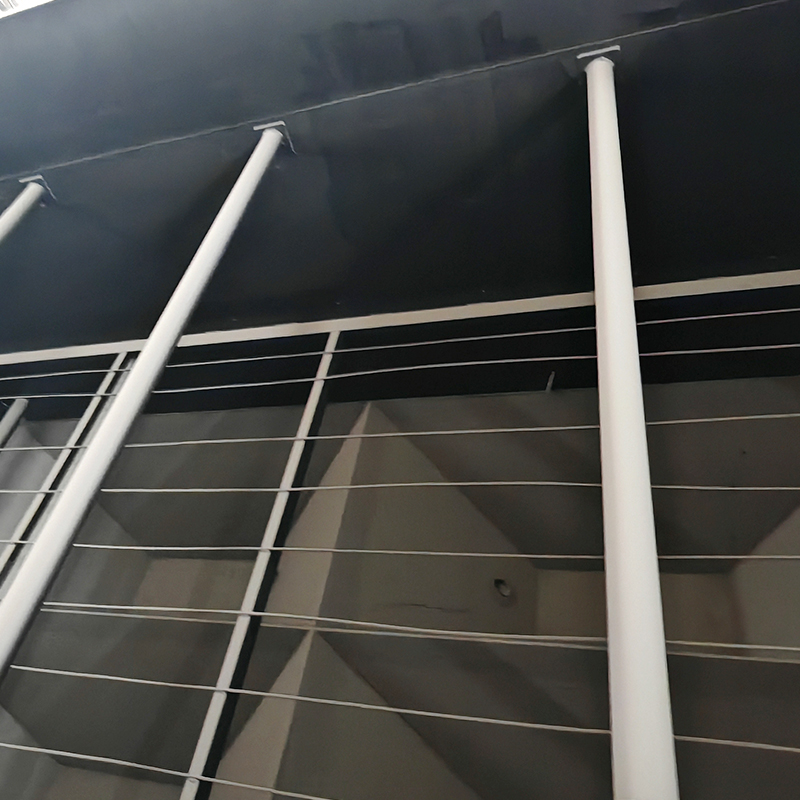 Inclined Tube Sedimentation Tank for Clarifier UpgradesInclined tube modules increase effective settling area within the existing tank footprint, letting particles settle faster than the upward flow velocity. For plants where the clarifier limits capacity, this is a low-disruption upgrade.View Product →
The Four Operating Numbers That Decide Activated Sludge Performance
Four numbers, MLSS, dissolved oxygen, F/M ratio and SVI, describe almost everything happening in an activated sludge system, and all four can be tracked with routine daily sampling.
Mixed liquor suspended solids (MLSS) is the amount of biomass doing the work. The food-to-mass (F/M) ratio compares incoming BOD with that biomass: push it above 0.5 and flocs turn loose and dispersed, starve it below 0.1 and pin floc with clarifier losses follows. Dissolved oxygen below about 0.5 mg/L in any zone invites filamentous organisms such as Sphaerotilus, while oxygen far above 4 mg/L simply burns blower power.
| Parameter | Normal window | What happens outside it |
| MLSS | 1,500 to 3,000 mg/L | Under 1,000 mg/L loses shock tolerance; over 4,000 mg/L overloads the clarifier |
| Dissolved oxygen | 1.5 to 3.0 mg/L | Below 0.5 mg/L favors filaments; above 4.0 mg/L wastes power |
| F/M ratio | 0.2 to 0.5 kg BOD per kg MLSS per day | High ratios disperse the floc; very low ratios grow pin floc |
| SVI | 70 to 150 mL/g | Above 200 mL/g signals bulking and clarifier carryover |
| pH | 6.5 to 8.0 | Below 6.5 nitrification stalls; above 8.5 flocs break up |
Same Biology, Different Configurations
The same loop appears in many plant types, and the configuration mainly changes how much biomass the basin carries. Sequencing Batch Reactors (SBR) run the whole cycle in a single tank, extended aeration plants hold more sludge for longer, and the membrane bioreactor (MBR) replaces the clarifier with membrane filtration so it can carry several times the conventional MLSS.
Match the configuration to your load profile and staffing reality rather than to the biggest number on a datasheet. Because blowers dominate the power bill, oxygen transfer is usually the fastest payback in the plant: replacing worn coarse-bubble grids or aged surface aerators with fine-bubble diffusers routinely trims a double-digit share of aeration energy while holding the same DO setpoint.
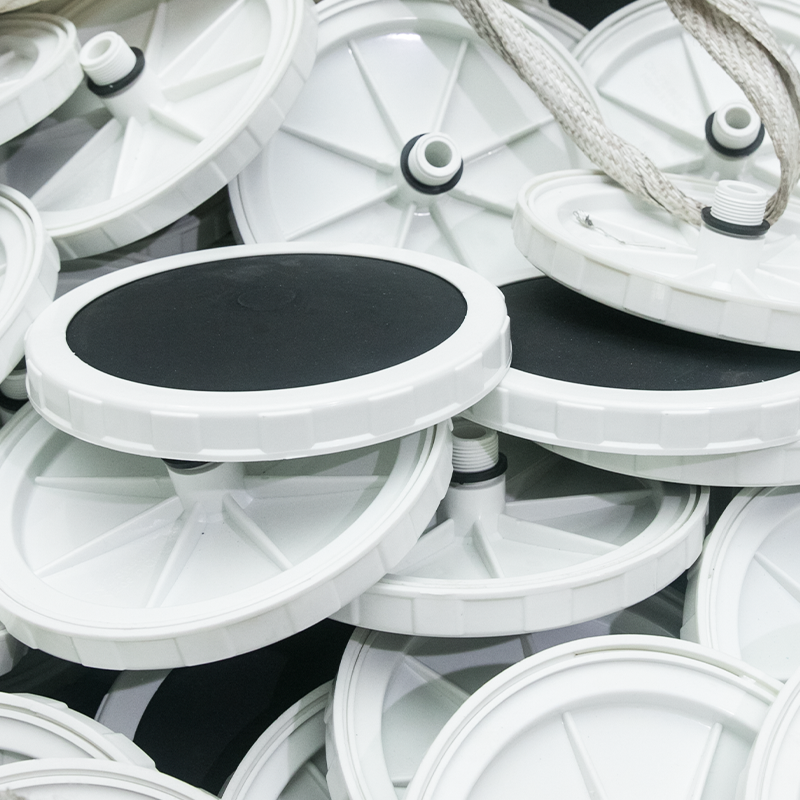 Microporous Disc Aerator for Aeration TanksDiaphragm-type microporous aerators release fine bubbles with a large gas-liquid interface area, improving oxygen transfer efficiency. Replacing worn coarse-bubble or surface aerators with these can cut aeration energy while holding the same DO setpoint.View Product →
When Activated Sludge Goes Wrong: Bulking, Foaming and Rising Sludge
Most activated sludge upsets are settling failures rather than biology failures, and they trace back to a short list of causes: filaments, nutrient imbalance, oxygen sag and load swings.
- SVI between 70 and 150 mL/g
- Compact brown flocs 0.1 to 0.5 mm across
- Blanket settles clear within 30 minutes
- Low suspended solids at the weirs
- SVI above 200 mL/g
- Open, filamentous floc that traps fine bubbles
- Blanket reaches the weirs within the hour
- Cloudy effluent and rising discharge solids
The Most Common Root Causes
- Dissolved oxygen sagging below 0.5 mg/L in part of the basin, often at the inlet end
- Nutrient shortfall, because many industrial wastes carry far less nitrogen or phosphorus than the classic 100:5:1 BOD to nitrogen to phosphorus ratio
- Septic influent carrying sulfides from long, anaerobic sewer runs
- Wide swings in load, pH or temperature from batch production
- Chronic underloading in oversized basins, which starves the floc-formers
Rising sludge is the impostor in this list: the sludge settles well, then denitrifies in the clarifier and floats back up on nitrogen bubbles. The cure is operational, more wasting, a higher return rate or shorter basin residence, not a chemical one.
Handling Waste Activated Sludge Before It Takes Over the Budget
Waste activated sludge is dilute, unstable and expensive to haul, so thickening and dewatering it on site is almost always cheaper than trucking it away wet.
Secondary sludge is also harder to dewater than primary sludge, because biological flocs hold water in fine capillaries. After polymer conditioning, expect roughly 16 to 22 percent solids from a screw press or belt filter press on waste activated sludge, against higher figures on primary material, so size the cake handling for the biological stream, not the average.
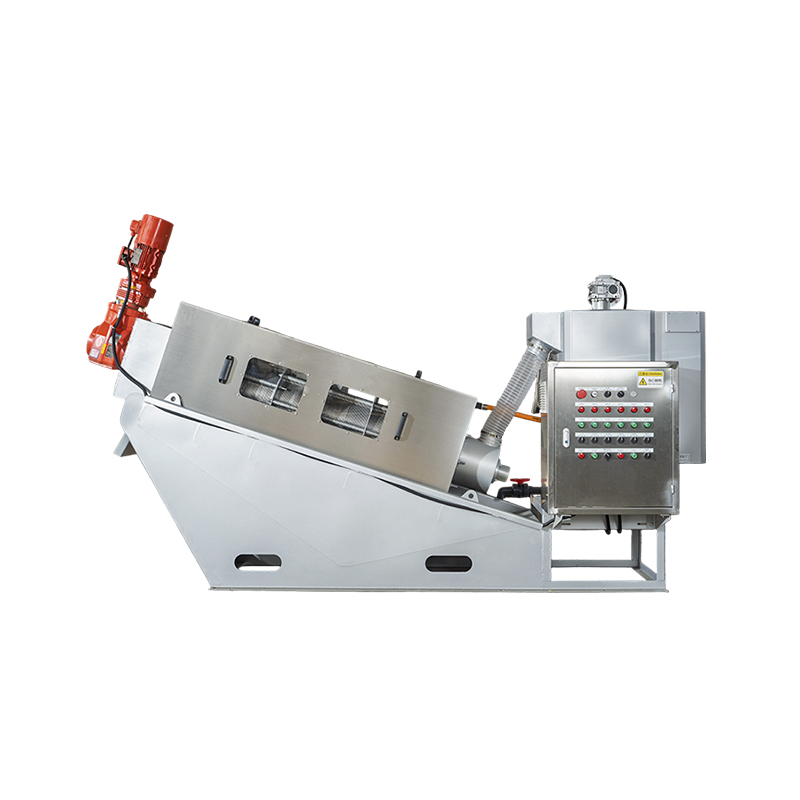
Equipment choice matters as much as chemistry. A detailed comparison of screw press versus belt filter press designs shows trade-offs in capture rate, wash-water demand and operator attention: screw presses run continuously with minimal washing, while belt presses can deliver a drier cake on some sludges but need constant belt cleaning.
Buying both stages from one supplier also simplifies performance guarantees. Yixing Hengye Environmental Protection Technology Co., Ltd., an industrial wastewater equipment manufacturer founded in 2015, builds screw press, belt filter press and decanter centrifuge dewatering machines alongside aerators, clarifier equipment and screening systems, and holds ISO 9001, environmental management and occupational health and safety certifications across its design and production chain.
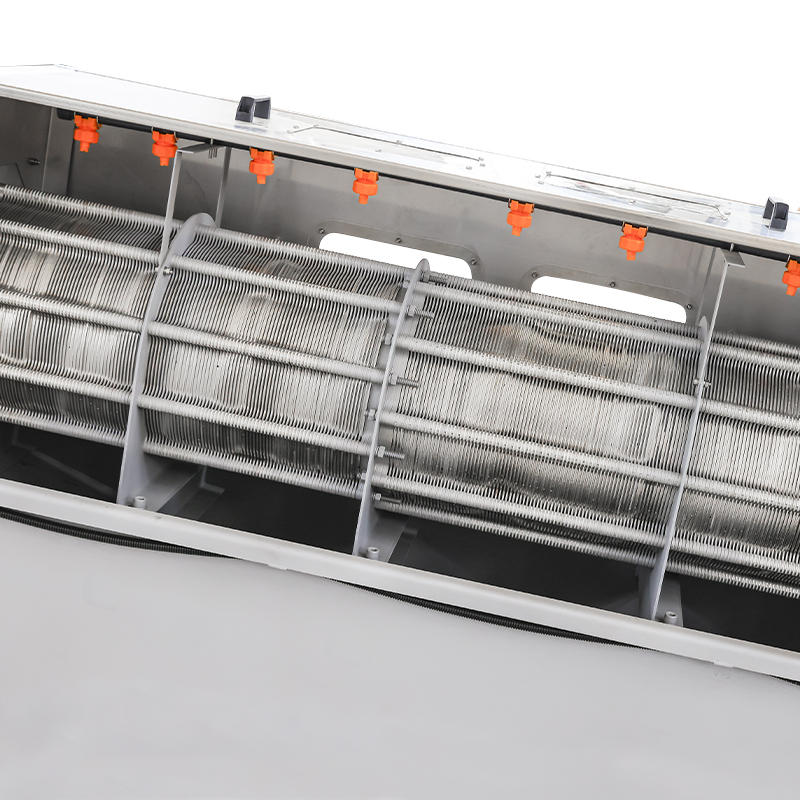 Screw Press Sludge Dewatering MachineUsing fixed and moving rings with a self-cleaning screw mechanism, this machine dewaters sludge from 2000 to 50000 mg/L without filter cloth clogging. A practical choice for handling sludge volumes generated by biological treatment stages.View Product →
Frequently Asked Questions About Activated Sludge
How is activated sludge different from a biofilm process such as MBBR?
Activated sludge keeps the microorganisms suspended as floc and pumps them back from the clarifier. A Moving Bed Biofilm Reactor (MBBR) grows them on plastic carriers that stay in the basin, which tolerates load swings better and needs no return pumping, while suspended activated sludge generally reaches lower effluent BOD with tighter process control.
What SVI value indicates healthy activated sludge?
Treat 70 to 150 mL/g as the healthy band. Between 150 and 200 the sludge is drifting and the clarifier should be watched hourly; above 200 mL/g you are in bulking territory and solids losses are likely within days.
How long does start-up of an activated sludge system take?
Seeding with 10 to 20 percent of the design MLSS from a neighboring plant typically shortens commissioning to two to three weeks. Without seed sludge, expect four to six weeks before stable removal, and longer in cold water.
Can activated sludge treat high-strength industrial wastewater?
Yes, provided the stream is equalized, nutrients are balanced to roughly the 100:5:1 BOD to nitrogen to phosphorus ratio, and toxic shock loads are screened out upstream. Chemical, textile, leather and paper mills run activated sludge successfully on exactly that basis.
Let's Cooperate with Yixing Hengye Environmental Protection
Contact Us
- Product Categories
- Sludge Dewatering Machine
- Roller Filter
- Dissolved Air Flotation Machine(DAF)
- Rotary Mechanical Bar
- Dosing Device
- Aerator
- Biological Packing Material
- Other Wastewater Treatment Equipment
- Contact Us
-
-
[email protected]

[email protected] -
+86-13812201185

-
+86-13812201185

-
No. 20, Saite Road, Gaoyao Village, Gaocheng Town, Yixing City, Wuxi City, Jiangsu Province, China

-



